The Maris Review, vol 82

Forgive me for skipping last week's newsletter! I've been reading submissions for for the NYPL Young Lions Fiction Award, and I didn't want to use this space to write about what I read. That will be under wraps until this spring.
I also took a little pre-Thanksgiving break because during the previous weekend I attended the Miami Book Fair. It was a real life-affirming weekend, the kind where you're doing so many fun things that you don't have time to read.
But I do have a very inconsequential blind item for you.
The setting: the author party at the Miami Book Fair, held at The Standard
The situation: It got a little chaotic because there was only one bar serving a huge array of people.
Where I was: On a line that snaked around the bar, and didn't move for at least 15 minutes.
Who I was with: Beloved Kristen Arnett, who was following the rules like I was. We were so patient.
The small blind item: Which authors skipped the monumental line of other authors and cut ahead to the bar instead? The answers may shock you.
What I read this week
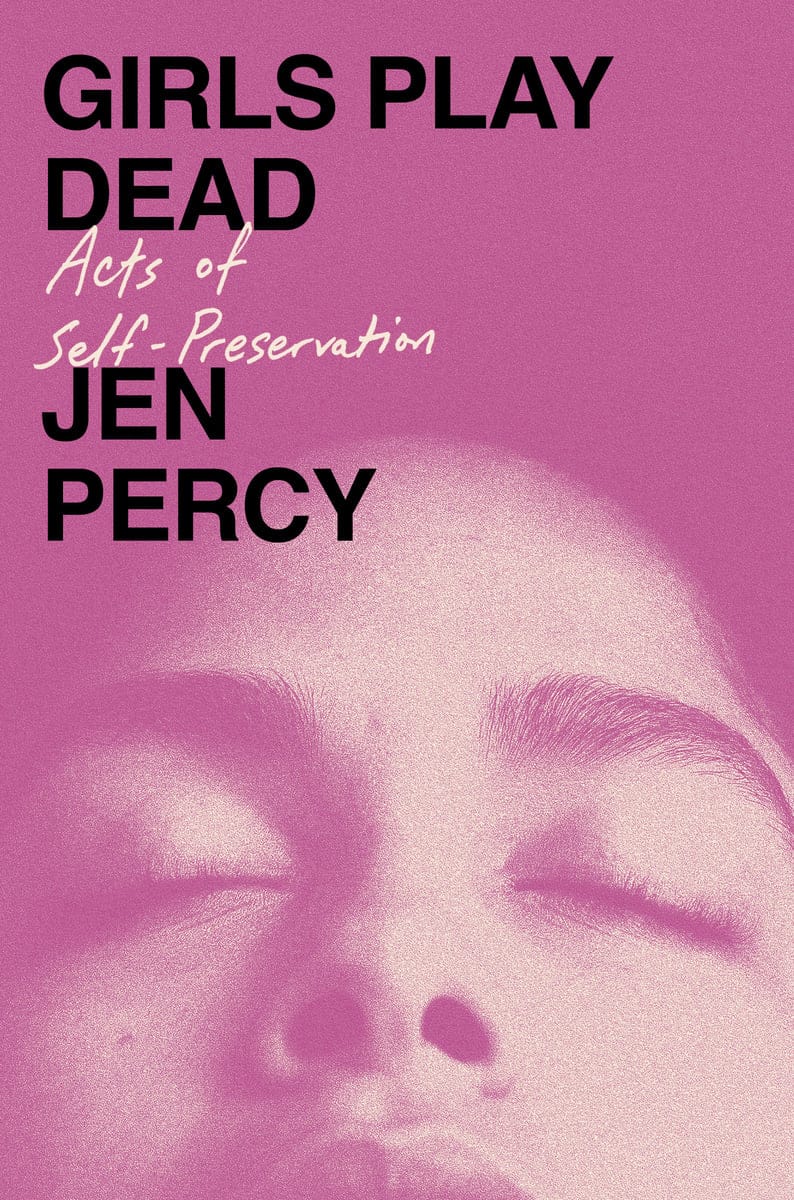
Girls Play Dead: Acts of Self-Preservation by Jen Percy
I had never read anything like Jen Percy's tour de force reporting debut, Demon Camp, a 2014 book about unlikely manifestations of PTSD in vets returning from Afghanistan. Now she's investigating a different kind of trauma response in an unsettling but beautiful book about all of the confounding ways our bodies react to danger.
We all know about fight or flight as a nervous response to danger, but there's a third option. Girls Play Dead is about freezing. Did you ever have one of those dreams where you know you are in danger and you can't move? When it happens in real life, it's called tonic immobility or "thanatosis," a Greek word for "preparing for death." It's an actual physical response that has caused so many survivors so much shame: just because they didn't fight back, didn't say "no," doesn't mean the sex was consensual. In the aftermath of rape so often the focus is on believability, whether the victim has a "convincing" story. If she hasn't reacted in the way society deemed she was supposed to, what happens to her humanity?
One of my favorite books of recent years is Melissa Febos's Girlhood. The essay that stuck with me the most was about Melissa attending a cuddle party and realizing that her eagerness to please or to avoid conflict led her to worry more about the other cuddlers' happiness than centering her own needs. Girls Play Dead takes such submission one step further, including lines from rape survivors said directly afterward to comfort their rapists: "I comforted him and said it was okay" and "I acted like he was the victim and told him I was sorry" and "I comforted him because he was crying."
Blending personal writing with strong reporting, Percy delves deep into so many different kinds of cases when a victim's response doesn't follow some standard of logic that society expects of them. It's a brutal book, but it's written with warmth and light. Girls Play Dead reminds me most of Rachel Aviv's Strangers to Ourselves, where there is excellent storytelling and artistry in the prose and too much nuance to offer a decisive takeaway.
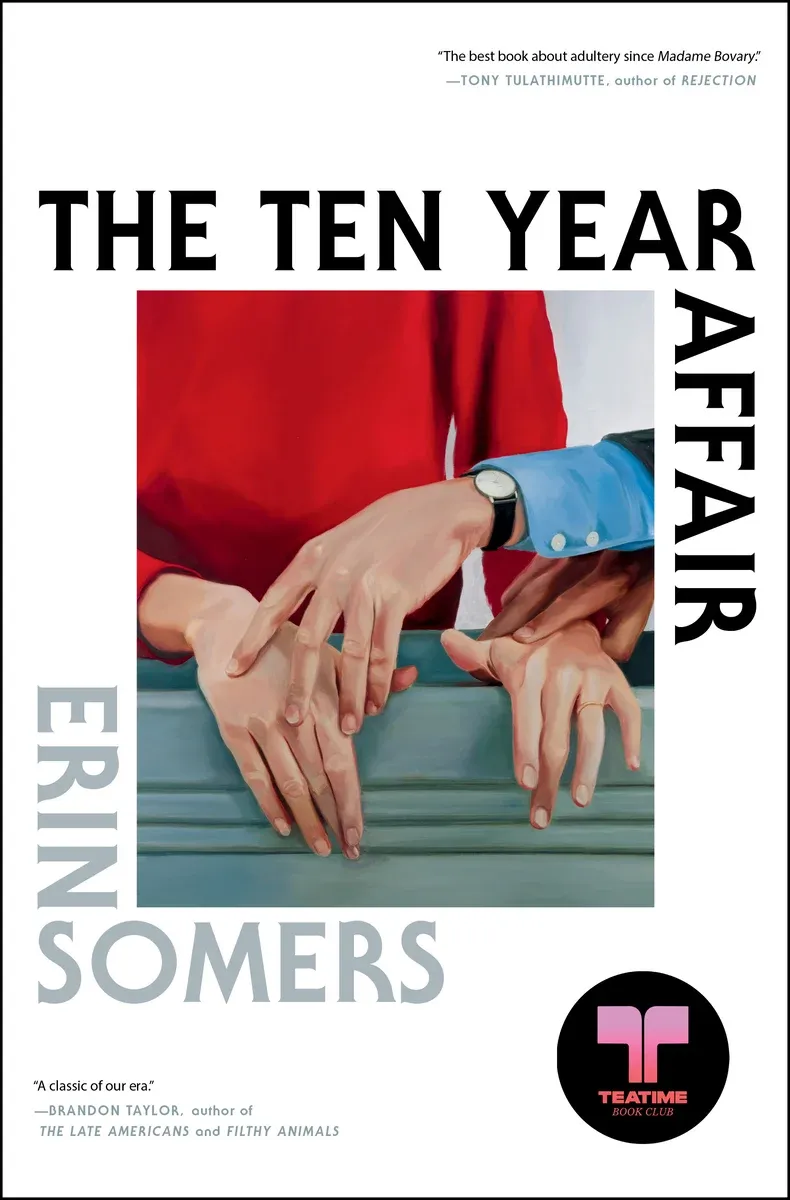
The Ten Year Affair by Erin Somers
I met Erin when her debut novel came out in 2019 and she was the second guest ever on my podcast. I had been married to a comedian for two years at the time, and I had seen a lot of great comedy and a fair share of bad comedy. Erin's novel captures what mediocre comedy sounds like in a way that's actually funny, which is very difficult to do.
Over the years I've enjoyed watching Erin become devastating at social media. She is a keen observer, and in just a line or two she can really set a scene and convey character. I'm gonna go ahead and say The Ten Year Affair is the book she was meant to write.
Set in a town that or may not be Beacon, New York, both before and after Covid, The Ten Year Affair is the story of Cora, a happily married young mother of two children who becomes enamored with Sam, a man she meets at a baby play group. From that moment on, Cora's story exists on two timelines: there's a reality that's all about mundane routines and the work of domesticity, and the world in which she acts on her feelings for Sam and they both live out Cora's fantasies, romantic and otherwise. Here is Cora on the need for fantasy in a dull world: "No one was passionate about content management. Passion was what went on in the other world. It was between two people with unwholesome fixations on each other, determined to do something stupid. It was not between a person and her desk job."
When the timelines begin to collapse on each other, the proverbial fan is covered in shit. I won't say more except that the novel reminds me of so many of the great fiction about suburban ennui in the 20th century, but this time from a millennial perspective, It's as wry and bitter as you might imagine, but there is sweetness there too.
It's Giving Tuesday and AABB is (finally!) accepting donations
DONATE TO AUTHORS AGAINST BOOK BANS HERE.
As many of you know, for the past year I’ve served on the board of Authors Against Book Bans, an organization of more than 5,000 authors who stand united against the unconstitutional movement to limit the freedom to read and to write, working in conjunction with a variety of national organizations and grass roots, state-level freedom-to-read organizations to mount effective, coordinated responses to book bans. Our aim is to support the educators, librarians, parents, and students who are the first line of defense against censorship, as well as the authors whose books are under attack.
Book bans are nothing new, but this past year it seems we’ve reached an inflection point as our country descends into fascism. In schools and libraries across the country, laws are being passed to try to erase trans and nonbinary and other queer people just as they’re trying to erase Critical Race Theory and any other historically accurate narrative that paints America in a less than heroic light. Meanwhile, the well-being and livelihoods of authors whose books do not top the list of most banned are in jeopardy.
It’s been invigorating to be a small part of growing this grassroots organization that has already achieved so much on a shoestring, with colleagues putting down their own credit cards to host Zoom webinars with members, or to update our website. Now that we finally have our nonprofit paperwork and the support of EveryLibrary to help us to get up and running, we’re eager to start building a real funding source for things like basic infrastructure, member support, legislative advocacy, marketing and publicity. In the long term we hope to be able to build a pool from which we can pay legal fees and issue grants to support authors struggling under the weight of bans.
I know that right now the world feels like it’s on fire in a zillion different ways, but if you have some money to spare we would so appreciate your help as we can continue this fight.
DONATE TO AUTHORS AGAINST BOOK BANS HERE.
New releases, 11/25
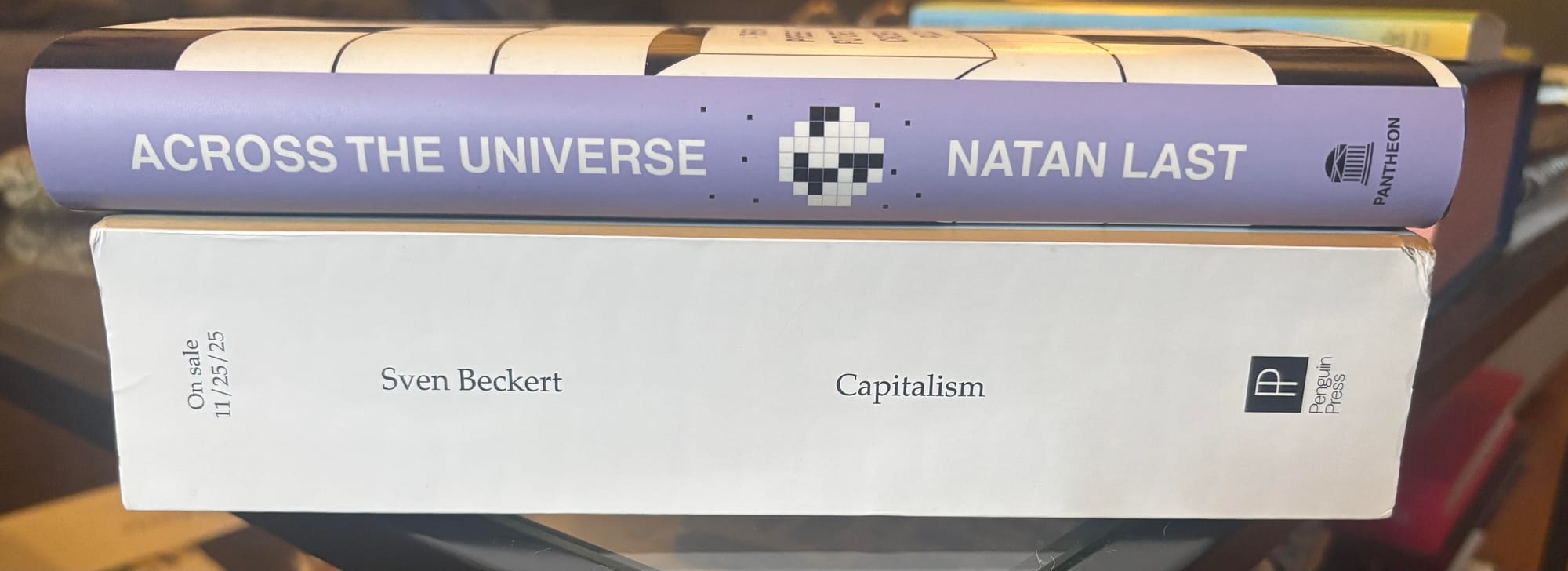
Across the Universe: The Past, Present, and Future of the Crossword Puzzle by Natan Last
Capitalism: A Global History by Sven Bekert
The Bridegroom Was a Dog by Yoko Tawada
New releases, 12/2
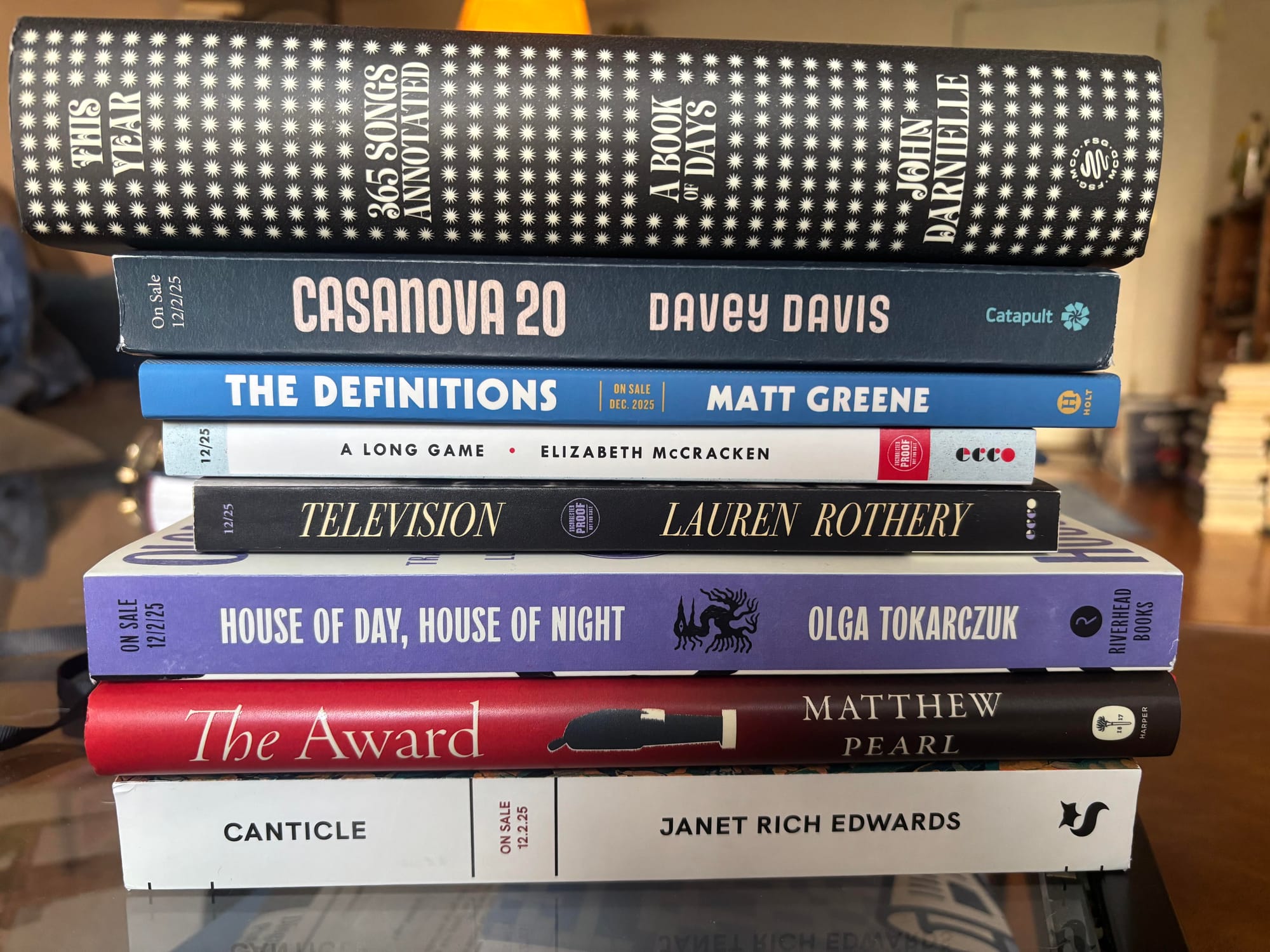
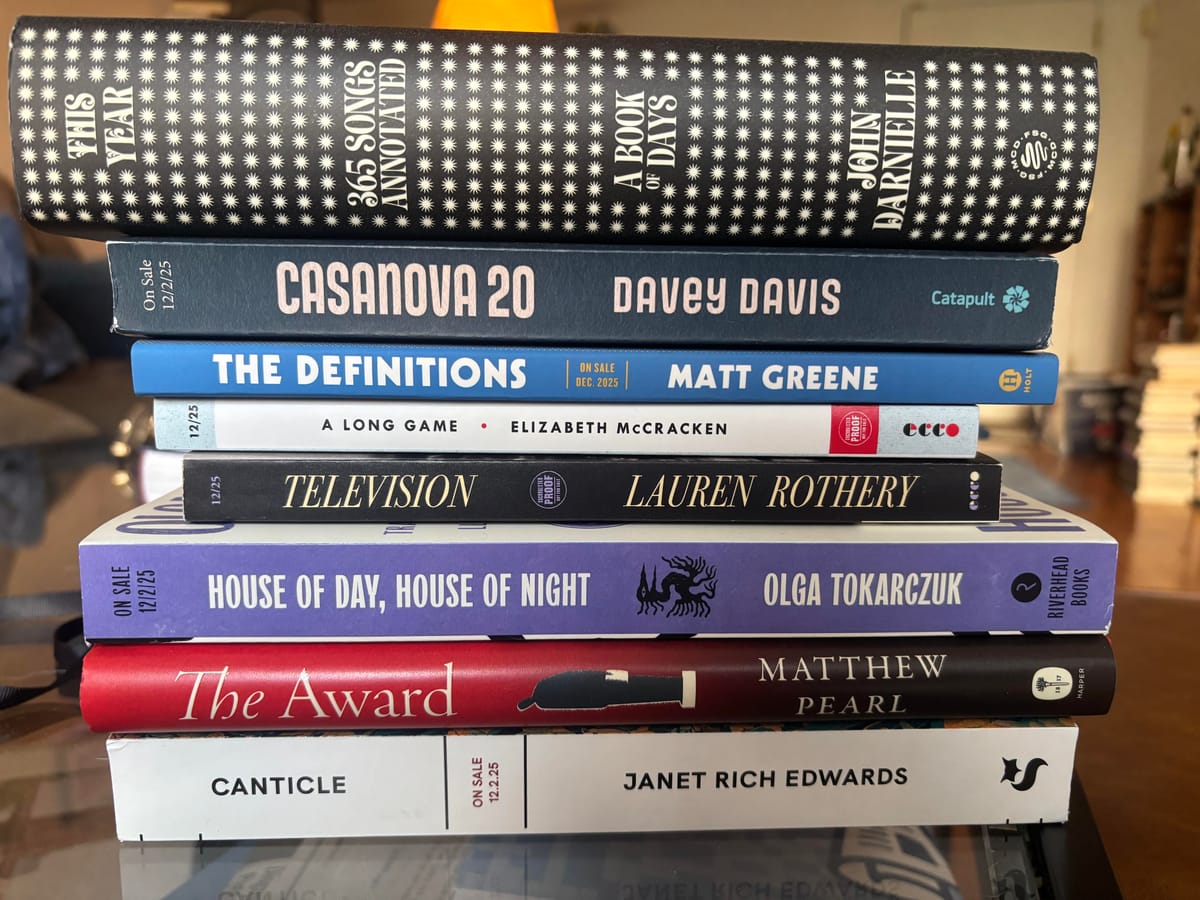
This Year: 365 Songs Annotated by John Darnielle, illustrated by John Keogh
Casanova 20: Or, Hot World by Davey Davis
The Definitions by Matt Greene
A Long Game: Notes on Writing Fiction by Elizabeth McCracken
Television by Lauren Rothery
House of Day, House of Night by Olga Tokarczuk, translated by Antonia Lloyd-Jones
The Award by Matthew Pearl
Canticle by Janet Rich Edwards
Barbie Land by Tarpley Hitt