The Maris Review, vol 86
What I read this week
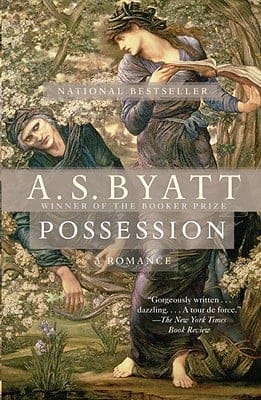
Possession by A.S. Byatt
I first tried to read A.S. Byatt's Booker Prize-winning novel about all kinds of intrigue in academia when I was in high school. What a bad idea. So much of the book is about the tedium of research, about the uncertainty of studying a dead writer's life and work by reading about what they left behind. I didn't know I was meant to bring an archivist's curiosity to this love story buried in layers and layers of texts. I'm glad I put Possession down in the 90s, and I'm so glad I picked it up again now that I can appreciate it more fully.
Possession is the story of Roland Michell an underling for the most prominent Randolph Henry Ash scholar in Britain in the 1980s. One day he finds, in a book that seemingly hadn't been open for decades, unfinished letters that Ash (a fictional Victorian poet in the Browning or Tennyson vein) had never sent to a woman with whom he seemed to be utterly intrigued. With the help of Maud Bailey, a fellow academic who is as sharp as she is beautiful (Gwyneth played her in the film adaptation), Roland begins to play detective. In their search they find clue after clue in text after text that reveals a previously unknown romantic relationship that Ash had with another poet that changes all current interpretations of the master's work. They also might find a little romance themselves. It's a love story about literary obsession and scholarship that also happens to involve a man and a woman who have a lot in common.
The scope of A.S Byatt's narrative genius is vast. She channels the voices of Victorian poets in letters and diaries and the poems themselves, nearly a Norton Anthology's worth. She channels the voices of the academics who study them and expound upon them and write pretentious biographies about them with ego virtually dripping from every page. And then there is Byatt's own narrative voice, wry and playful in a way that drives home the fact that if a short passage of the book is dense and boring, it's dense and boring for a good reason. It all adds up to a thrilling reading experience, one that will come to mind the next time anyone asks me for favorite books ever.
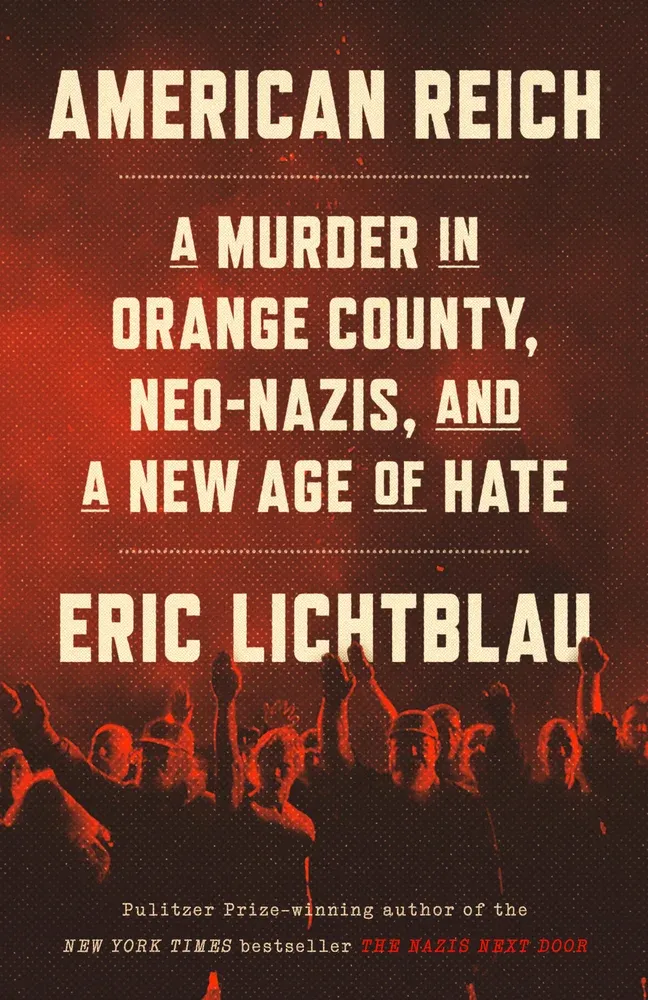
American Reich: A Murder in Orange County, Neo-Nazis, and a New Age of Hate by Eric Lichtblau
Happy January 6th, I guess? I don't think it's news to anyone who reads this newsletter that white supremacists are the most dangerous group in America by far, but it's chilling to consider exactly how much they have been emboldened over the past decade.
Although he focuses on one crime that took place in Southern California in 2017, Eric Lichtblau then pans widely to show us how hate groups have flourished all over the country in the age of Trump. American Reich is a suburban horror story in which Sam Woodward, a young man who had attended a 3-day Atomwaffen combat training camp in Texas, went on to kill his former high school classmate Blaze Bernstein, a 20 year-old Penn student who was Jewish and gay. Woodward had lured Bernstein to a local park by contacting him on a dating site and pretending that he was also gay (and look, Sam Woodward might very well be gay, but his Christian conservative father would not stand for it), then stabbing him more than 20 times. Blaze's story alone is devastating, but in the context of the book it's just one example of how anyone who is not white and Christian and cis/straight is a target.
A moment of levity: The OC really messed with my understanding of what Newport Beach was like. In my head every villain in this story looked like Seth Cohen's grandfather, Caleb Nichol, a mean and greedy man who hated a lot of people but was not a white nationalist? In fact, every pop cultural reference I know from Orange County, from Laguna Beach to The Real Housewives, seem like rich asshole conservatives but not neo-Nazis? Then I learned that Orange County has historically been a home base for skinhead bands. This is not, in fact, Death Cab for Cutie territory.
The most troubling realization I had when reading American Reich is that recently, if you were a young man looking to get radicalized online, you would have to go to the darkest corners of the internet to be black pilled. And now, stoked on by our monster of a president, hateful rhetoric can be found in any and every corner of the internet.
Fuck, I want to end on a less dire note. There are more of us than them, I try to remind myself again and again. There are more of us than them.
My literary resolutions for 2026
- The first one is the same as it is every year: read more widely. For the last two years when I was on the board for the National Book Critics Circle I didn't read any fiction for the awards. Instead I focused on criticism and nonfiction. Criticism in particular was a gateway to reading more books from academic presses, and just challenging myself overall. Good for the soul.
- Tell people when I love their books. Some, gasp, don't read this newsletter, so it's on me to reach out to them. Fan mail is the best.
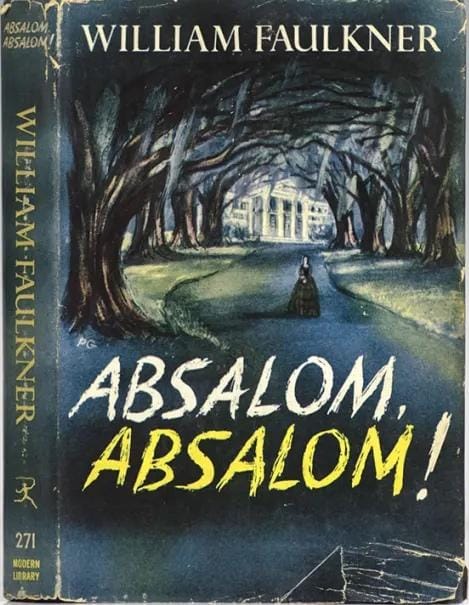
- Reading Possession over the past week was an excellent reminder to go back to books I might have been to young to appreciate when I first tried to read them. Right now this includes just about all of William Faulkner and a bunch of Murakami.
What are yours?
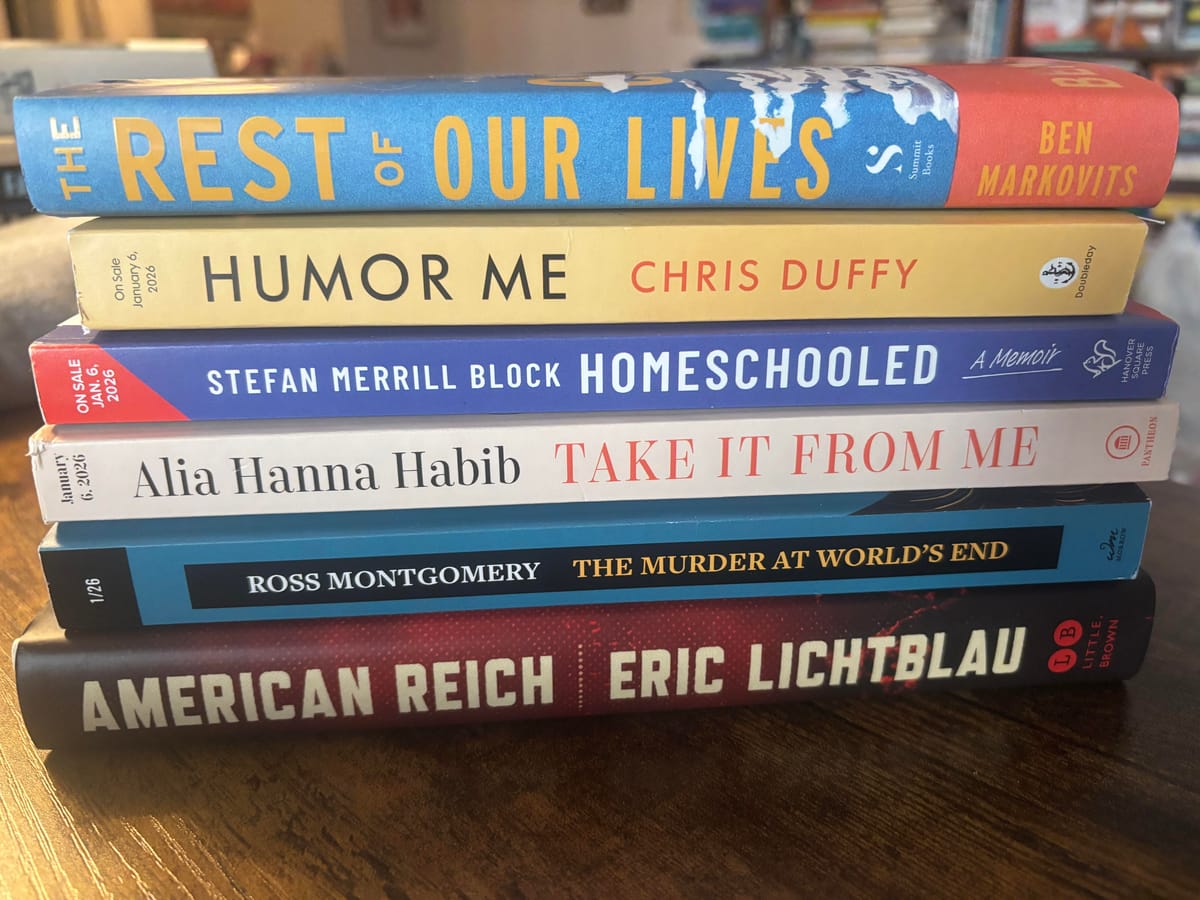
New releases, 1/6
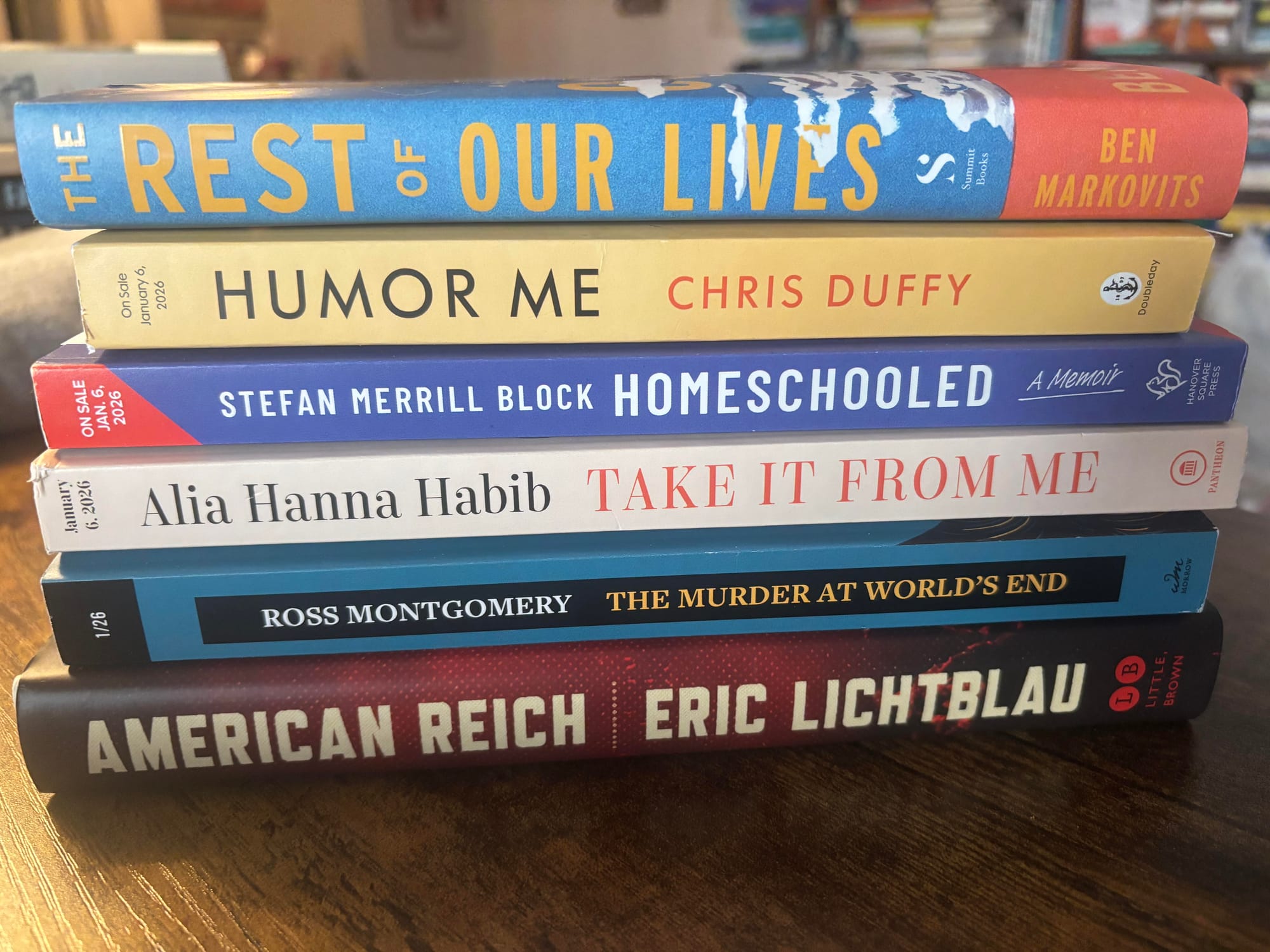
The Rest of Our Lives by Ben Markovits
(the above actually came out last week, but I smooshed it in here)
Humor Me: How Laughing More Can Make You Present, Creative, Connected, and Happy by Chris Duffy
Homeschooled: A Memoir by Stefan Merrill Block
The Murder at World's End by Ross Montgomery
American Reich: A Murder in Orange County, Neo-Nazis, and a New Age of Hate by Eric Lichtblau
Life After Ambition: A "Good Enough" Memoir by Amil Niazi