The Maris Review, vol 90

The theme of the week is how-to.
But first...
This is the worst part. I hate to do this. But I just re-upped my account for this newsletter on Ghost (it would have been nice if they'd given me a warning first!) for more than $1000 for the year. If you have a few bucks you can spare and enjoy this newsletter, I'd so appreciate it if you'd become a paid subscriber. Thank you!
What I read this week
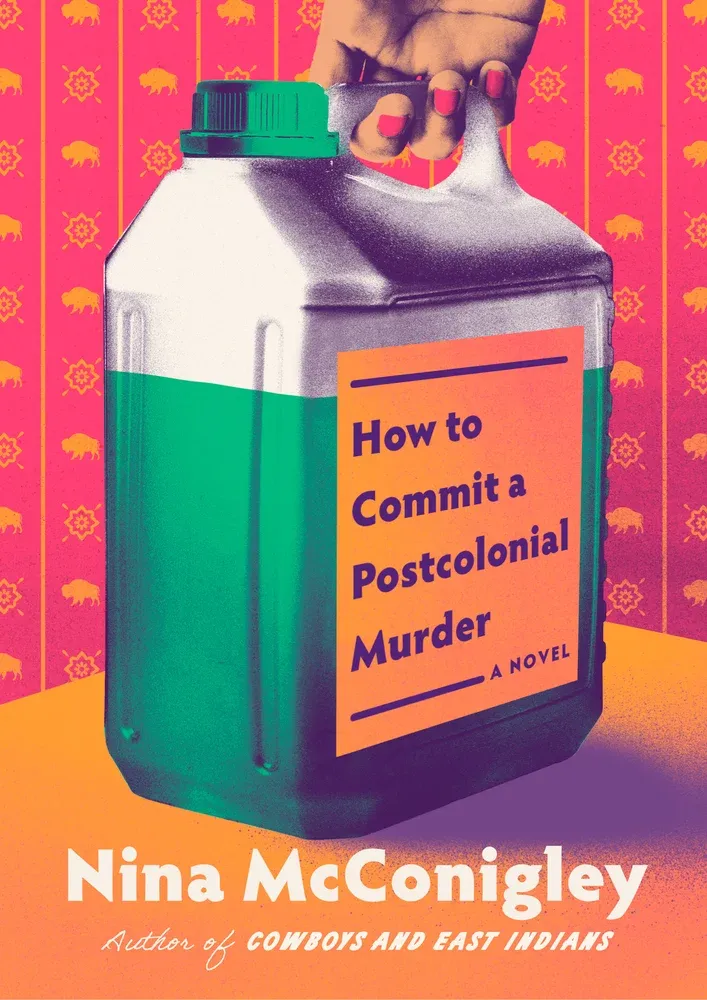
How to Commit a Postcolonial Murder by Nina McConigley
Finally, a book that I can feel good recommending to people who loved My Sister, the Serial Killer, a short little firecracker of a novel that somehow feels epic. Trade Serial Killer's Lagos setting for a small town in Wyoming, but keep the tone playful yet cutting, silly but also deadly serious.
It's the year 1986, and narrator Georgie Ayyar and her older sister Agatha Krishna live in the land of pioneers, where their father extracts oil from the land for a living. The sisters are close as can be until their mother's brother and his family come over from India and move in to their modest home. Vinny Uncle is a monster of the kind I've been thinking about way too often with the latest Epstein files dump. The girls decide they must act, and they plot to take him out with some antifreeze. Although it's about a very specific murder, How to Commit a Postcolonial Murder is also very much a story about America in the mid-1980s, with much cultural detritus creeping through: there's the Challenger explosion and Princess Diana's wedding and Chernobyl and Michael J. Fox and the Satanic Panic and quizzes from teen magazines.
Interspersed with Georgie's story are chapters in which the narrator addresses "YOU," the reader. "This story is for you; I know you want it to go a certain way." The narrator lays out what an average American reader reader of fiction by an Indian-American woman might expect: mangoes and saris and magical realism and colonialism. But the narrator is really only interested in the last item on the list. Georgie is an Indian-American girl who is tasked with playing Sacajawea in a summer camp reenactment of Lewis and Clark's journey to Oregon because she's the only brown girl available. British imperialism and American imperialism become so entangled that India's independence in 1947 resulted in a "new line that scalped the country." Everything is connected and we are all implicated, and in this mire Georgie must figure out how to live "a good life in spite of."
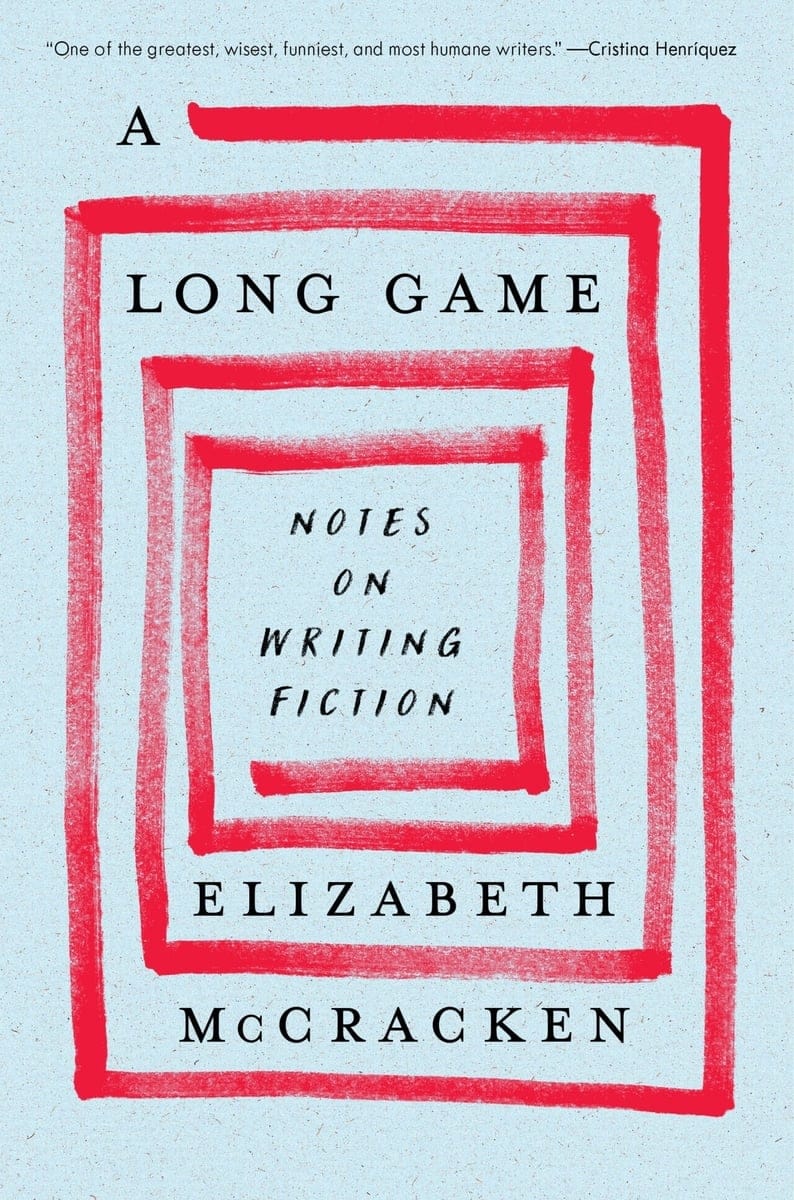
A Long Game: Notes on Fiction Writing by Elizabeth McCracken
Not as much a how-to book as some essential Real Talk, A Long Game is the perfect craft book for people who don't entirely trust craft books, written by one of my favorite writers of fiction ever. Elizabeth imparts her wisdom in list form, which means that you can flip around as you see fit, but if you read page by page you will get caught up in the narrative she imposes on her ideas.
Here is item number 257 for just a taste: "It is the flawed, the oddball, the broken, that is magnificent. The perfect doesn't interest me. It has no personality."
The big takeaway? There are no, or very few, rules. That's what makes fiction great. Her students (she holds the James Michener Chair for Fiction at UT Austin), she says, often look for definitive answers: Should I write in the first person or the third? Should I write fiction that's autobiographical or entirely made up? Do I need to write every day?
Write what speaks to you, Elizabeth says again and again in a variety of lovely ways, and work in whatever way suits you to be productive. No one knows anything, so do what moves you! It's an empowering message even when you realize that Elizabeth does, in fact, have actionable, practical advice to offer. I love how she believes that there should be more farting in literature, and I love that she thinks spite and self-hatred are perfectly worthy motivators for writing. What could be more inspiring?
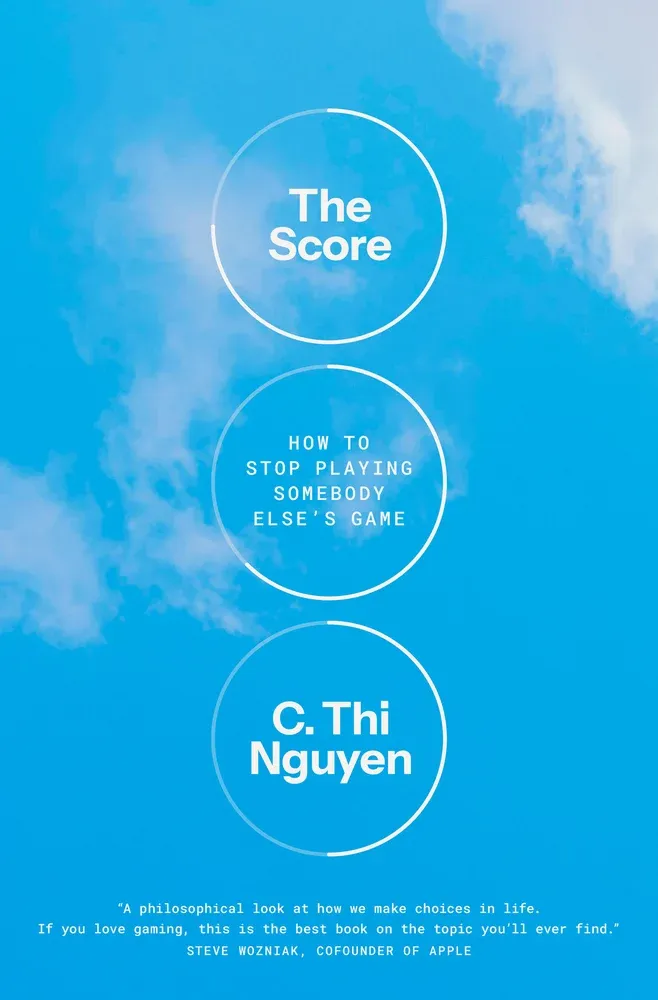
The Score: How to Stop Playing Somebody Else's Game by C. Thi Nguyen
I'm not a great reader of philosophy, but I'd heard such wonderful things about The Score so I gave it a listen. And while it does get technical, I had no trouble following along because it's written so clearly, in a conversational tone that doesn't obfuscate meaning behind a morass of jargon. The best thing about The Score is it articulates in a new way something I've known for a while: that despite our society's constant need for data, the best things in life are unquantifiable.
Our lives are dictated by metrics and measurements, by necessity Nguyen tells us. Numerical scores make it easy to share information widely and relate to one another. But Nguyen reminds us, by example, to make room for joy. Whether he's talking about rock climbing or cooking or teaching philosophy or, yes, playing games, his enthusiasm and his delight are infectious. He is the perfect guide to show us how important it is to experience the joy in playing the game rather than the winning of it, how we must find the joy in the process rather than only in the results.
On icky AI boosterism

This is a great reminder that the If Books Could Kill episode on Sapiens is incredible.
New releases, 2/3
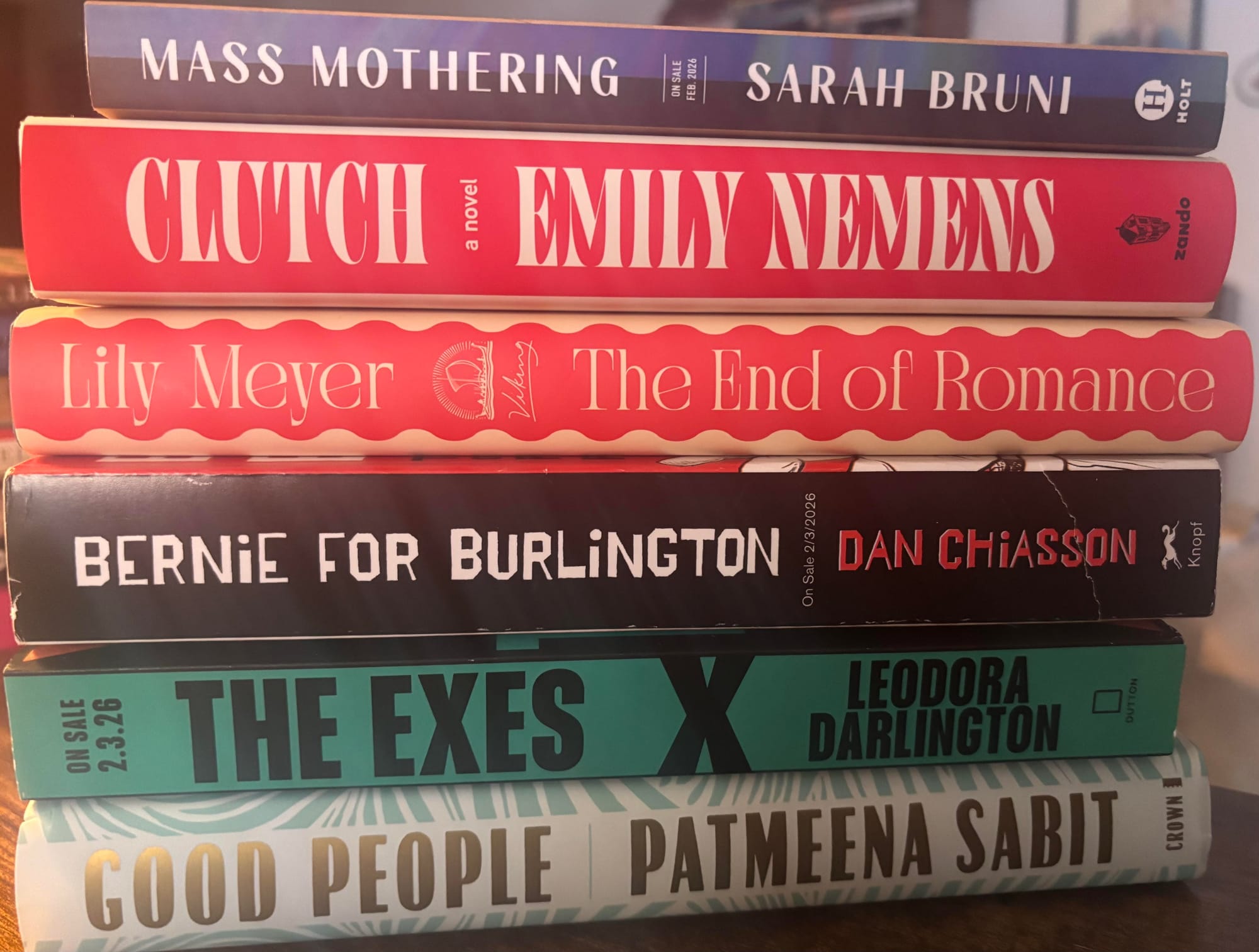
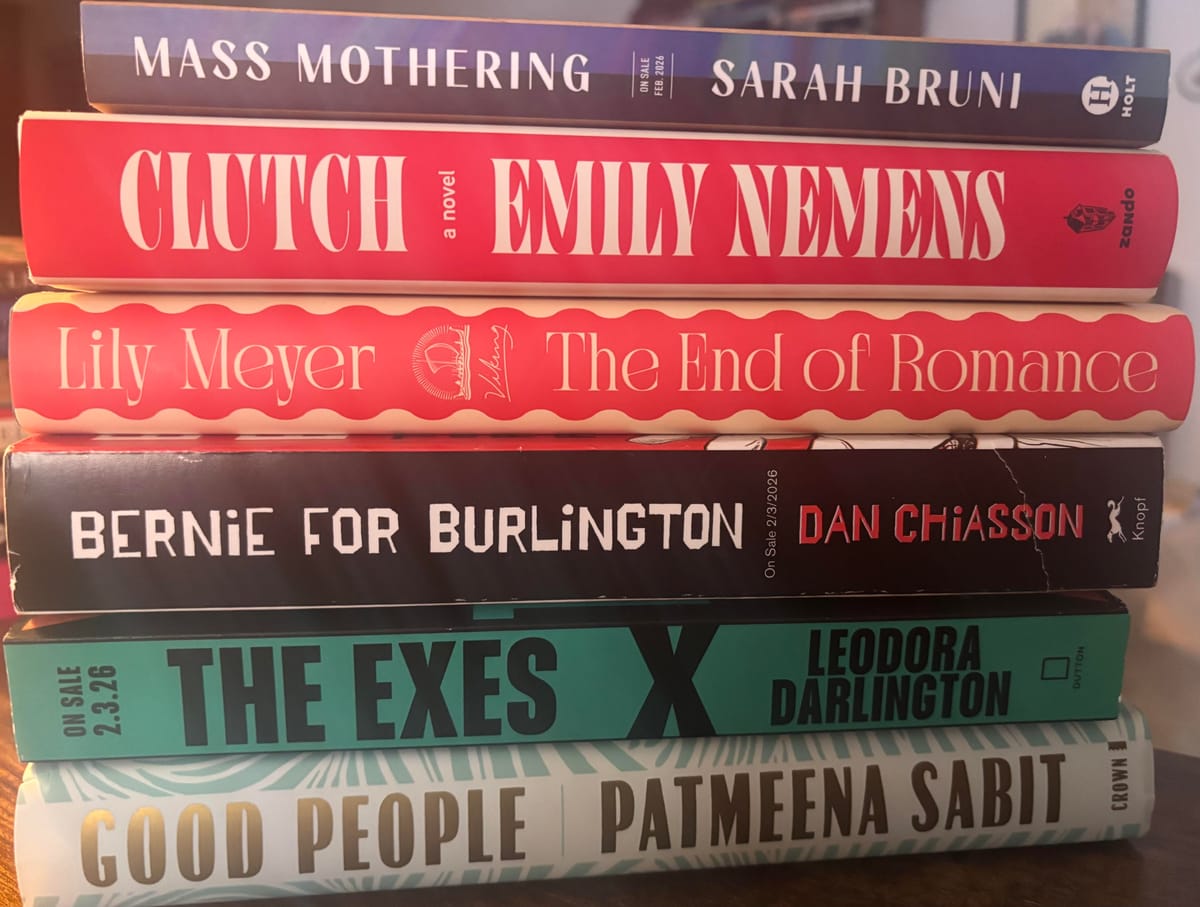
Mass Mothering by Sarah Bruni
Clutch by Emily Nemens
The End of Romance by Lily Meyer
(Come see me in conversation with Lily at Books Are Magic next week!)
Bernie for Burlington: The Rise of the People's Politician by Dan Chiasson
The Exes by Leodora Darlington
Good People by Patmeena Sabit
Language As Liberation: Reflections on the American Canon by Toni Morrison
Autobiography of Cotton by Cristina Rivera Garza
The Cure For Everything: The Epic Struggle for Public Health and a Radical Vision for Human Thriving by Michelle A. Williams with Linda Marsa
The Shape of Dreams by April Reynolds
To Catch a Fascist: The Fight to Expose the Radical Right by Christopher Mathias
The Wall Dancers: Searching for Freedom and Connection on the Chinese Internet by Yi-Ling Yiu
Bonfire of the Murdochs: How the Epic Fight to Control the Last Great Media Dynasty Broke a Family –– and the World by Gabriel Sherman
Superfan by Jenny Tinghui Zhang