The Maris Review, vol 91
The theme of the week is fictional characters named for other fictional characters
What I read this week
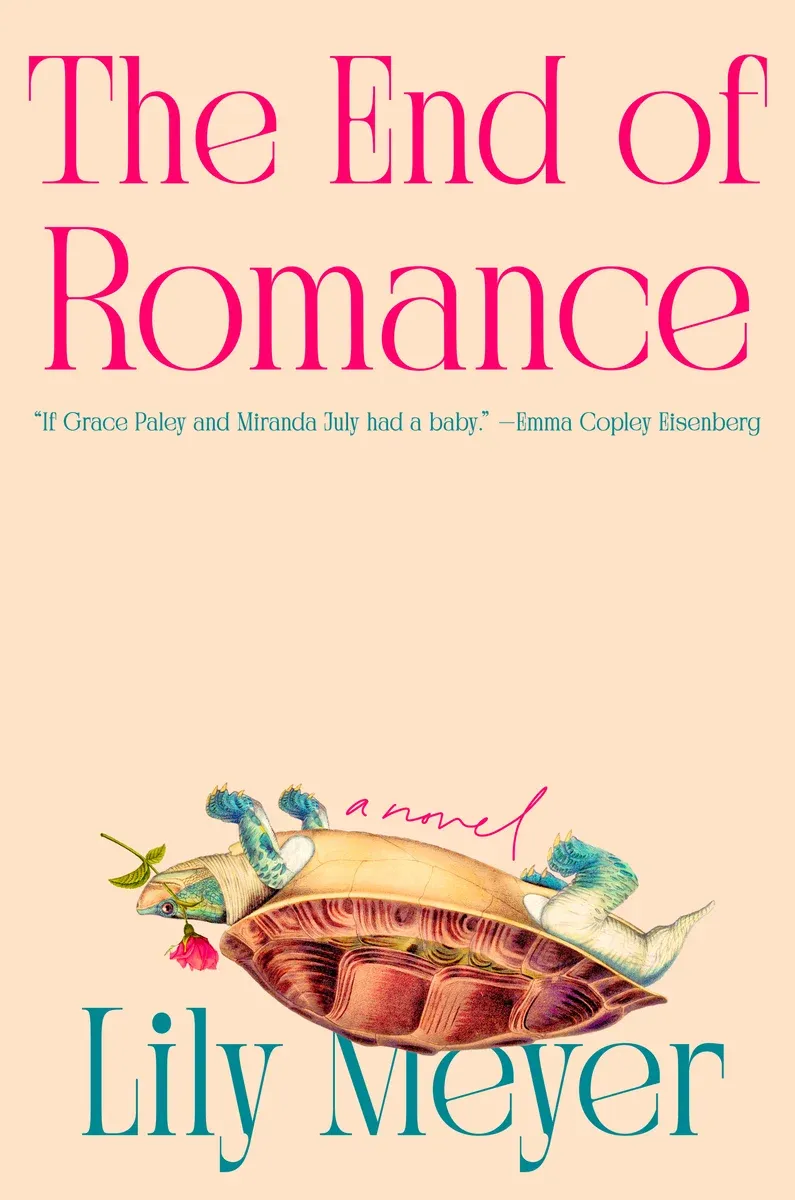
The End of Romance by Lily Meyer
Lily Meyer has said that the heroine of her second novel is named Sylvie Broder, after Broder, the protagonist in Isaac Bashevis Singer's Enemies: A Love Story, a 1966 novel about Holocaust survivors' guilt and subsequent girl problems. But I also like to think she invokes poet and novelist Melissa Broder, who is a master of writing a sex scene that's both hot and kinda sad.
The End of Romance is a big, smart, funny book about PTSD and shame, even though the latter two words are just about never used in the novel. Sylvie, the granddaughter of Holocaust survivors who were adamant about enjoying life to the fullest, escapes an abusive marriage determined to never again be trapped that way. Sylvie gives up romance novels and becomes consumed by "the fun of turning other people's ideas into her own." She then goes to grad school for philosophy at the University of Virginia, where she desperately tries to develop a coherent philosophy on the way to conduct her love life that's based on privacy and a lot of compartmentalization: "It was Sylvie's belief, after two years of a master's and four years of not living with Jonah, that not only marriage but any public or public-inspired performance of relationships or sexuality–any romance–at once kept women from flourishing and corroded true love," AKA The End of Romance. What could go wrong??
Sylvie is the kind of character who is both so lovable and so foolish that I've seen many Goodreads reviews that involve readers wanting to grab Sylvie by the shoulders and shake her. She's the kind of narrator who is wise about just about everything in the world except herself. It is so fun to watch her relationships with two different men make her question everything she thought she knew about how a straight woman is supposed to be in the world.
l'll be talking to Lily tomorrow at Books Are Magic and I'm going to ask her about a whole variety of things: imaginary friends, romance as a genre, Me Too, Judaism in America, the allure of Miami, how to write a sex scene, and whether AI can be taught to think morally. Please join us!
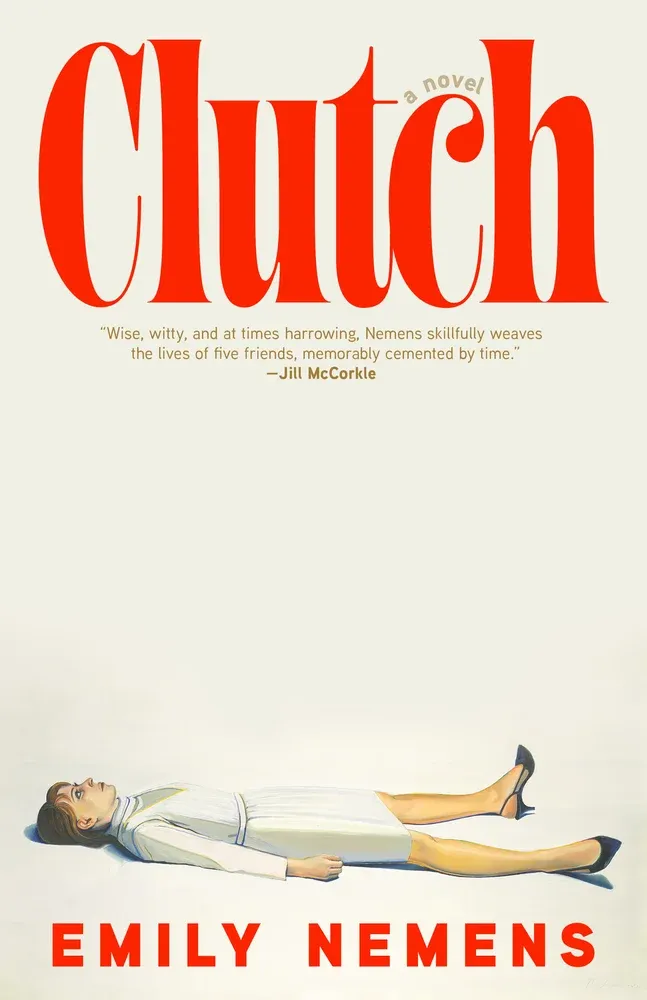
Clutch by Emily Nemens
The minute I knew that one of the principle characters in Emily Nemens's second novel was named Gregg, I knew what I was in for and I loved it. The character may have been named for the poet Linda Gregg, but her name also invokes Gregg, the glamorous aspiring actress from Rona Jaffe's The Best of Everything. Jaffe's novel, along with Mary McCarthy's The Group and maybe even a little Jacqueline Suzanne's Valley of the Dolls, is what Nemens is going for here in writing a big fat novel that follows the lives of a group of modern women as they navigate young adulthood.
We first meet the five friends who graduated from college together in the early aughts in Palm Springs for a 40th birthday weekend. We see them together and in their specific roles within their group, and then we see who they are in their own vividly drawn stories, when they're not reminiscing about old boyfriends and Britney Spears. There's Carson, a novelist and tutor in Brooklyn who is haunted by a family secret; the aforementioned Gregg, who's a former actress turned Texas politician reminiscent of Wendy Davis; Reba, a former high-powered consultant who desperately wants to be a mother; Bella, a mom and lawyer on the partner track whose big case revolves a Four Loko type of beverage; and Hillary, an ENT who struggles to balance work and motherhood even as her husband struggles with addiction. The omniscient narration of Clutch is really a feat – I feel like I got to know what was going on in the heads of all five main characters even as the narrator steps back and tells us what will happen to them in the future.
Clutch is about a lot of things, but I really enjoy its take on how it's impossible to survive into adulthood without making some moral compromises. We live under capitalism, after all. But, as we know, work won't love you back. Will husbands? This is just a me thing and not a flaw of the book but I'll say it anyway: one day I would like to read a book about a group of women who like each other's significant others because they're likable. I'm sorry to pull a #NotAllMen; I know I'm biased because I like and I love my partner. I would concede that, as depicted in Clutch, the institution of marriage and women's roles in and out of the home in general have not much evolved since the age of The Feminine Mystique. Sad but true.
Heated Rivalry is not everything
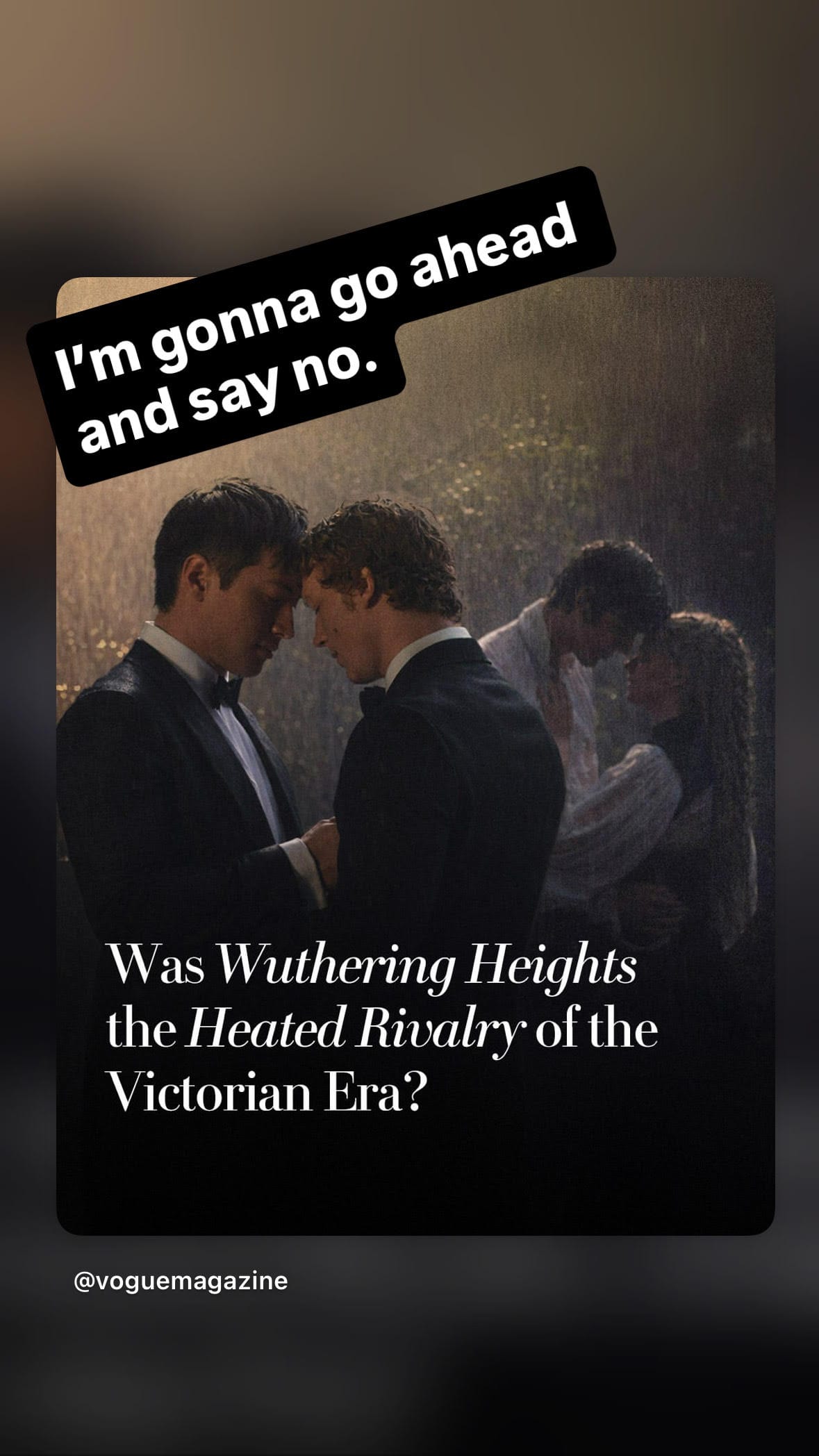
Two weeks ago I wrote about Heated Rivalry for my column about Lit Hub about my fear that every other book would be compared to it. I was really not expecting Wuthering Heights to be one of them.
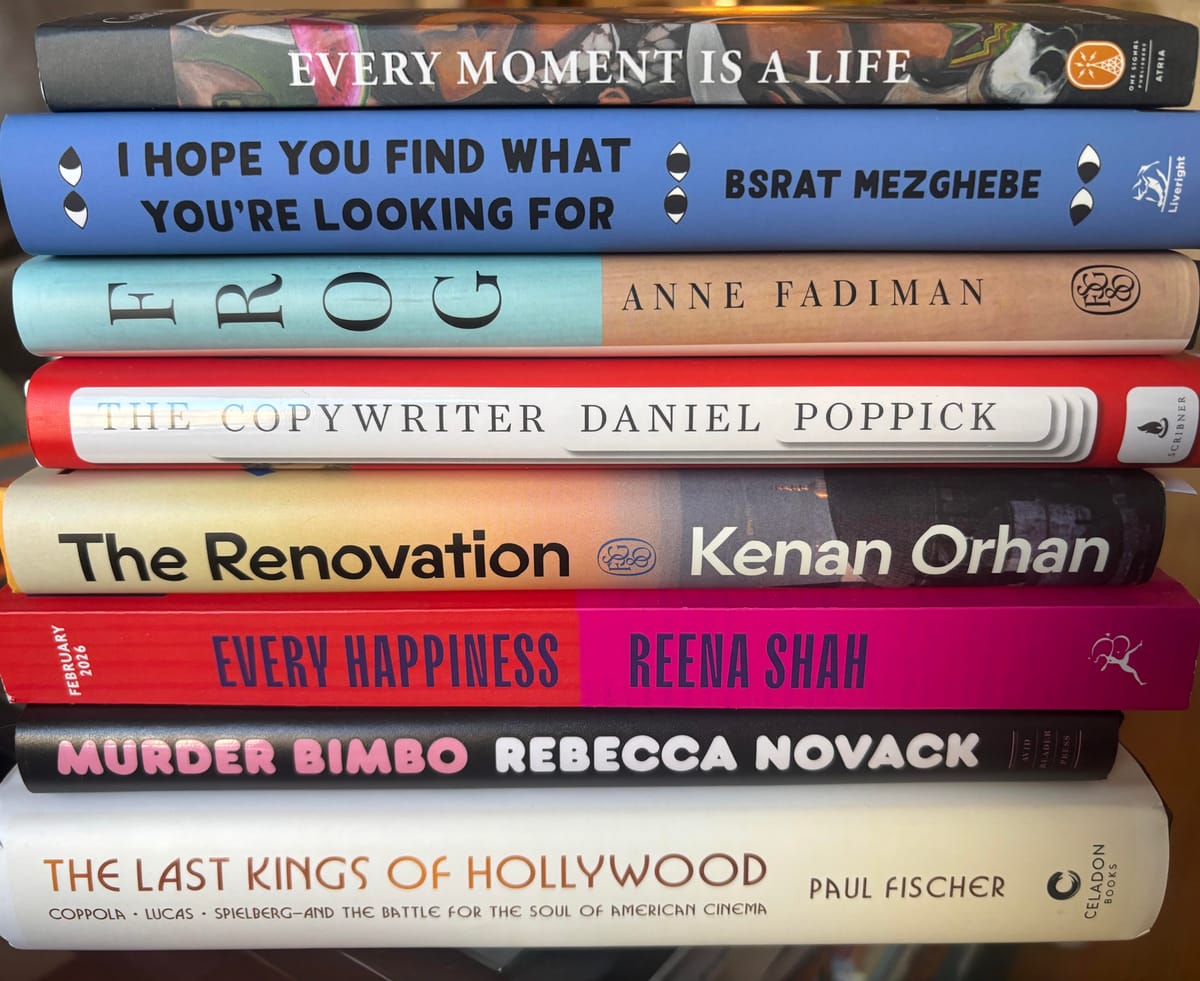
New releasers, 2/10
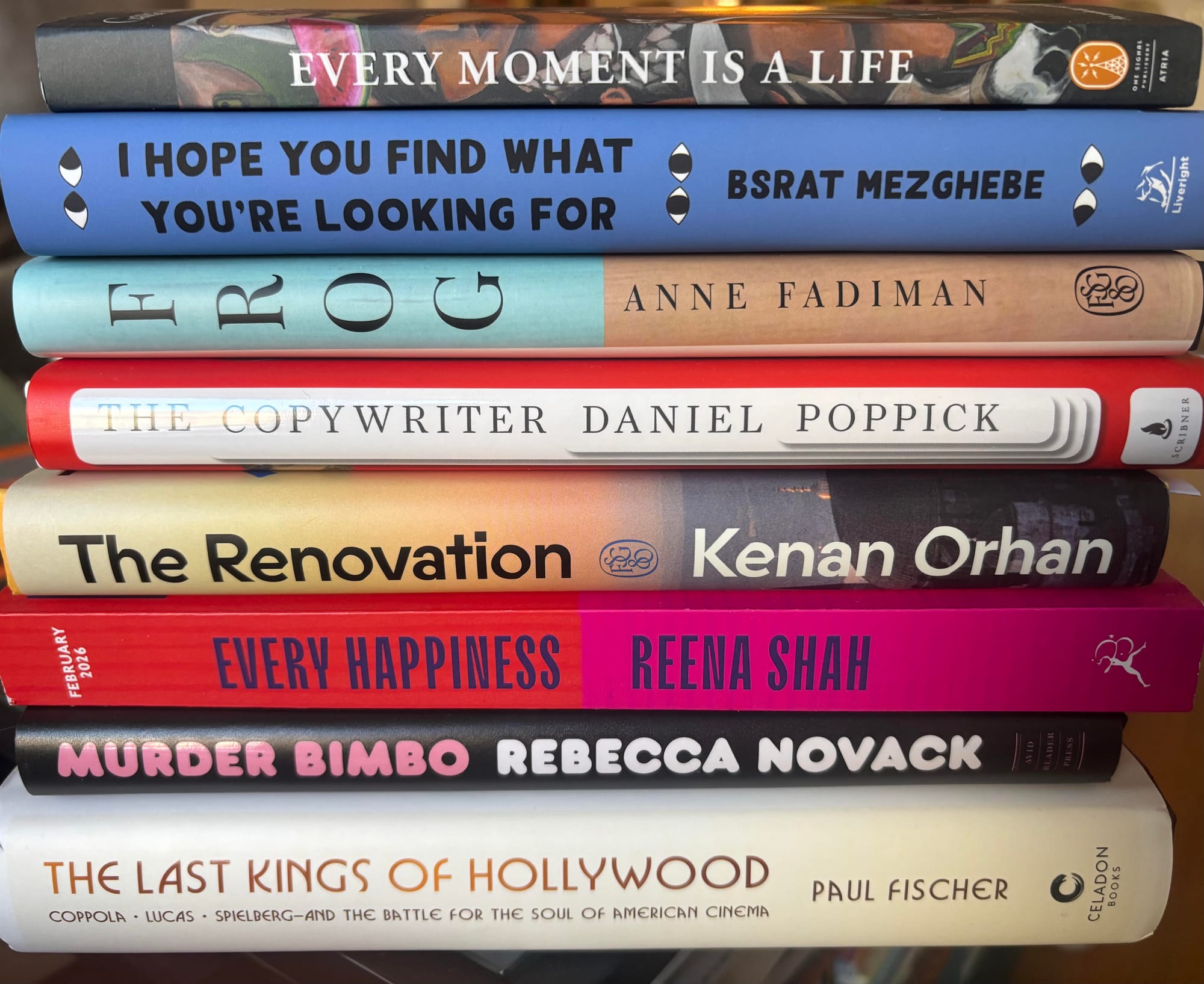
Every Moment Is a Life: Gaza in the Time of Genocide edited by susan abulhawa with Huzama Hubayeb
I Hope You Find What You're Looking For by Bsrat Mezghebe
Frog: And Other Essays by Anne Fadiman
The Copywriter by Daniel Poppick
The Renovation by Kenan Orhan
Every Happiness by Reena Shah
Murder Bimbo by Rebecca Novak
see issue 89 for my take on Murder Bimbo
The Last Kings of Hollywood: Coppola, Lucas, Spielberg—and the Battle for the Soul of American Cinema by Paul Fischer
In Sickness and in Health: Love Stories from the Front Lines of America’s Caregiving Crisis by Laura Mauldin
The Body by Bethany C. Morrow
This Is Not About Us by Allegra Goodman
Hannibal Lecter: A Life by Brian Raftery
The Lost and the Found: A True Story of Homelessness, Found Family, and Second Chances by Kevin Fagan
Everyday Movement by Gigi L. Leung, translated by Jennifer Feeley
The Final Problem by Arturo Pérez-Reverte, translated by Frances Riddle
Eradication: A Fable by Jonathan Miles
The Boundless Deep: Young Tennyson, Science and the Crisis of Belief by Richard Holmes
She Made Herself a Monster by Anna Kovatcheva