The Maris Review, vol 93

The theme of this week is reappearances
What I read this week
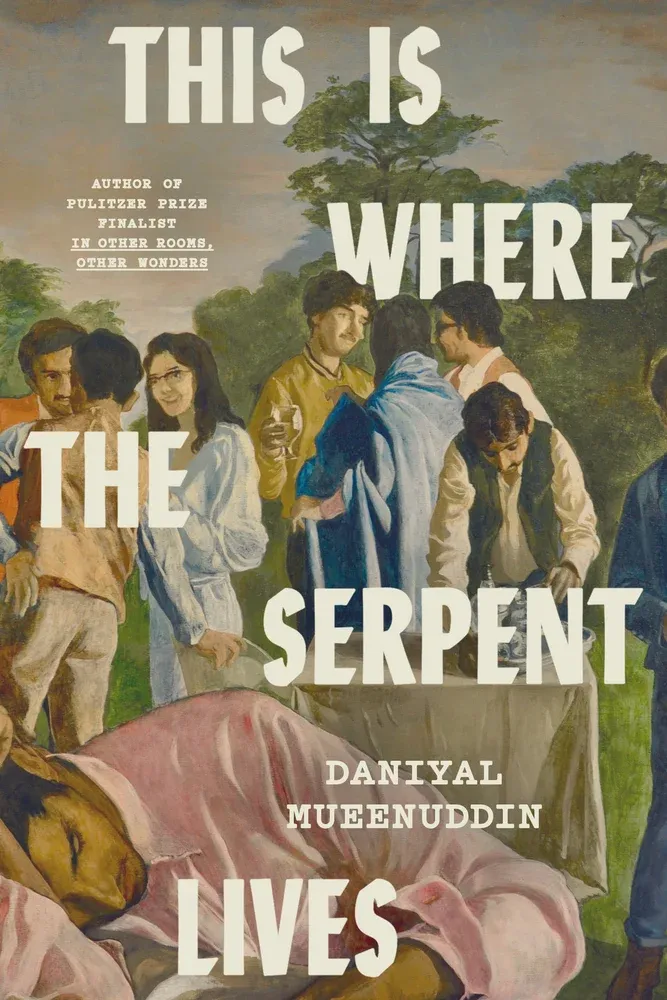
This Is Where the Serpent Lives by Daniyal Mueenuddin
As precise and epic in scope as the most celebrated Russian novels, This Is Where the Serpent Lives is a modern history of Pakistan whose characters will likely haunt me for a long time. Daniyal Mueenuddin's debut novel (after his short story collection In Other Rooms, Other Wonders), is told in four distinct parts, each of which follows a different main character and certain set of ambitions. It's a systems novel about who gets to have ambition in the first place in a country where a person's caste still determines most of their outcomes.
The first part follows Bayazid, an orphan abandoned in the Rawalpindi bazaar in the 1950s, and how he rises to become the chauffeur to a powerful colonel. The next section involves Rustom, a young man who, after being educated abroad in America, returns to his family's land in South Punjab as master, where he has to learn all of the large and subtle ways he's meant to treat the people around him (his servants, his politicians, his muscle) to get what he wants. Rustom's cousins Hisham and Nessim get the third section, in which the brothers go to Dartmouth and fall in love with the same woman with lifelong consequences. And the final section, certainly the most devastating, is the story of Saqib, the son of a gardener who rises to become Hisham's house servant and then to becoming the leader of a new farming enterprise on one of Hisham's estates. The fellow servant who served as Saqib's mentor? That very same Bayazid from the first section.
Taken together, the individual sections become a about large scale corruption (in government, in policing) as well as the smaller scale ways (the "accumulations of little thefts") that ensures that everyone who lives under an archaic feudal system are morally compromised, some more than others. When Saqib gets in trouble, he watches with devastation as his gardener father fails to defend him: "He could not imagine making any protest, not even to protect his own son, bent to obedience all these years, all these people here on the farm the same, all implicated in these histories." After seeing the humanity in each and every character Mueenuddin portrays, it's devastating to be reminded that systems of oppression will always trump the self-determination of individuals.
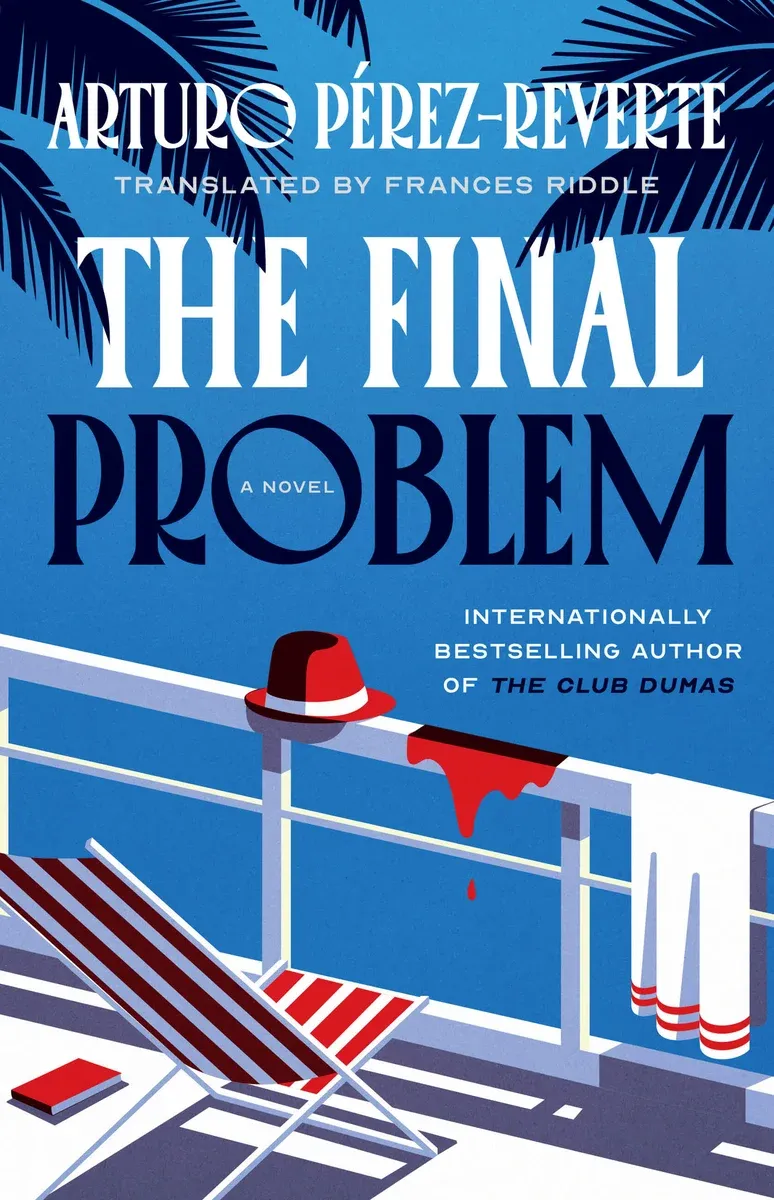
The Final Problem by Arturo Pérez-Reverte, translated by Frances Riddle
It's 1960 and someone has just been murdered on a smaller Greek island just off of Corfu, where a storm has stranded a group of people at the one hotel on the island. An ode to Arthur Conan Doyle, The Final Problem is a classic murder mystery with a twist – the detective who solves the case is not a detective, he only played one in films.
Ormond Basil is a 65 year-old British gentleman and former film star who did some Shakespeare and had many – roles, but most famously played Sherlock Holmes in 15 films. People on the street recognize him immediately but most only know the name of his most famous character. Basil hung out with all of the great actors of Old Hollywood and he is great at name-dropping. He had a deep friendship with Larry Olivier, had a brief fling with Marlena Dietrich, that kind of thing. Despite his successes, he has been pushed aside for younger blood lately, along with so many of his contemporaries (there is a Brando dig).
So when a guest at the hotel dies under suspicious circumstances, Basil decides to take it upon himself to investigate, using all of the skills he developed while researching his most famous character. And for some reason all of the other characters... let him? He even recruits a Spanish thriller writer to be his Watson.
They embark on an intellectual murder mystery just like the ones they used to read, before noir became all the rage and the detectives were all broken men with whiskey in their desk drawers and guns in their pockets (as opposed to Holmes who just injected cocaine when he was bored). The best thing about Conan Doyle and Agatha Christie's genre is that hey had explicit rules. Which means that every detective who's come after has been able to play with those rules (see also Everyone in My Family Has Killed Someone) and twist them to suit their needs.
I'm not sure I was as invested in all of the details of Basil's detective work (I hate when these novels insist that they've laid out all of the necessary clues for the reader to solve the murder!) as much as I was in his grappling with playing at a role with real life consequences. In Basil's world, murder is tragic but investigating murder(s) is exhilarating, especially if you have a tendency towards narcissism and nostalgia. This is a fun one.
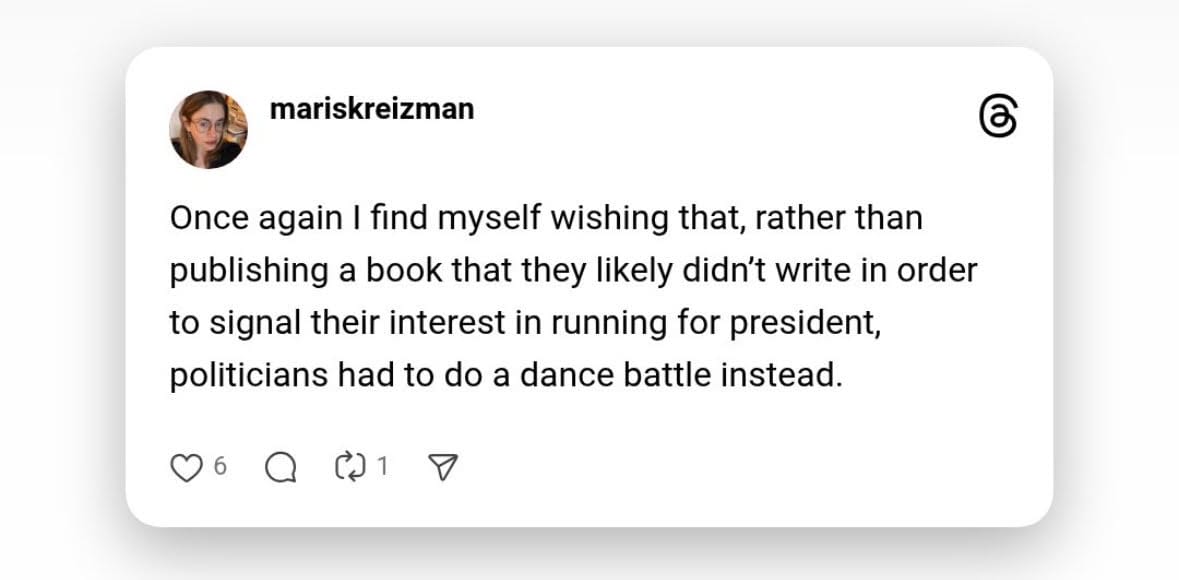
This one goes out to Gavin Newsom and Josh Shapiro
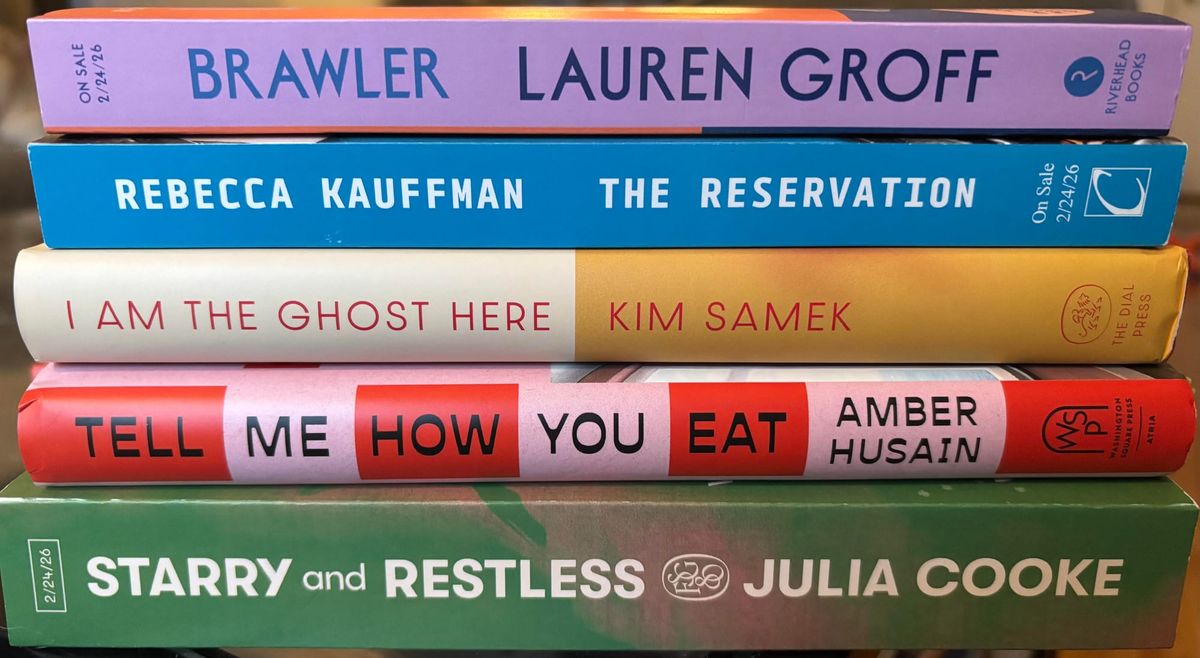
New releases, 2/24
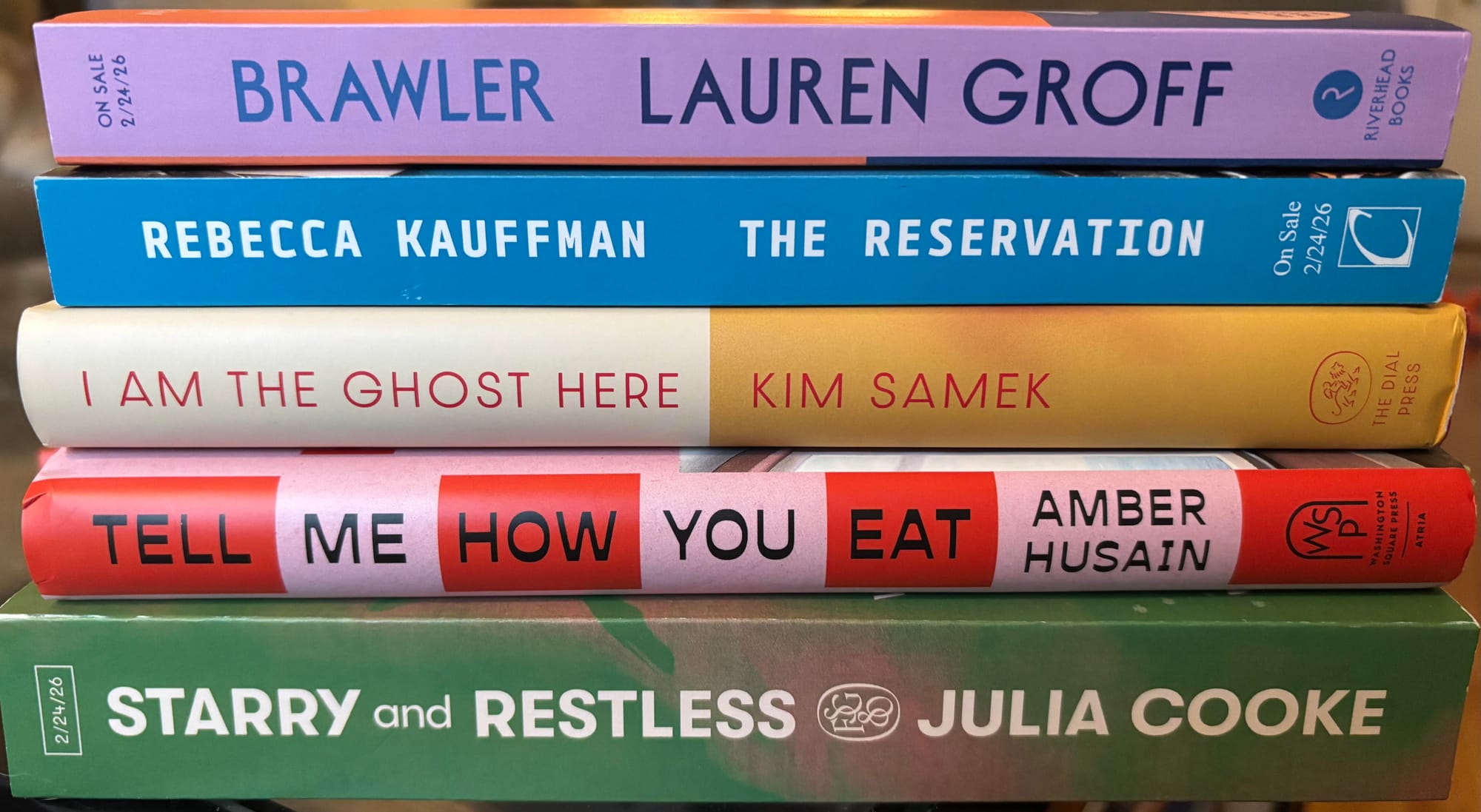
Brawler by Lauren Groff
The Reservation by Rebecca Kauffman
I Am the Ghost Here by Kim Samek
Tell Me How You Eat: Food, Power, and the Will to Live by Amber Husain
Starry and Restless: Three Women Who Changed Work, Writing, and the World by Julia Cooke
A World Appears: A Journey Into Consciousness by Michael Pollan
Kin by Tayari Jones
Defiance: A Memoir of Awakening, Rebellion, and Survival in Syria by Loubna Mrie
More Than Enough by Anna Quindlen
The Death of Trotsky: The True Story of the Plot to Kill Stalin's Greatest Enemy by Josh Ireland
After the Fall by Edward Ashton
You Better Believe I'm Gonna Talk About It by Lisa Rinna