The Maris Review, vol 95

The theme of the week is schadenfreude
What I read this week
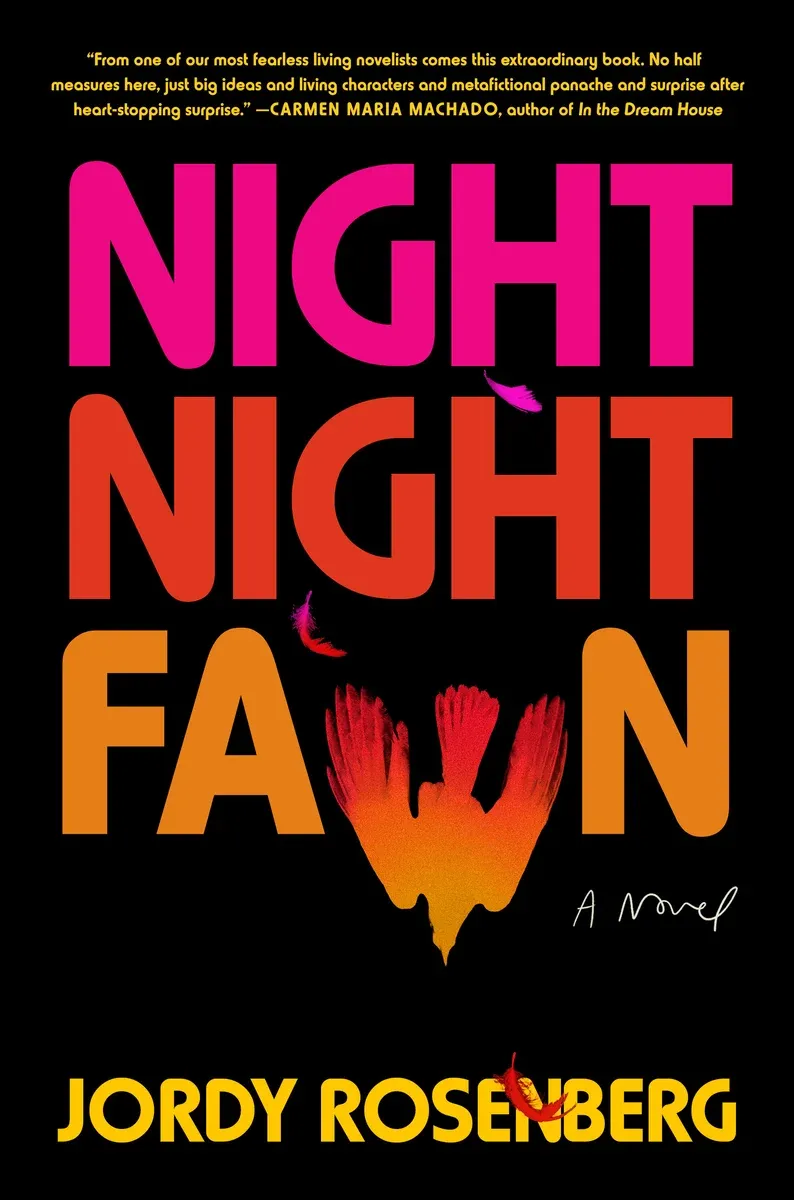
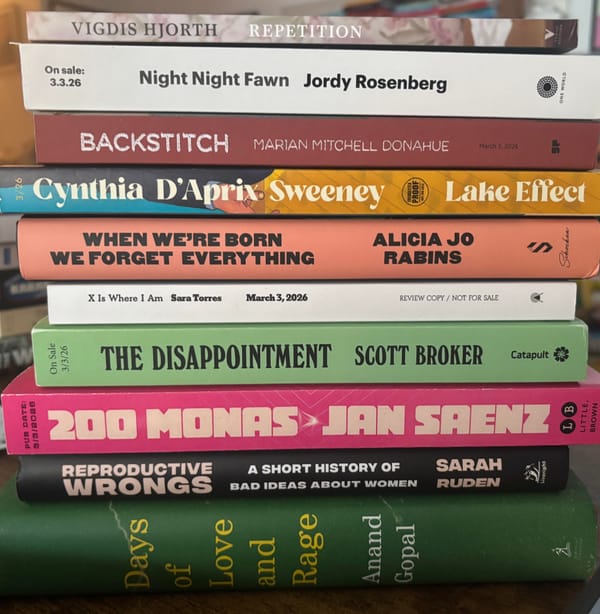
Night Night Fawn by Jordy Rosenberg
Why aren't more people screaming about this book? What an accomplishment for Jordy Rosenberg to change the entire tenor and tone of his work after his excellent debut, Confessions of a Fox, which is reminiscent of Possession in the best way. Night Night Fawn is an entirely different beast, a character study of an older woman (based on his mother) dying in her Upper East Side (but east of Third Ave) apartment. Jordy's latest accomplishment is to portray this woman, a monster and a bigot in many ways, as someone deserving of our attention and maybe even empathy.
The book is mostly composed of the reminiscences of Barbara Rosenberg, a self-described yenta, a bargain shopper, a film buff, a wannabe social climber, and an incredibly wonderful conversationalist and vivid storyteller. Here she is describing seeing her future husband's penis for the first time while sitting in the back row at a movie theater showing Exodus: "Stephen's prick was a brutal, wealthy cardiologist in Pompano Beach, a thick golfer in polo shirts and gold chains." She is so funny and so fun to be around.
She is being tended to by her trans son, who is doing tons of thankless work even though Barbara still refuses to refer to him as anything but her daughter. Dead naming abounds. She is also an avid Zionist, like so many good liberal Jews. Here she is on the establishment of Israel: "If someone had asked me then, what about the Arabs who already lived there, I would, like Rhett Butler, have said, 'Frankly my dear, I don't give a damn.'" Her transphobia and colonizer mentality come to a head in the most destructive way, but even so, I couldn't help but love her.
Added bonus: I split my time between reading the book and listening to the audio, which Jordy narrates himself to great effect. I was awed by the generosity of both his writing and his performance in portraying a character based on his own mother, from whom he was estranged until her final days, with such depth and sympathy and humor.
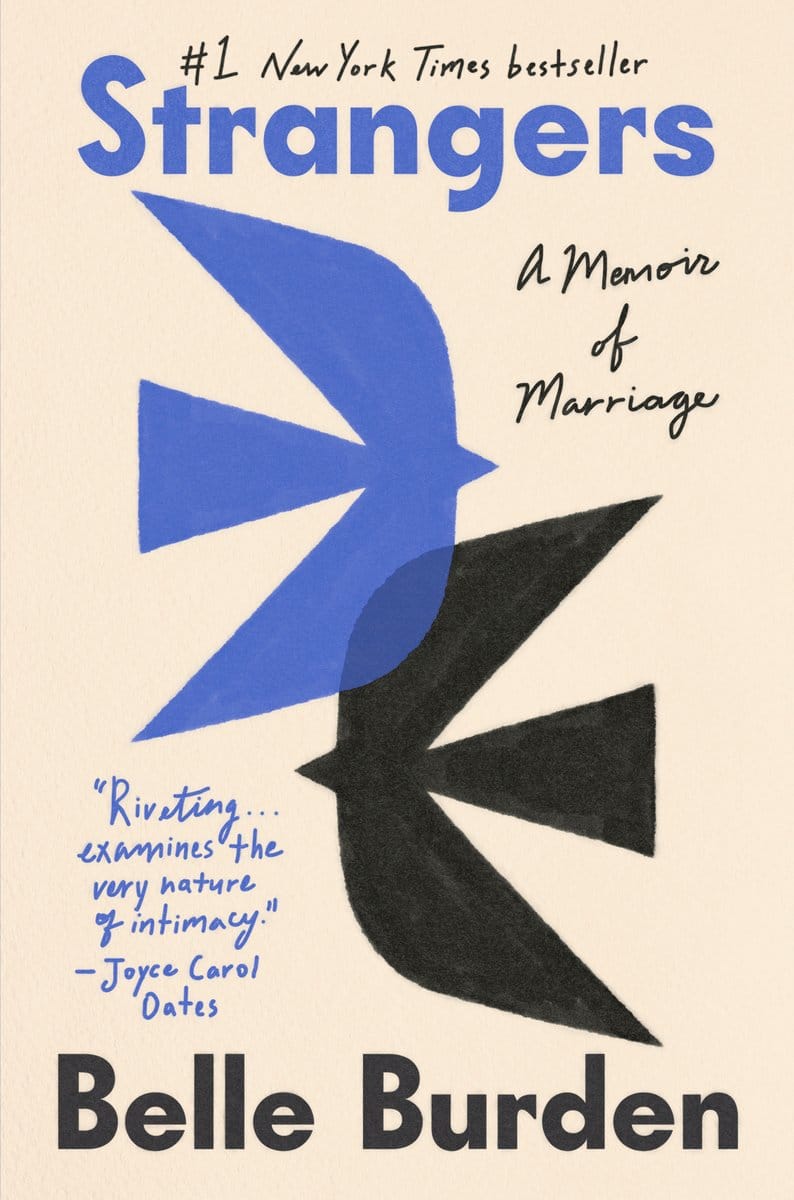
Strangers: A Memoir of Marriage by Belle Burden
I had resisted this memoir for the past month or so, a story about a socialite whose husband, after 20 years of marriage, abruptly asks for a divorce during Covid, wanting nothing to do with his wife or children any longer. There are so many beautifully written, exquisitely rendered memoirs of divorce written by authors who did not have oodles of generational wealth at their disposal. The ones who worried they wouldn't be able to afford a divorce, who risked their livelihoods to pay rent on a 2-bedroom apartment alone.
Still, people from all over my life raved about Strangers, the book people, the normies, everyone in between. And it's not like I don't devour all sorts of fiction about the ultra-rich. So I decided to discard my own biases and find out what was so appealing.
Holy shit, the first 50 pages are so are scintillating. This is a story about a man so cold, he asks his soon to be ex-wife to make him a sandwich while he says goodbye to their children. The perfect husband revealed to be a weird, unfeeling robot of a man. I think for anyone who's ever loved anyone else, there's a fear that the person you think you know better than anyone else, and vice versa, turns out to be a mystery. This is the book's most interesting project: Both the author and the reader have to figure out if something extraordinary had happened to change Belle's ex-husband, or if he was always a horrible fucking wanker. Yes, maybe down the line we'll discover that he has a behavior-altering brain tumor or something. But I think the way that he was always a workaholic who expected his wife to raise the kids while he tended to his Rolex collection is a good clue.
The other question that the book raises but maybe doesn't address thoroughly enough is this: is attraction to unfaithful types a genetic trait? Belle's grandmother, Babe, was famously the subject of a short story by Truman Capote (the Ryan Murphy depiction was only semi-fun) about a man based on her husband who has sex with the governor's wife in his marital bed. Belle's father also cheated on her mother. Is it generational trauma if a husband can't keep it in his pants?
Belle is a great writer. And by all accounts, a noble enough rich person: her work as an immigration attorney is much appreciated. Still, I had trouble feeling for her. Has my class rage made it so I can no longer empathize with a very wronged multimillionaire? A very wise friend of mine said, "I felt like I could feel schadenfraude and a sense of superiority without shame." I think she nailed it.
This Thursday I get to be shrill

I'm moderating a panel about AI in the literary world on Thursday. My main question to all of the panelists will be: WHY? How has AI made anything about the literary world better? Or the world in general? Why is it being shoved in our faces constantly when it's environmentally destructive and, as Emily M. Bender and Alex Hanna wrote in The AI Con from which I plan to quote liberally "threatening stable careers and replacing them with gig work, slashing personnel in government, cheapening our social services, and degrading creativity." How do we push back effectively?
New releases, 3/10
Another huge week!
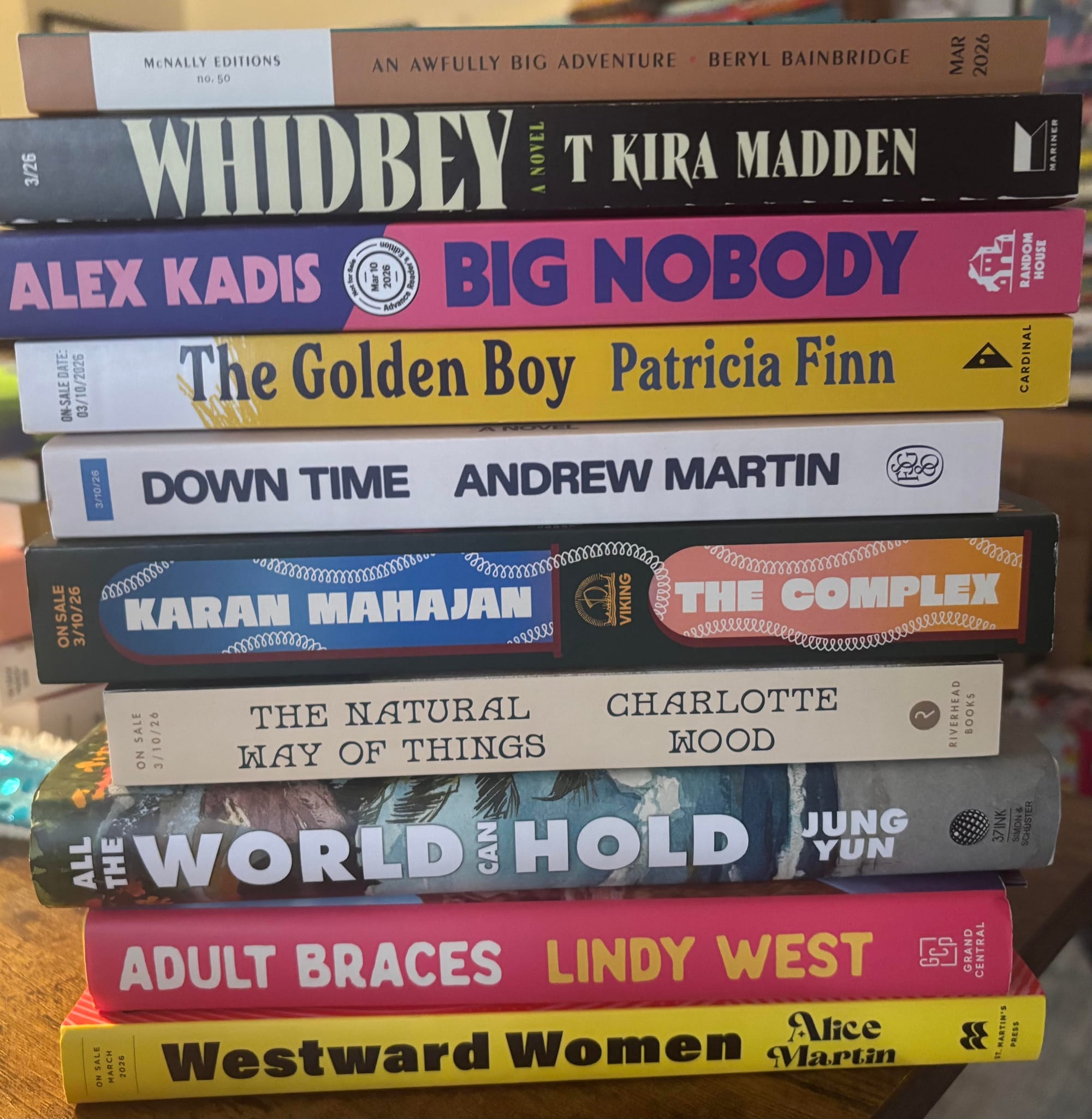
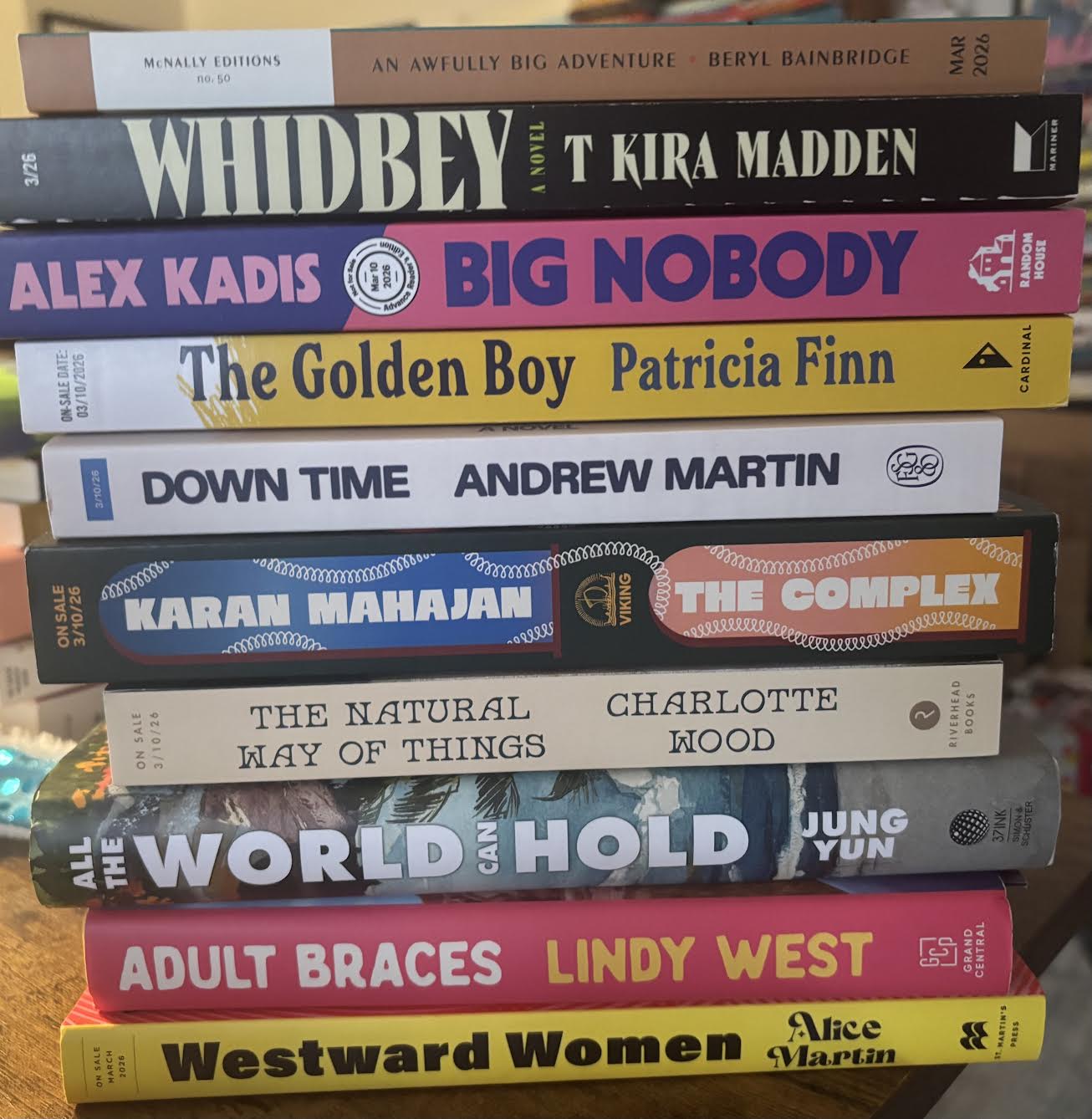
An Awfully Big Adventure by Beryl Bainbridge
Whidbey by T Kira Madden
Big Nobody by Alex Kadis
The Golden Boy by Patricia Finn
Down Time by Andrew Martin
The Complex by Karan Mahajan
The Natural Way of Things by Charlotte Wood
All the World Can Hold by Jung Yun
Adult Braces by Lindy West
Westward Women by Alice Martin
Party Tricks: Easy, Elegant Recipes for Snacking and Hosting by Anna Hezel
Black. Single. Mother: Real Life Tales of Longing and Belonging by Jamilah Lemieux
Killers of Roe: My Investigation Into the Mysterious Death of Abortion Rights by Amy Littlefield
Kids, Wait Till You Hear This by Liza Minelli
Spoiled Milk by Avery Curran
Haven by Ani Katz