The Maris Review, vol 107

The theme of the week is crossing boundaries and borders; it's so on the nose that I'm a little ashamed
What I read this week
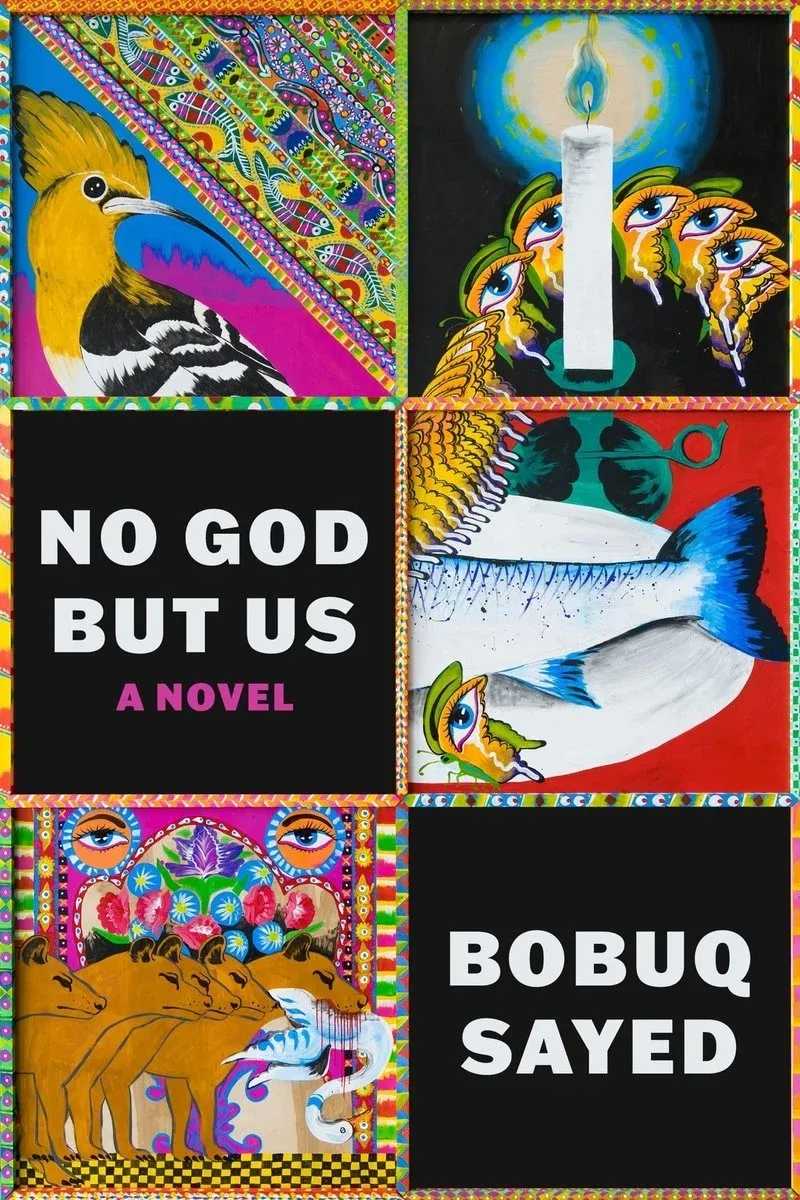
No God But Us by Bobuq Sayed
"Istanbul is where the people displaced by all the wars end up. They're in limbo here for years, sometimes, waiting for their humanitarian asylum claims to get processed by the UNHCR."
A stunning debut novel about finding chosen family in liminal spaces, No God But Us is the story of two men whose lives intersect in Istanbul for a short period of time. Delbar is an Afghani American who leaves home to live with a forward-thinking aunt in Turkey when his family in a DC suburb finds out that he's an aspiring drag queen (his drag queen name was meant to be Sharia Raw, and it's a cruel but crucial trick of narrative that we never get to see her perform in all her glory). Mansur is an Afghani refugee who lives with his family for a time in Iran before fleeing to Istanbul after being kicked out of his home.
They meet at PeaceMeals, a weekly dinner for queer and trans refugees run by Leif, a German man who is mostly good but is maybe not the saint he makes himself out to be.
In Mansur, the very first other Afghani gay man he'd encountered, Delbar sees what he hopes to be an equal. He is captivated immediately. There is much yearning! But because the novel is told from Delbar and Mansur's alternating points of view, it becomes apparent immediately that Mansur's life experiences are entirely different from Delbar's. The stakes are not the same at all, even if the passions might be, at least for a moment. Author Bobuq Sayed, I think, lets his readers (and Delbar himself) hope that the novel will turn out to be one of those life-changing, inspiring, outcasts-coming-together-to-defy-odds stories that a Western audience might crave. But Sayed defies expectations and gives us a messier, more realistic story, but one with great moments of beauty all the same.
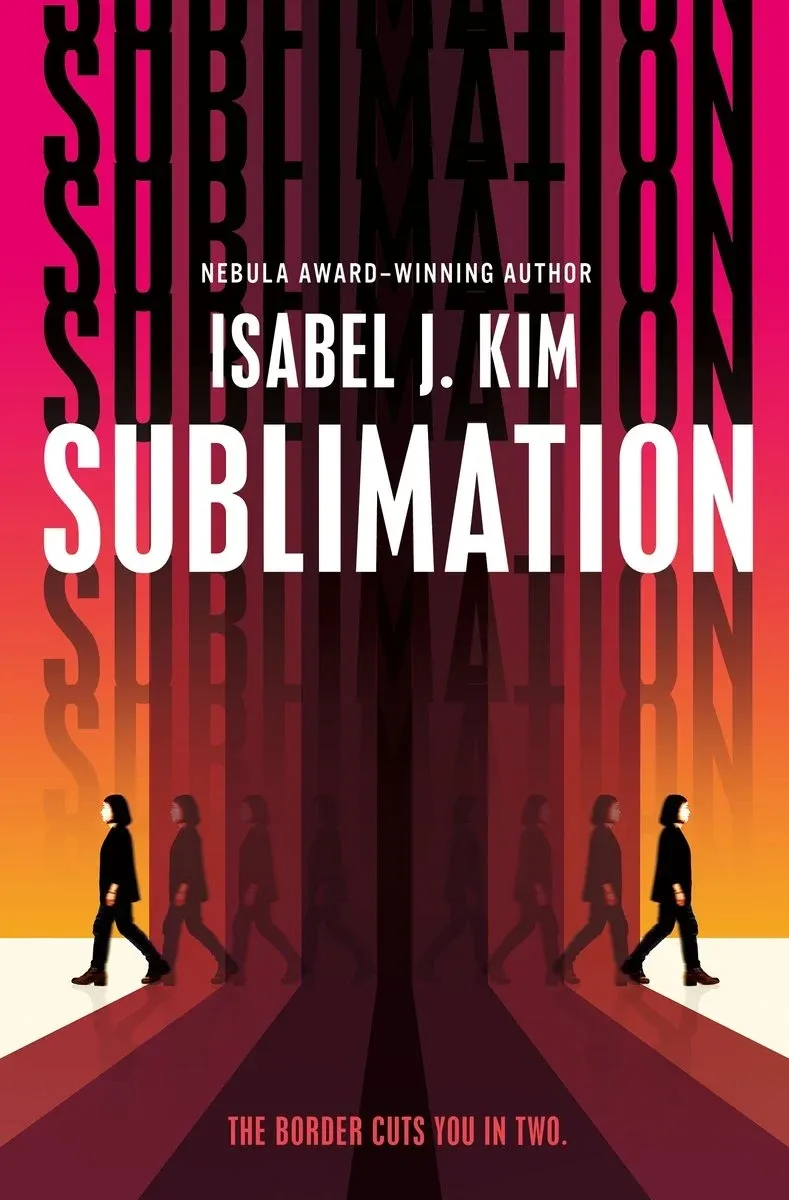
Sublimation by Isabel J. Kim
Funny story: last year I went to Penn, my alma mater, to sit on a panel of published authors. We were all middle aged, at different stages of disillusion with the publishing industry, trying to give students some real talk – "you can't expect the money you make from writing books to support you full time" – that kind of thing. And then there was Isabel Kim. A very recent Penn Law grad and a less recent Penn grad, she had just received a life-changing advance for her first novel and had already sold the film rights. Okay then. So I watch in envy and awe as this book comes into the world with all of its hype, thrilled to find that the novel is really good.
Isabel Kim's debut straddles the commercial and the literary in a way that made me think about if she had a different imprint and a different cover that had flowers on it, then there would have been all of this praise about how she "transcends" genre. But going full sci-fi with Tor is the right call.
Sublimation takes place in a world in which immigration doesn't just leave travelers of two minds but in two separate bodies, or instances as they're called here. Immigrants instance when they cross a border they don't anticipate re-crossing anytime soon – one version of their instance goes to the new country and begins a new life, and one stays in the old. Sometimes the two versions keep in touch, sometimes it gets a little awkward.
In the world of the novel everyone knows that Odysseus instanced when he went off to fight the Trojan War; one instance stayed at home with his family, and one is the hero who spends 10 years trying to get back home.
The present action concerns a young woman named Soyoung whose instance took the more-Americanized name Rose when she left Seoul to move to New York City as a child. When their grandfather dies, Rose must return to Korea to sort out his affairs along with her instance Soyoung, this woman who looks like her and acts like her and is her, but is still different. Lots of intrigue and some corporate espionage and a love triangle (square?) follow.
The novel is told in the second person point of view and it really, really works here. "You" becomes a tricky word when there are two of you, always, but they're both you. The novel is difficult to summarize succinctly, but I promise you it all works and absolutely makes sense and tugs heart-strings and thrills.
Ragebait Lit
For Harper's Bazaar I wrote about why some of the bestselling books of the moment by Belle Burden, Lena Dunham, and Caro Claire Burke, bring up all sorts of questions about feminism and where we (mostly white women, I should say) are now.
"When your rights are evaporating, it’s easier to make snap judgments about people you don’t know who share the details of their lives with you—whether you love or hate them—rather than calling your elected representatives again to plead for attention for one of the thousand urgent problems that plague us."
This really broke me
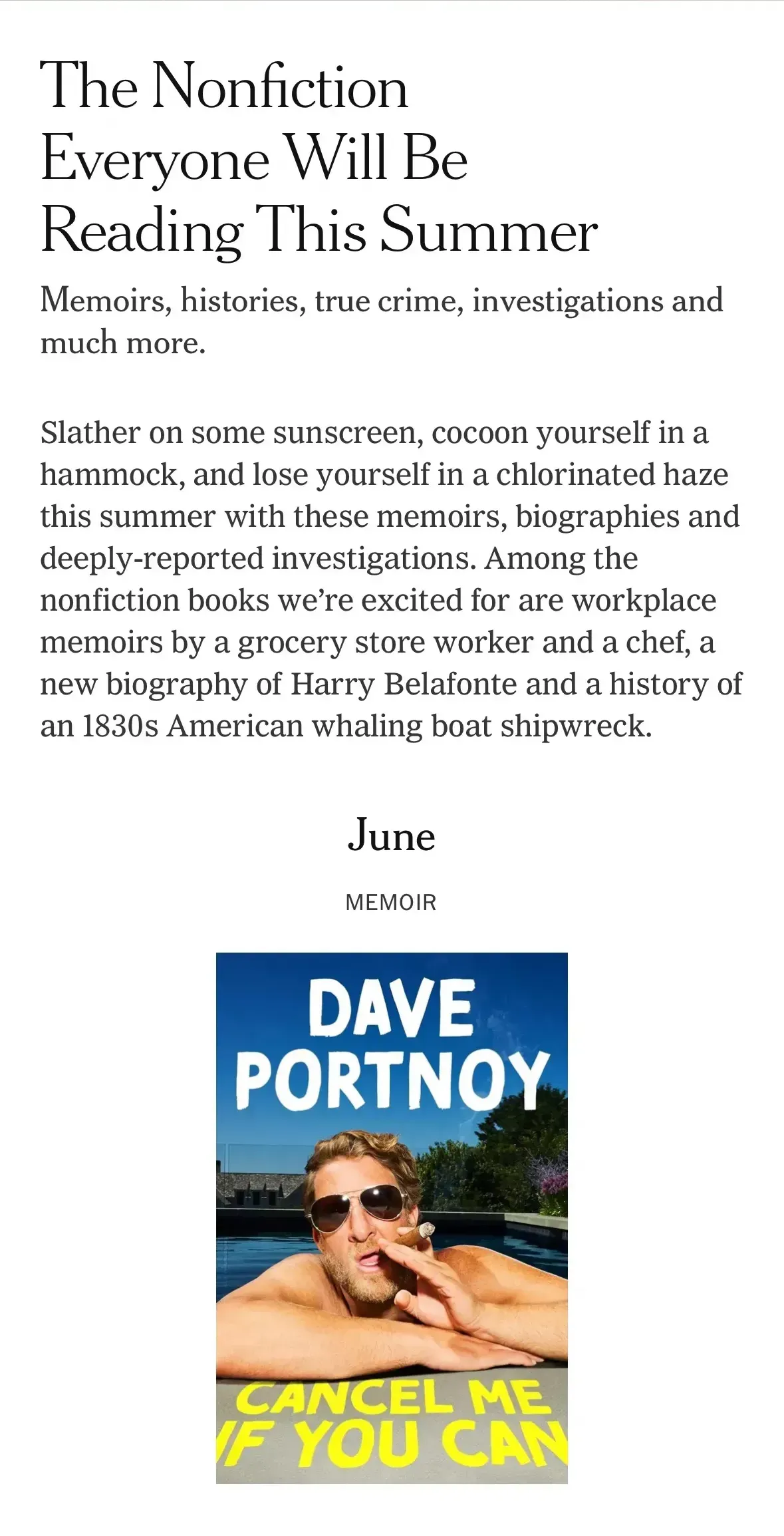
My dream publication, the one I've read religiously for 30+ years or so. I love that they're doing lists (lists get readers to click!), I have no problems with lists. But I hate that they're not even curating the lists, just sticking up what books are coming out with a line of marketing copy. And that face on the cover of that book is one of the most punchable faces in America, and that's really saying something. I hate this timeline.
Something less curmudgeon-y

I really loved the adaptation of Rufi Thorpe's delightful novel. Read about it here.
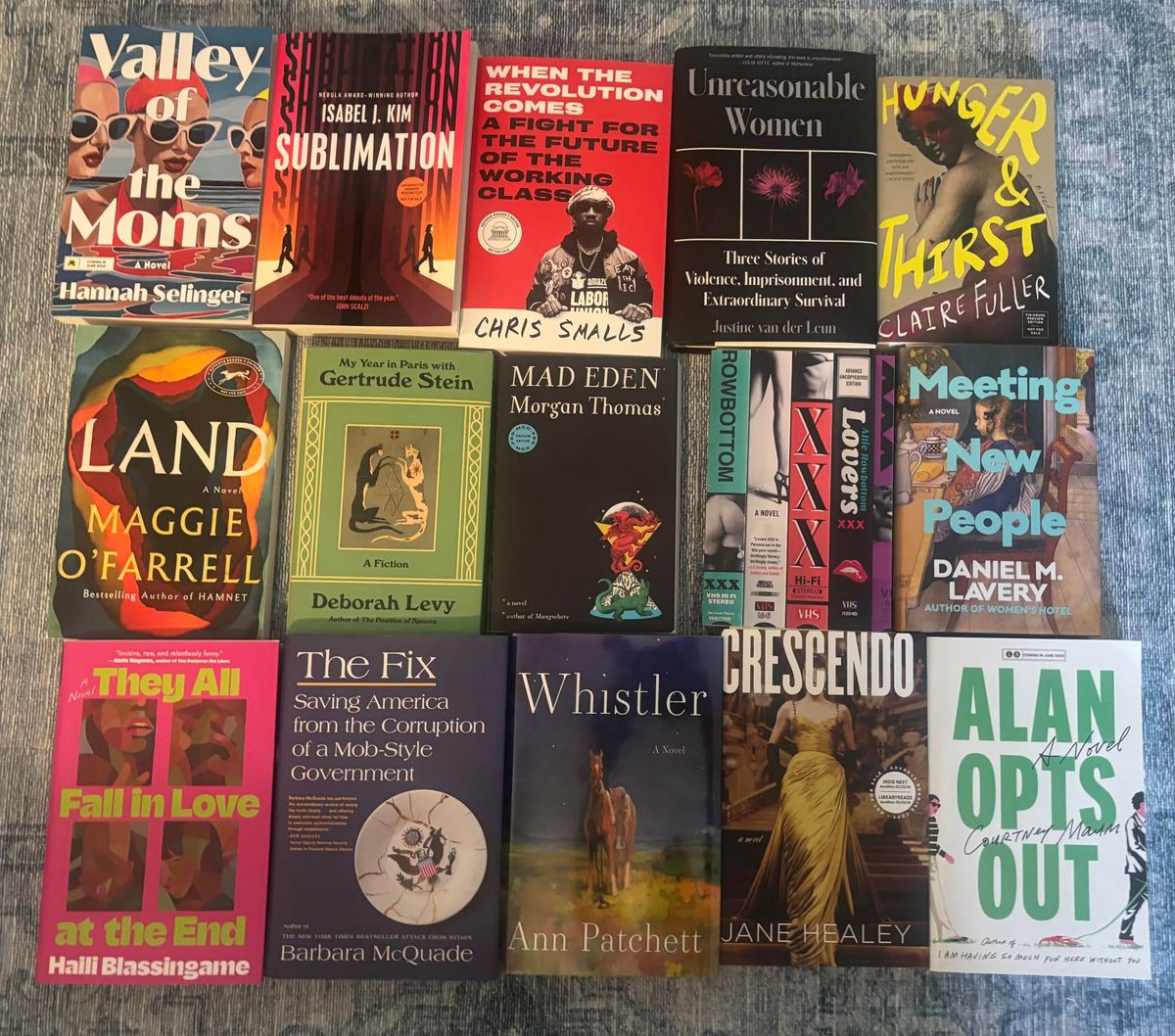
New releases, 6/2
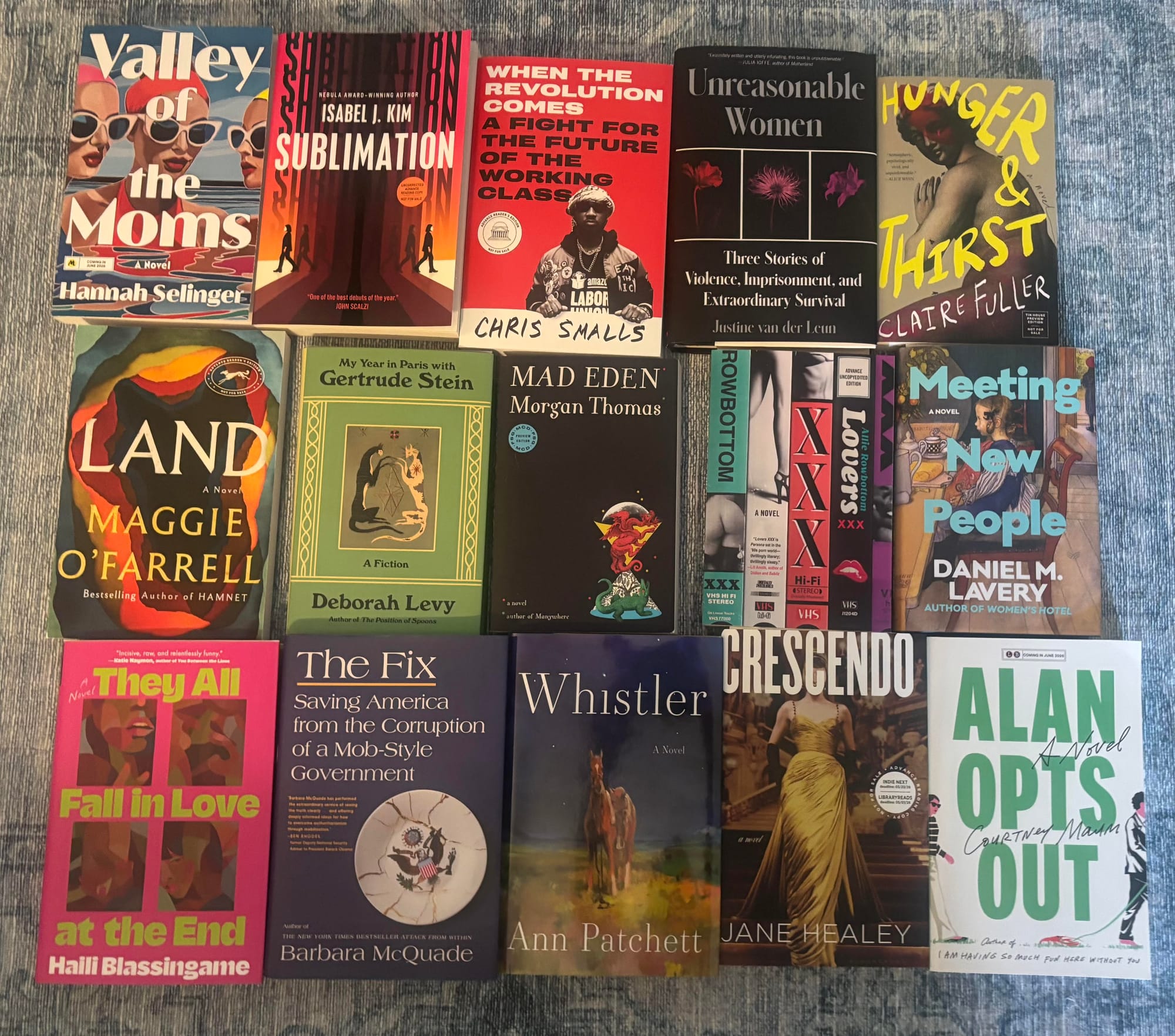
Valley of the Moms by Hannah Selinger
Sublimation by Isabel J. Kim
When the Revolution Comes: A Fight for the Future of the Working Class by Chris Smalls
Unreasonable Women: Three Stories of Violence, Imprisonment, and Extraordinary Survival by Justine van der Leun
Hunger & Thirst by Claire Fuller
Land by Maggie O'Farrell
My Year in Paris with Gertrude Stein by Deborah Levy
Mad Eden by Morgan Thomas
Lovers XXX by Allie Rowbottom
Meeting New People by Daniel Lavery
They All Fall in Love at the End by Haili Blassingame
The Fix: Saving America from the Corruption of a Mob-Style Government by Barbara McQuade
Whistler by Ann Patchett
Crescendo by Jane Healey
Alan Opts Out by Courtney Maum
The Children by Melissa Albert
1873: The Rothschilds, the First Great Depression, and the Making of the Modern World by Liaquat Ahamed
Stolen Revolution: Betrayal and Hope in Modern Iran by Yeganeh Torbati and Bozorgmehr Sharafedin
There's Only One Sin in Hollywood by Rasheed Newson
Girl's Girls by Sonia Feldman
The Typing Lady: And Other Fictions by Ruth Ozeki