The Maris Review, vol 100

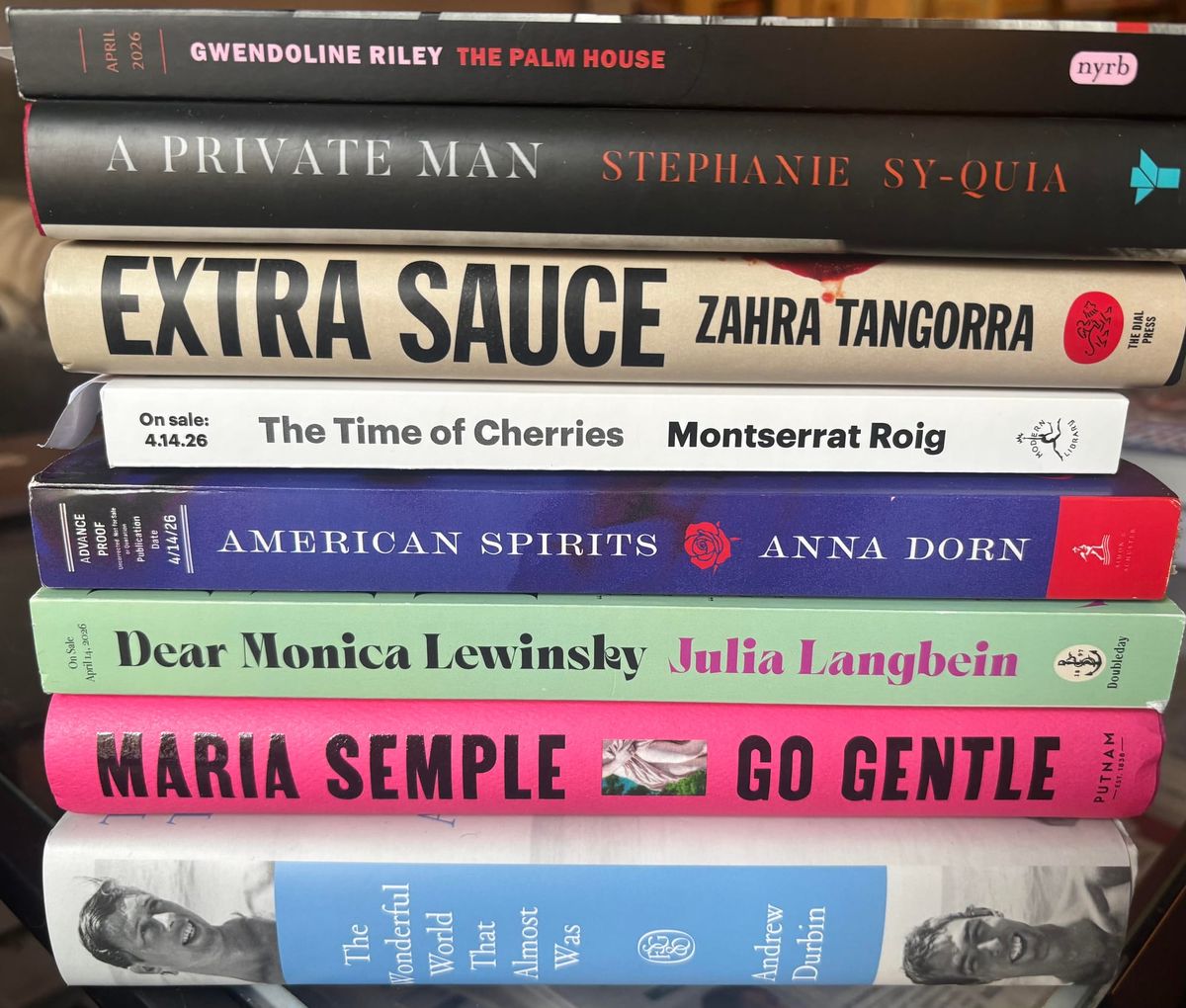
The theme of the week is hurt people hurt people.
What I read this week
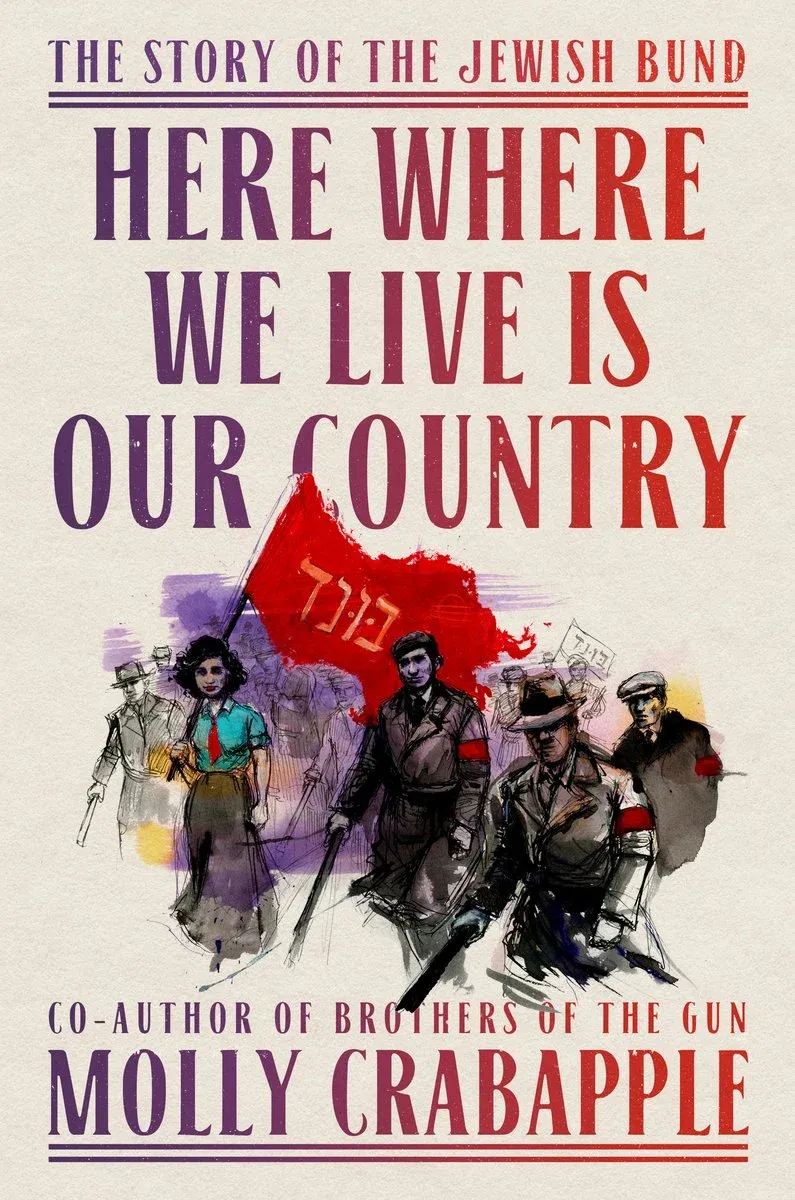
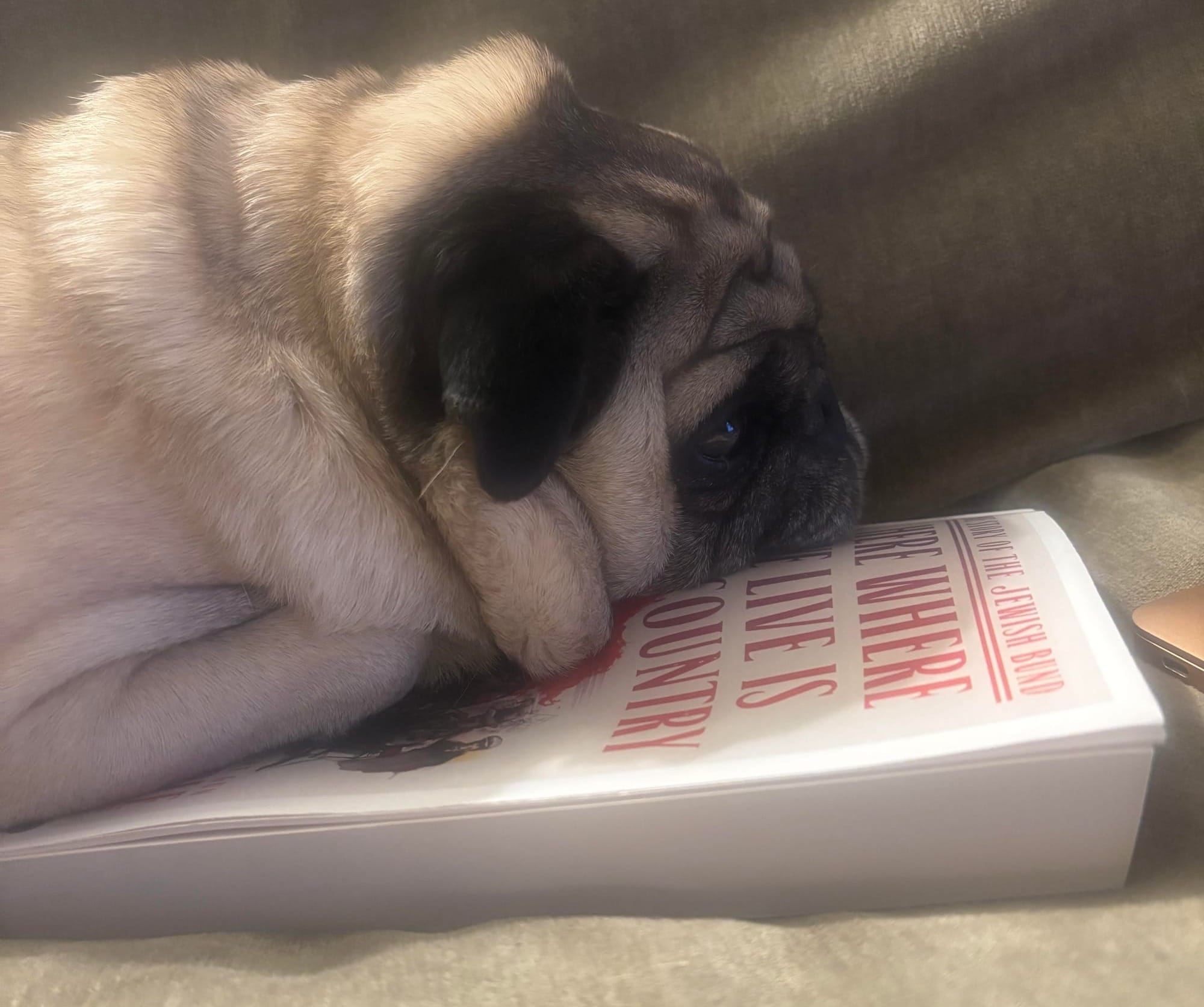
Here Where We Live Is Our Country: The Story of the Jewish Bund by Molly Crabapple
I never thought that in my adult life I would spend so much time thinking about what it means to be Jewish. I'm not religious. I basically consider the Lower East Side to be my homeland; it's certainly not Israel. But I also haven't spent much time considering my ancestors in the Pale of Settlement, that swath of the Western Russian Empire where Jews were allowed to live and where a majority Ashkenazi Jews are from. I don't like herring.
The closest I ever got to contemplating shtetl life was when I was in three separate productions of Fiddler on the Roof when I was a kid. The events of the musical had taken place less than a century before, but it felt like the Dark Ages. Costuming involved wearing babushkas and sack-like dresses in various shades of dirt brown. This didn't feel like my heritage either. I wasn't even all that curious about it.
So I am so glad to have read Molly Crabapple's incredibly detailed and impeccably reported history of the Jewish Labour Bund. The Bund was a secular socialist organization that came together at the turn of the last century, back when Russia was still led by a tsar and Jews were the targets of regular ongoing violence. While once an important part of Jewish resistance in Eastern Europe, the Bund is Molly purports that we don't know hear much about the Bund today because they were firmly anti-Zionist, a stance that had fallen out of fashion over the last century.
Molly had a foothold into the world of the Bund because her great-grandfather, the artist Sam Rothbort, had been a member of the Bund back in Russia. Like much of my family, he came over to New York City in 1904 in search of a better life. From there, Molly launches herself into archival research, finding troves of documentation of the Bund's battles and triumphs before it fizzled out after the Holocaust. The author inserts herself into the story with a light touch, just enough so that her voice becomes vital to the book for context and levity without overwhelming it.
The book tracks a whirlwind of protests and meetings and strikes and schisms and sects and pogroms and destruction, so much so that the violence can become overwhelming. By the time I got to the section covering World War II, I gave myself permission to simply skim a chapter entitled "Boxcar." I knew what would happen. But I appreciate that all of the facts are here in one place, on the record. And I love how Molly has captured the complexity of being both a Jew and a worker at a time when intersectionality hadn't really been invented. The Bund's history is a great reminder that solidarity is vital to resisting persecution of all kinds.
Let's talk about the book's title, which is repeated throughout the book: Here Where We Live Is Our Country. The Bund members believed that for people of diaspora, home is not some place where you've never been. It's right where you are right now. They believed that everyone is entitled to live with dignity in the place where they are, and that freedom is most valuable when it doesn't come at anyone else's expense. After the Holocaust so many people thought that Zionism is the answer to Jewish oppression, but, as Molly points out, now we see that that experiment has ended in another genocide. "Without a clear set of ethics that respects human life," she writes, "today's victims transform into tomorrow's killers. Oppressed becomes oppressor the moment the power flips."
Anyhow...
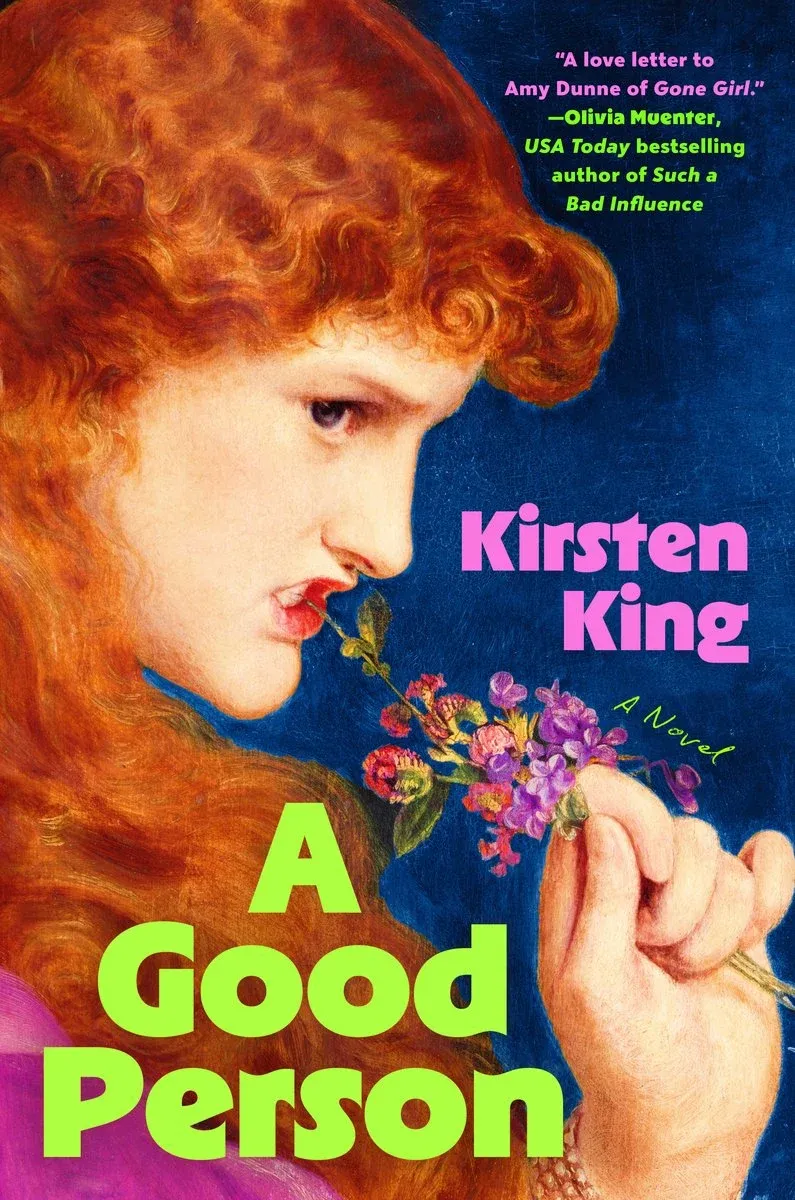
A Good Person by Kirsten King
It's officially a trend. The hottest fiction of the year 2026 features an unreliable woman narrator and a dead man somewhere nearby. Claire Oshetsky's Evil Genius, Rebecca Novack's Murder Bimbo, and Larissa Pham's Discipline.
Kirsten King's debut is perhaps the most straightforward of the group. Heroine Lillian is a piece of work, and it's fun to spend time with her even though (or because?) she is almost entirely deranged, a bad seed from the very beginning. In fact, if I had any questions at all about the novel they would be about how Lillian has managed to fit in as a regular member of society for so long when she's so prone to fantasy and so bad at reading cues. A narcissist to the nth degree, Lillian manages to hold down a job at an influencer marketing company, keep up with a college best friend, and live with a roommate.
And then she meets Henry. Lillian really falls for Henry in a way that only the most exceptionally delusional can do. She fantasizes about the future Christmas card photo she would some day take with his extended family while he treats her like, well, trash. Very relatable! When Henry is found murdered, all sorts of questions arise about who Henry really was and whether Lillian had anything to do with his death. I'll leave the plot description there, but trust me, you're in for a wild ride.
Today in bottom-scraping, S&S distribution-style

Let's just take a moment to appreciate this sentence: "Carlson and his business partner Neil Patel “'also launched a precious metals company and a nicotine pouch company.'”
Fuck, I'm also gonna link back to the piece I wrote about Russell Brand's whole deal last year.
New releases, 4/14
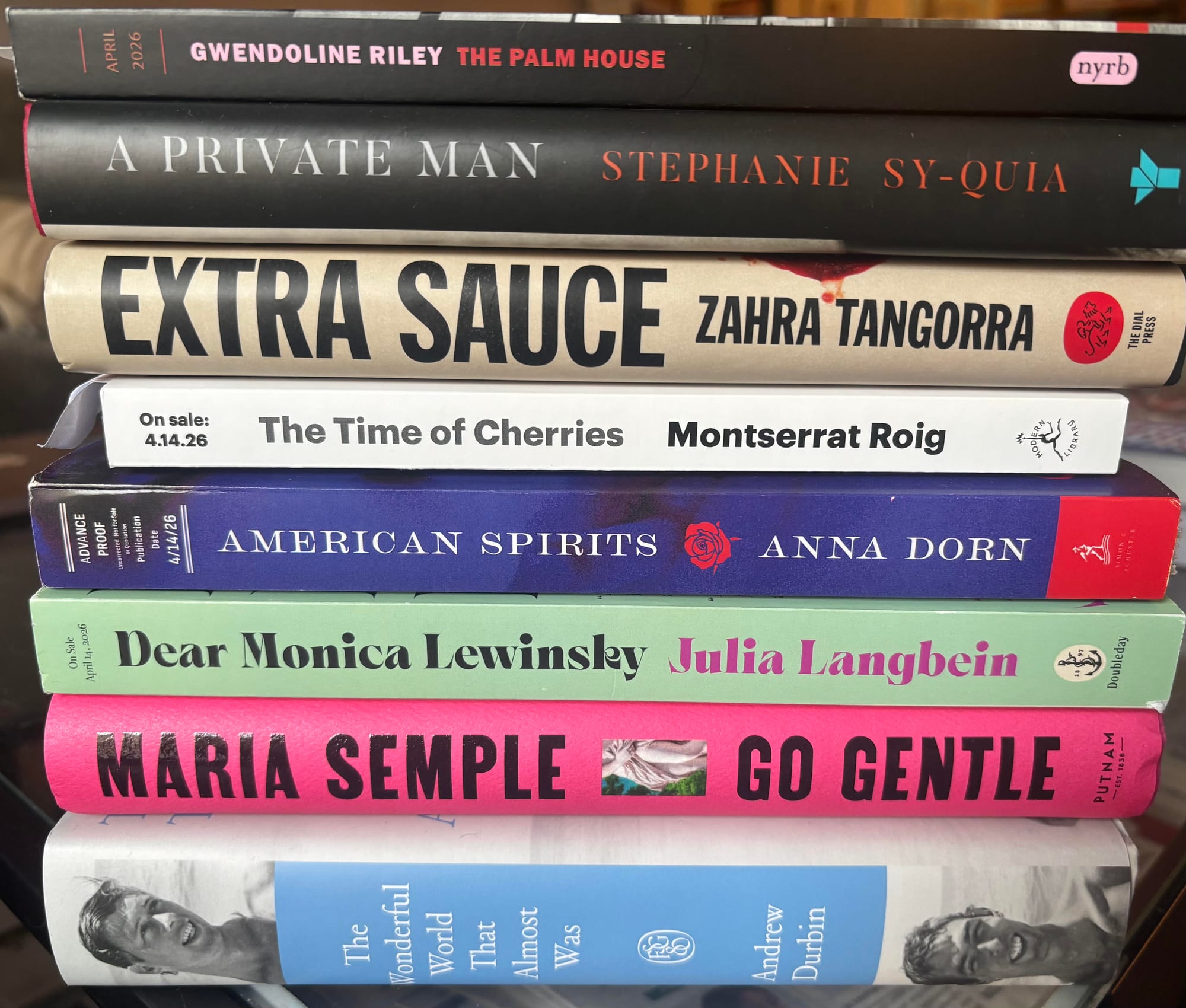
The Palm House by Gwendoline Riley
A Private Man by Stephanie Sy-quia
Extra Sauce: The Good, the Bad, and the Onions by Zahra Tangorra
The Time of Cherries by Montserrat Roig, translated by Julia Sanches
American Spirits by Anna Dorn
Dear Monica Lewinsky by Julia Langbein
Go Gentle by Maria Semple
The Wonderful World That Almost Was: A Life of Peter Hujar and Paul Thek by Andrew Durbin
Famesick: A Memoir by Lena Dunham
Cherry Baby by Rainbow Rowell
Midnight, at the War by Devi S. Laskar
Jan Morris: A Life by Sarah Wheeler
Leave Your Mess at Home by Tolani Akinola
A Terrible Intimacy: Interracial Life in the Slaveholding South by Melvin Patrick Ely
Harmless by Miranda Schulman
Nasty Work: Resist Systems, Explore Desire, and Liberate Yourself by Ericka Hart
Morcel by Carter Keane
I Choose Me: Chasing Joy, Finding Purpose & Embracing Reinvention by Jennie Garth