The Maris Review, vol 104

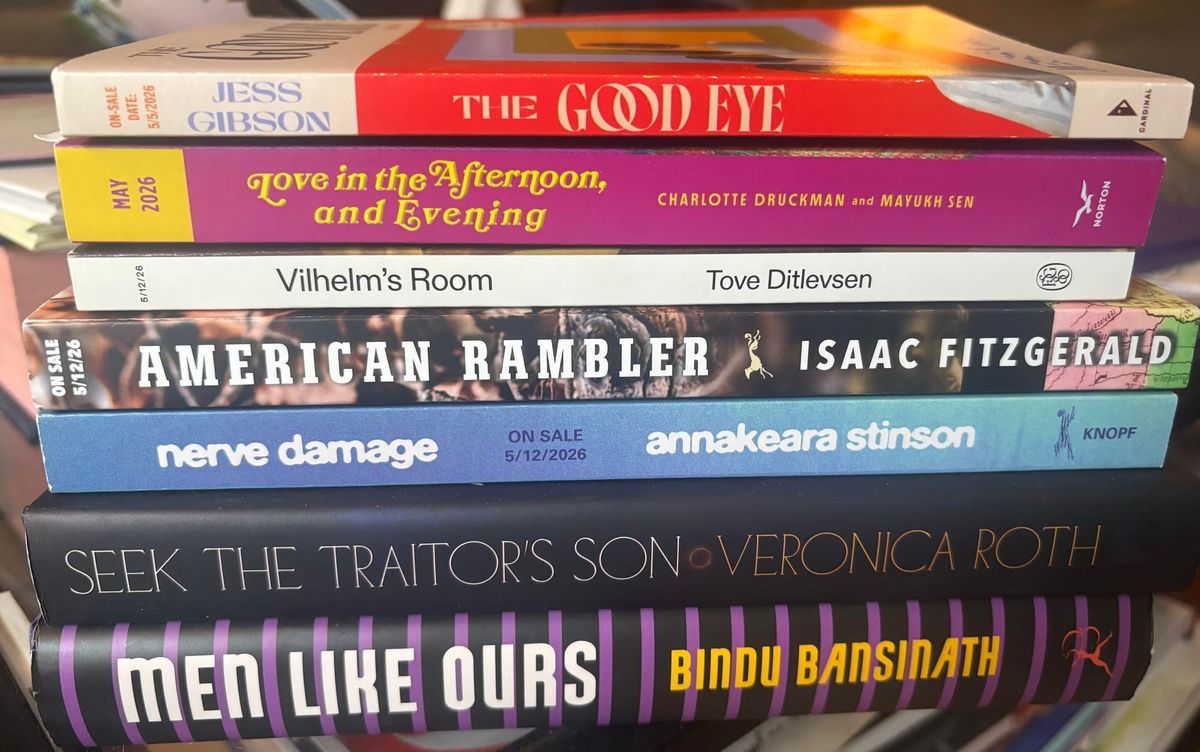
This week's theme is inheritances.
What I read this week
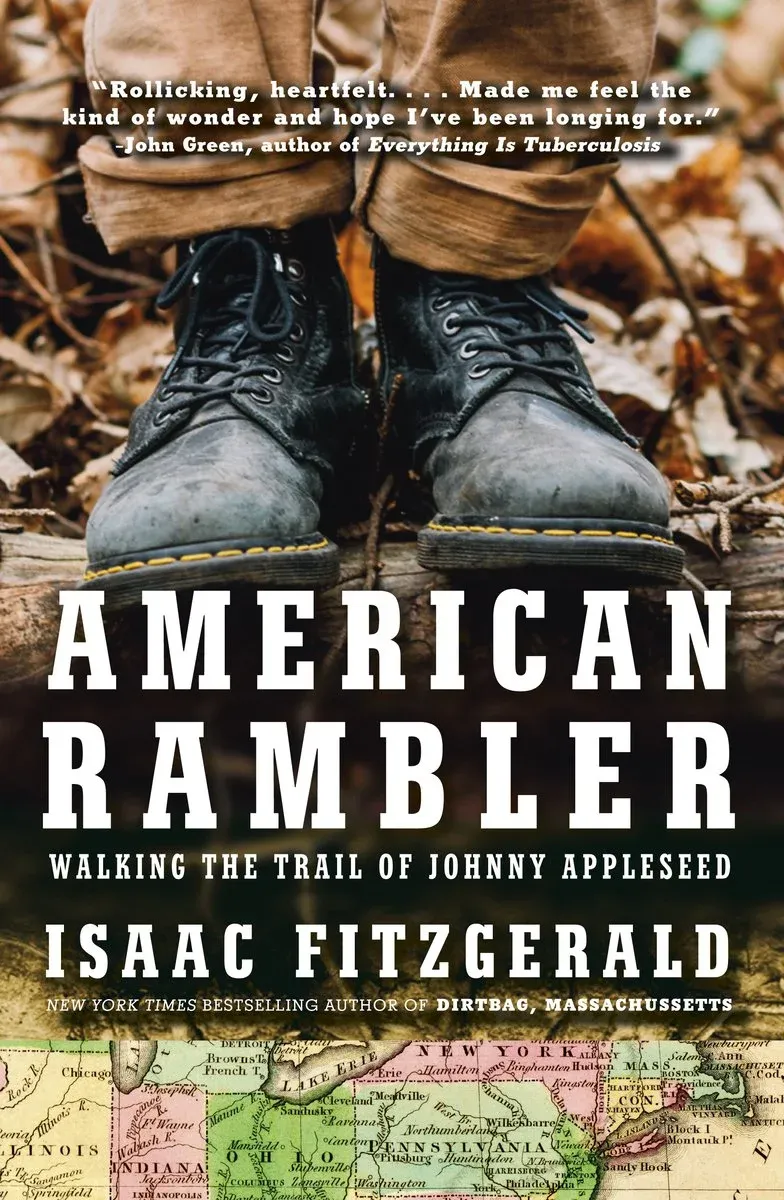
American Rambler by Isaac Fitzgerald
It's always illuminating to read a friend's personal writing about a time period when you sort of knew what was going on but not exactly. Sporadic texts are not enough to keep up with the day to day experiences, let alone the internal thoughts and struggles.
Isaac Fitzgerald is exactly the right person to write a clear-eyed but hopeful book about traveling through America in the 2020s. He's the kind of big-hearted guy who can walk into a bar in a town where he'd never been before and leave five hours later with 40 new best friends. He's full curiosity and openness, the kind that lots of people are not privileged enough (he acknowledges this!) to cultivate. The book, a memoir/travelogue/ history, starts from a place of loneliness, with Isaac going for long solo walks during the pandemic after a painful breakup.
But then his walking project became so much bigger when he decides to retrace the steps of Johnny Appleseed, who in real life was a man named John Chapman who, like Isaac, descends from Dirtbag, Massachusetts. Isaac has heard legends from his da and learned facts from his ma about the legendary pioneer and nurseryman who walked all over the Northeast and Midwest in the late 18th century, and he's determined to sort the myths from realities as best he can.
What follows is a history of the region filled with both wonder and the appropriate amount of truth-telling. American Rambler is a story about Americans as adventurers, but it's also a story of Americans as colonizers and fabulists. It's about the joys of experiencing nature and the horror at its destruction. It's about the joys of sleeping outside and the even bigger joys of sleeping in a good friend's guest room. Most of all Isaac's new book is about finding the will to put one foot in front of the other and keep going, and then to know when to come home.
Happy pub day, Isaac!
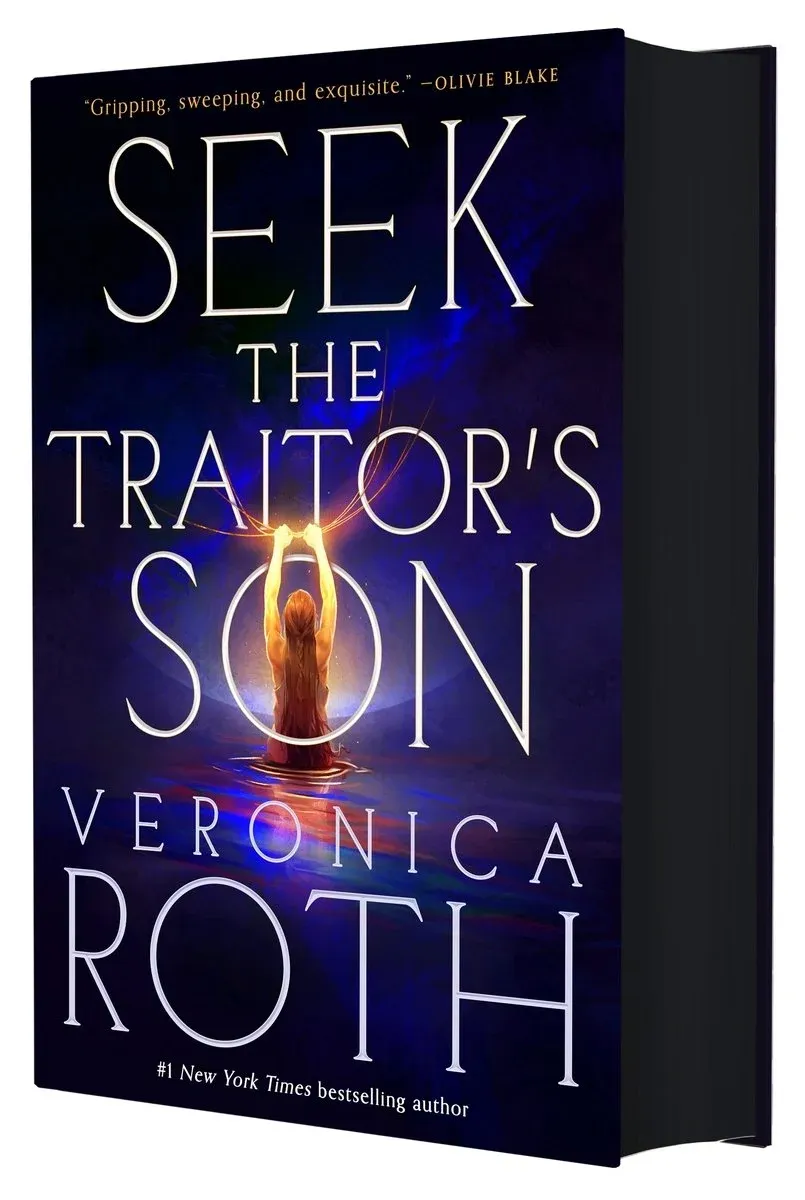
Seek the Traitor's Son by Veronica Roth
In the Acknowledgments to her latest dystopian fantasy novel for adults, the first in a series, Veronica Roth admits that she started writing the novel with no intention of publishing it: "I had it in my head that a book that made all the pleasure centers of my brain fire at once just couldn't be a serious project." Seek the Traitor's Son embodies a nice lesson, then. If you write towards what makes you happy, likely readers will be happy too. I sure was.
Seek the Traitor's Son begins with a prophecy about the fate of the world that is given to Elegy Ahn, who becomes known as the Hope of Cedre. The augurs, like all good augurs, speak in riddles, and the rest of the novel revolves around decoding what the augurs really mean when they say "He will bring you death. You will fall in love with him." If Elegy is the Chosen One, then Theren, the man who is meant to be her knight, might be the key, or one of the keys, to unraveling her fate. I can promise you this: there will be hot sex scenes.
Elegy and Theren live in a world in which a deadly virus known as The Fever has changed the geopolitics of Earth and space (a handy map of the world appears in the front matter!). The Talusar, a people who worship The Fever with religious fervor, have taken over much of Earth. They have intensive rituals around transmitting The Fever and dying from it. Half of those infected with The Fever die, and the rest "wake up" again with new abilities. Elegy and the rest of the citizens of Cedre, a small but mighty minority, reject the idea that the virus is their destiny. Who will win the fight? For the sake of those of us who keep up with their vaccines regularly, both for ourselves and for others, I'll be rooting for Elegy and the Cedre.
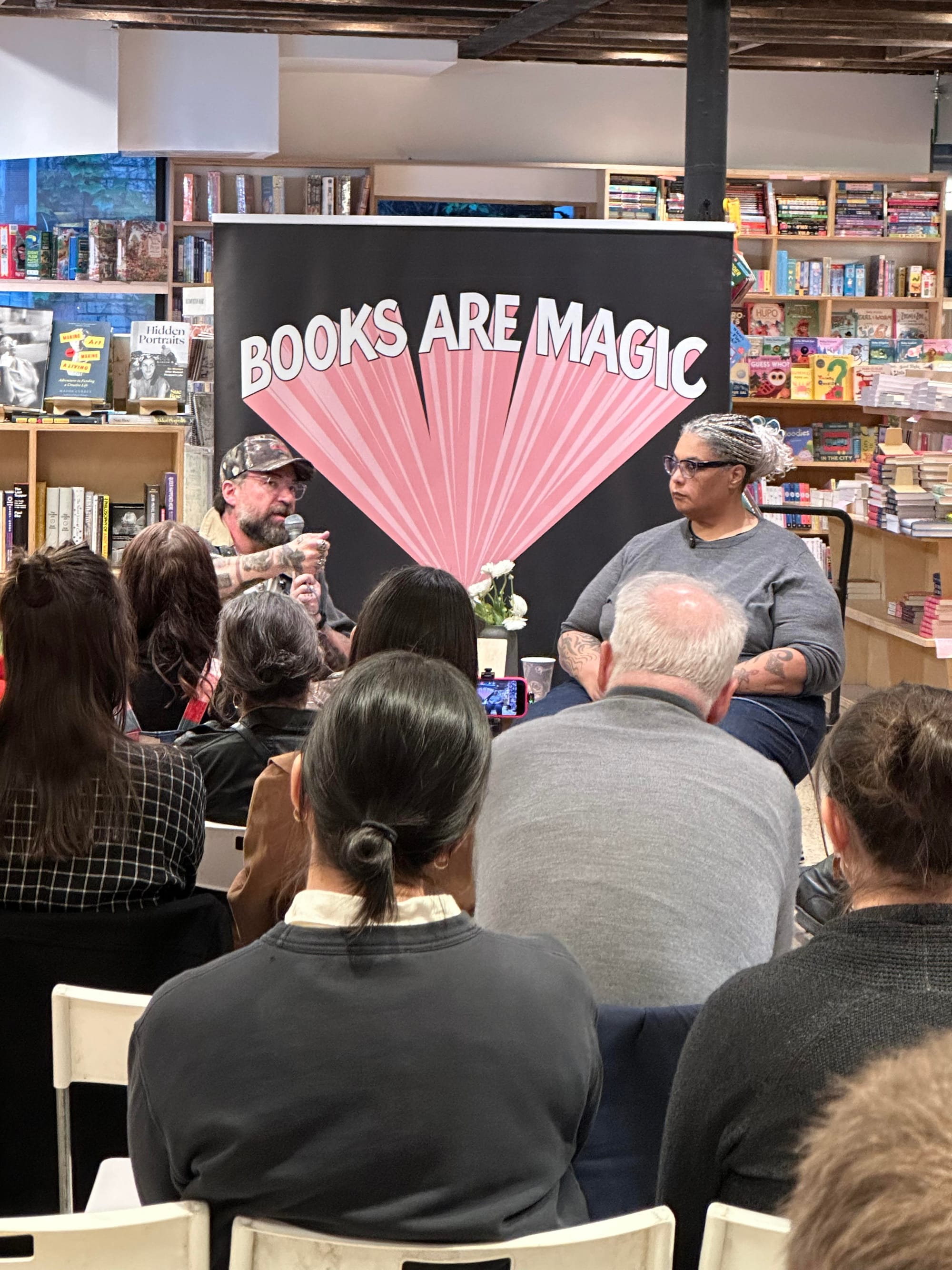
Join us tonight at Barnes & Noble in Union Square to celebrate Veronica's book release!
A note on Substack/newsletters in general:
I say this as someone who enjoys publishing this newsletter via Ghost every week and has no plans to stop: I miss being edited. I miss being able to bounce ideas off of other people as I write. I miss having the resources of a fact checker and designer and copy editor at my disposal, the way they were at previous media gigs. I hate that writers have become so siloed in this newsletter era, when I’ve always thought of publishing as a group effort. But at least I’ve had the experience of working with a variety of editors in the past – I worry about writers who are just starting out who could really use that help!
I used to make a living freelance writing. It was precarious even at the moment; I could never have done it without being on my husband's Writers Guild health insurance. But I couldn't imagine how quickly all of my opportunities would vanish, with the decimation of media, and book coverage more specifically. With most of my freelance jobs going away, yes, of course it's nice to have my newsletter to make a little bit of money.
In the early aughts blogs circumvented traditional writing spaces, eliminating gate keepers to allow a whole bunch of new (often unedited) voices to find audiences. The big difference between blogs and newsletters, at least in my eyes, is that blogs felt like they existed in addition to other forms of media, allowing for newer voices to be heard. But with the collapse of so much book media, I hate the idea that newsletters are meant to replace other kinds of book coverage. Becca Rothfeld made this point so well in her Substack back in 2024, when she was still a critic for the Washington Post, a newspaper that still had a robust books section. Since then the Post and the Associated Press both ditched book coverage completely (Becca now works at the New Yorker, thank goodness). We need both/many/all options.
I don’t love how newsletter platforms make it so that all writers must also be entrepreneurs. I worked at Kickstarter from 2014 to 2016 and I believed in the work I was doing helping writers to crowdfund their projects, with the understanding that it wasn't for everyone. It was meant to be another way, but not the only way. Much like we're supposed to have adequate healthcare and GoFundMe is not meant to be the only way to deal with a health crisis. But it so often is.
I hate this. But. In the meantime, while I'm underemployed and trying to write about books, maybe you'll become a paying subscriber to my newsletter?
Today in nonfiction trends:
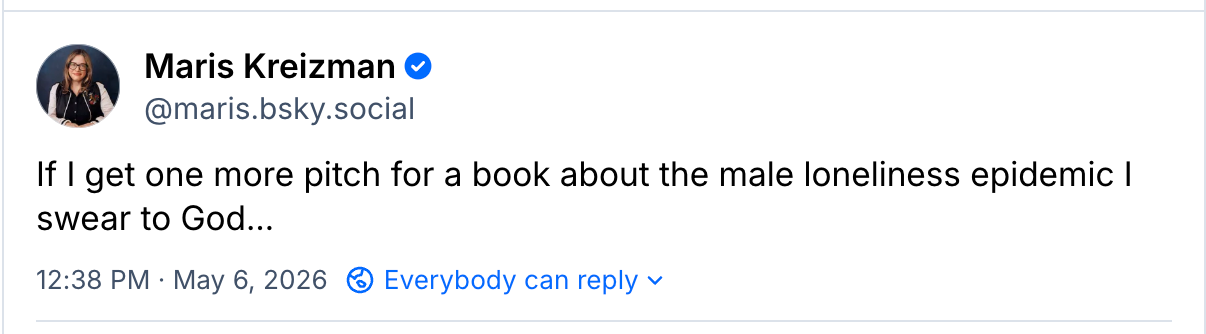
New releases, 5/12
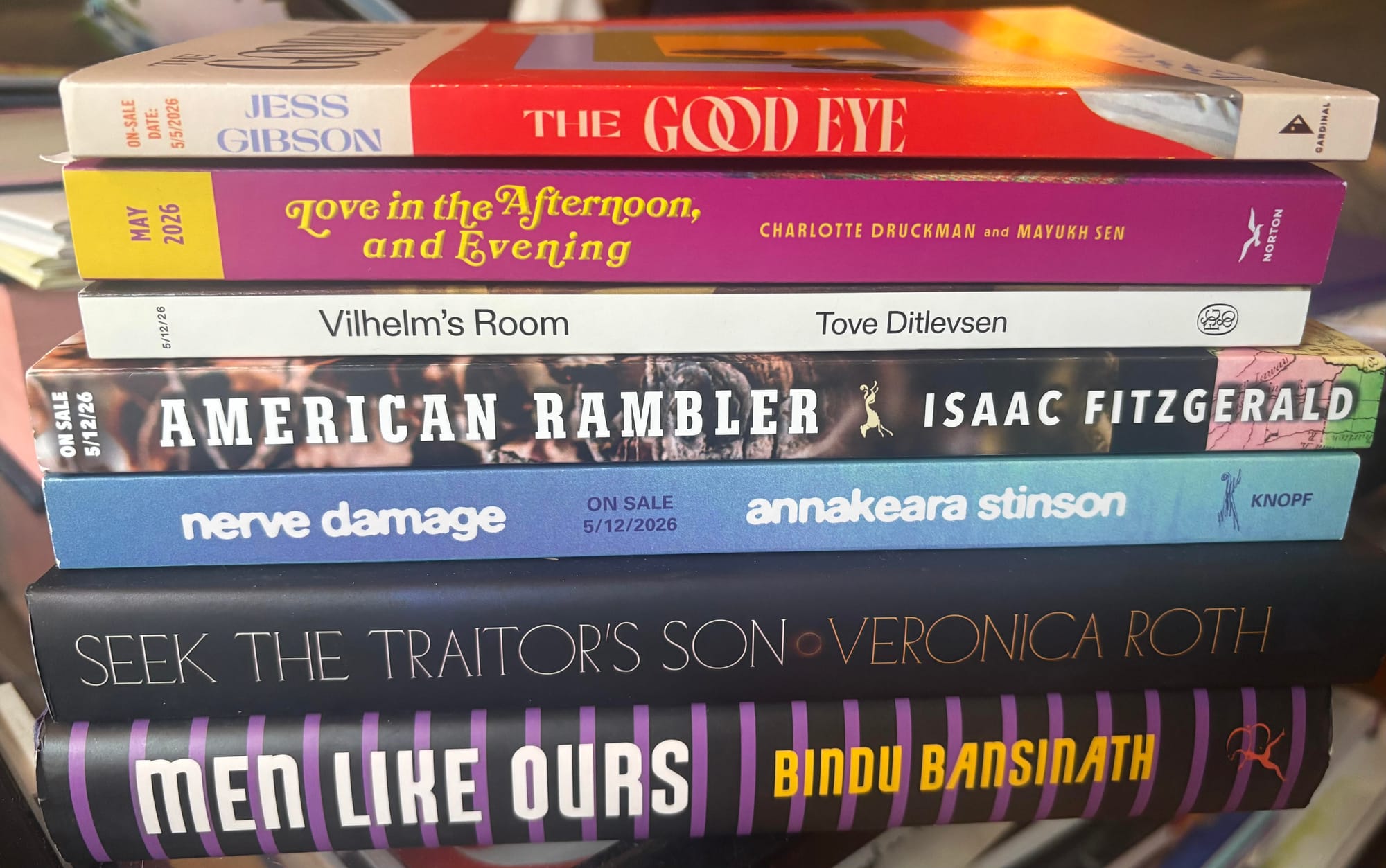
The Good Eye by Jess Gibson
Love in the Afternoon, and Evening: Essays and Conversations on Soap Operas by Charlotte Druckman and Mayukh Sen
Vilhelm's Room by Tove Ditlevsen
American Rambler by Isaac Fitzgerald
Never Damage by Annakeara Stinson
Seek the Traitor's Son by Veronica Roth
Men Like Ours by Bindu Bansinath
The Kindness of Strangers by Emma Garman
New Skin by Sarah Wang
Death of the Soccer God by Dimitry Elias Legér
Coyoteland by Vanessa Hua
Make Me Better by Sarah Gailey
Mighty Real: A History of LGBTQ Music, 1969-2000 by Barry Walters