The Maris Review, vol 101

This week's theme is college in the late 1990s was wild. I can attest.
What I read this week

Transcription by Ben Lerner
I'm a Ben Lerner completist. I am always intrigued by his work, as long as I can block out the sounds of his most ardent fans, who are, frankly, super annoying. His new novel is so slim you'd think it would feel... unsatisfying as a comprehensive work of fiction. But I enjoyed it completely – there is a whole wide world in these 144 pages. So much so that I'm still trying to process. This is one of those rare times when I wish I belonged to a book club.
For now I'll just say that the novel unfolds in three discrete parts that are out of order chronologically but that all speak to each other. The first part is the Ben Lerner character interviewing an elderly mentor but not having a phone to record their conversation. The second part takes place after the elderly genius's death, and all of the scholarship that's available on him. The third is a conversation between the Ben Lerner character and the mentor's son, who were friends during their undergrad years in the 1990s at Brown. The book is about screens and phone addiction and how what we consume changes how we process the world. It's about how memory is imperfect even for those of us who are still relatively sharp, and how memories are an important form of fiction in which we smooth out the edges of reality. And it's about all of the tools a writer can use and all of the small decisions that have to be made in order to construct fiction. Just trust me and spend three hours reading it.
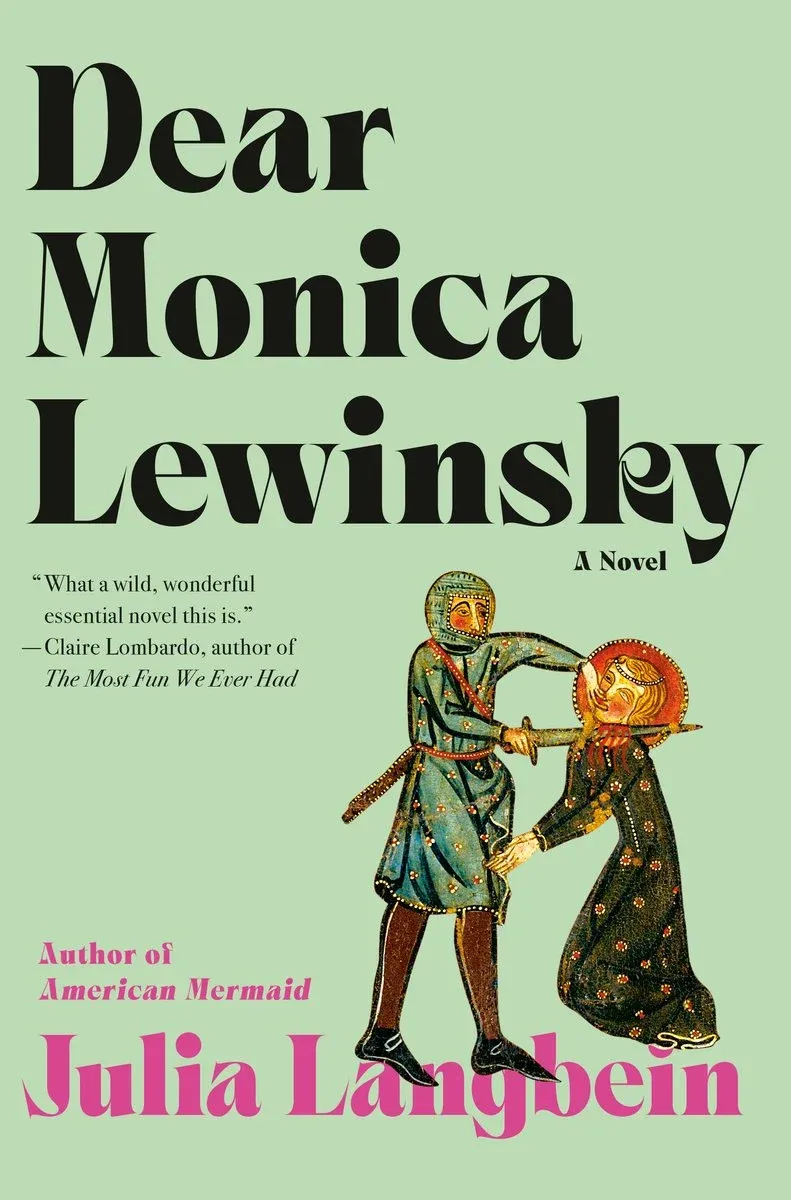
Dear Monica Lewinsky by Julia Langbein
Did you ever read a book in which you are so far inside the target demographic that it feels a little creepy? I am exactly the same age as Jean Dornan, the protagonist of Julia Langbein's truly hilarious second novel, and, in fact, I grew up in the very New Jersey town where Jean's college-age self wanted to spend the summer working at Red Lobster. Lucky for both me and Jean that instead of waitressing she gets to spend the summer of 1998 in a study abroad program in France to study medieval art and architecture (I was doing the Penn in London Theater Experience at the very same time). Jean and 1990s me shop at the same mall stores and listen to the same music and think we know all about the world when in fact we know so little.
The book opens in 2019 when Jean is 40. When she receives an invitation to go back to France to celebrate the retirement of David Harwell, one of the professors who taught the program, she spins out. It turns out charming, charismatic David Harwell taught Jean a lot more than just how to measure the windows in a nearly 1000 year-old church. The summer of 1998 was also the Summer of Monica, even though at the time Jean didn't consider how related the Clinton scandal is to her own debasement by David.
The majority of the novel takes place in that summer of 1998 and reconstructs Jean and David's relationship, how from the very moment she sees David, Jean simply lives for his gaze. Every move she makes is for him alone, even if he isn't there when she does it. Highly relatable. And as their relationship builds, there are moments of true sweetness and sexiness before it inevitably goes to shit. And the dialogue is so funny, Jean has excellent banter with just about everyone in the program and it's so much fun to meet them all and to see them grappling with religion and art and the petty jealousies of academia. Oh, and all along the way Saint Monica is there guiding Jean along, as the marketing copy says, like a "saucy Ghost of Christmas Past."
Let's talk about the Monica thing. I have no idea if in real life Monica approves this message, but this book really speaks to me as a woman who came of age in the 1990s and thought I was a feminist. I thought gender studies courses were irrelevant because men had nothing on us! Me and Jean were both so delighted to make Monica a joke and not think about how her persecution was a terrible reflection of all of us. We were busy being Cool Girls. I that it's kind of remarkable how, in our lifetime, we've come to see how power differentials work in the patriarchy at large, and to be able to look back on the past and see so much rot.
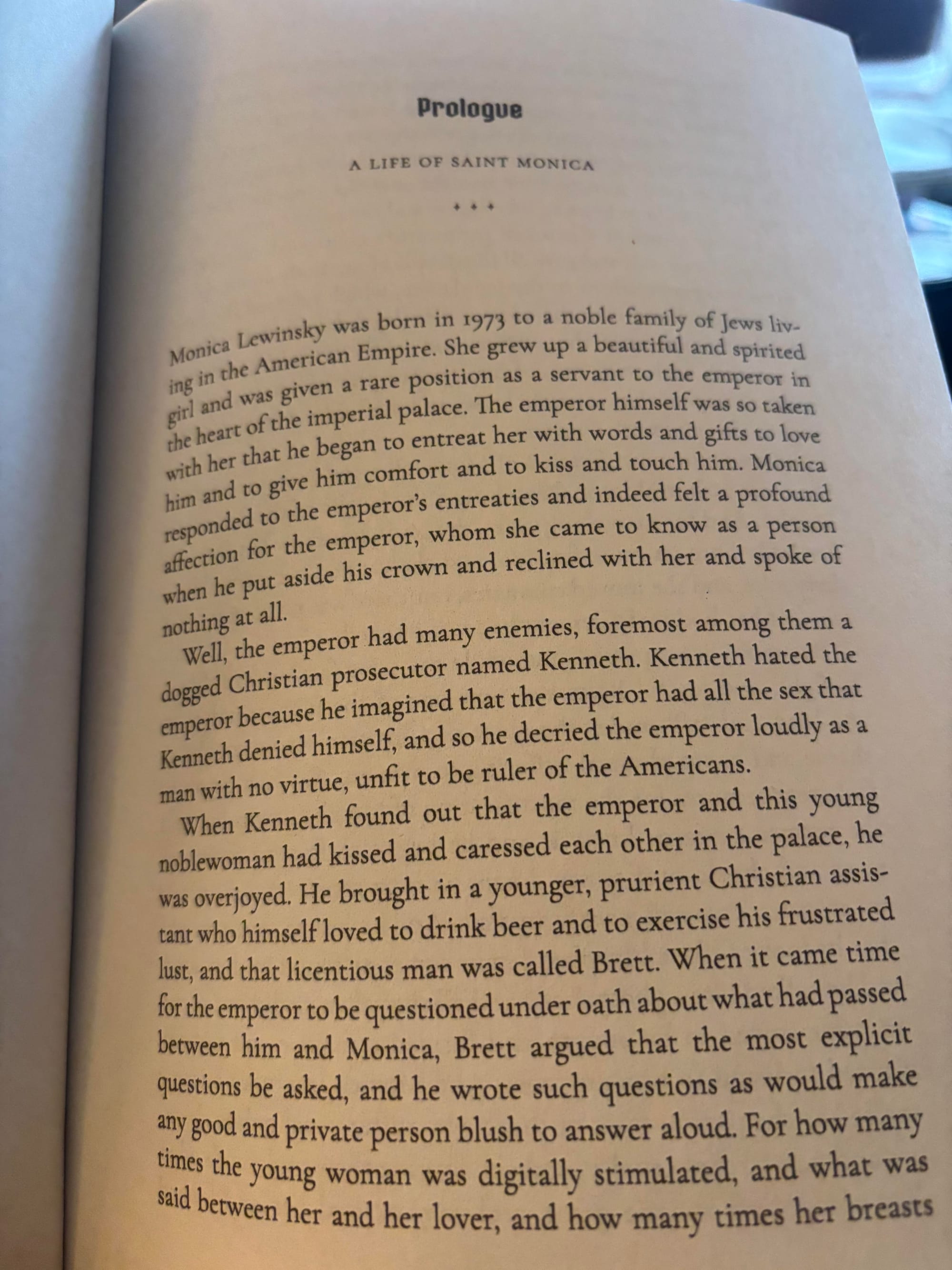
I highly recommend this novel, but I also think you should have a look at the first page. If this Lives of the Saints treatment of Monica Lewinsky speaks to you (and it's a motif sprinkled throughout, with the action of the novel broken up by descriptions of various other female saints who were just minding their own damn business when a man felt entitled to them) you will love this book.
Josh did so great last night
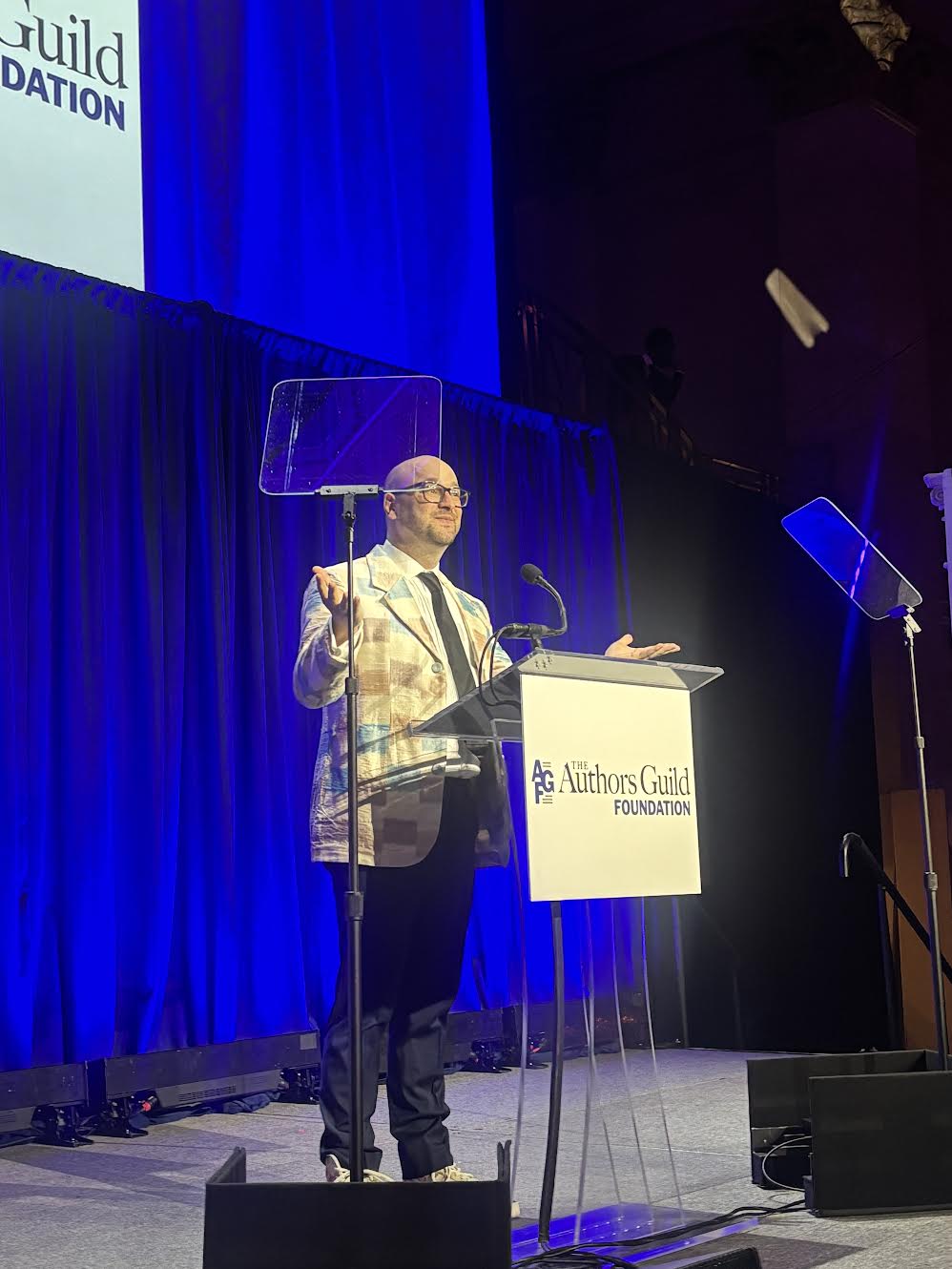
I knew he would, but it’s now confirmed that Josh killed it as host of the Author Guild Foundation gala. And as an author who just added an Authors Guild human-authored certificate to the copyright page of the paperback version of I Want to Burn This Place Down, I was so glad to be able to celebrate. Also I was glad to be able to text a photo to my mom of Josh standing next to Amy Tan. Also I was glad that I got to sit at the same table as Percival Everett even though I was so self-conscious the whole time about not being too much like the white lady literature fans from Erasure/American Fiction (Cord was there too, sitting next to him). A true delight.
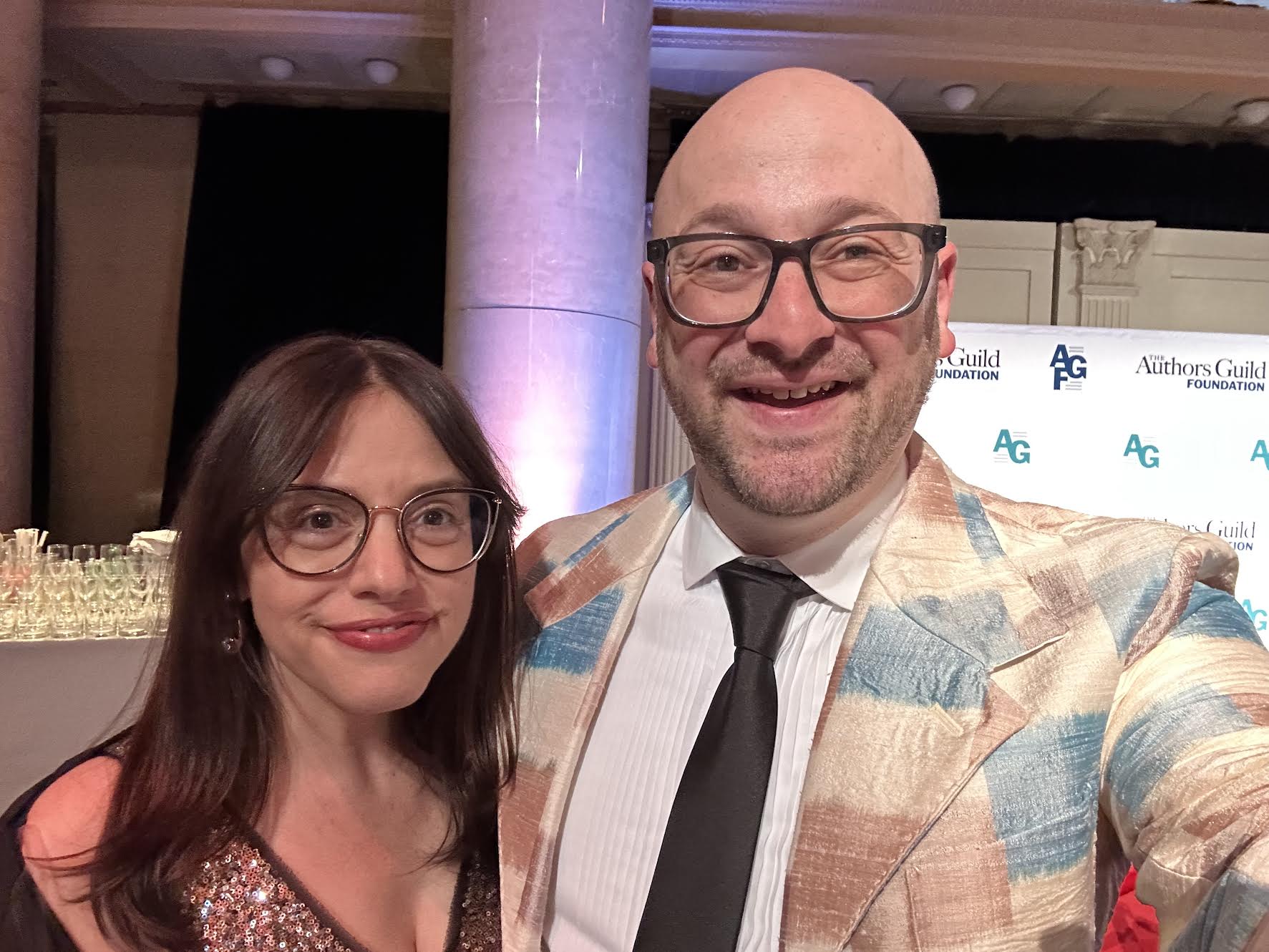
Anyhow, fuck AI forever!!
But also...
AI is a labor issue
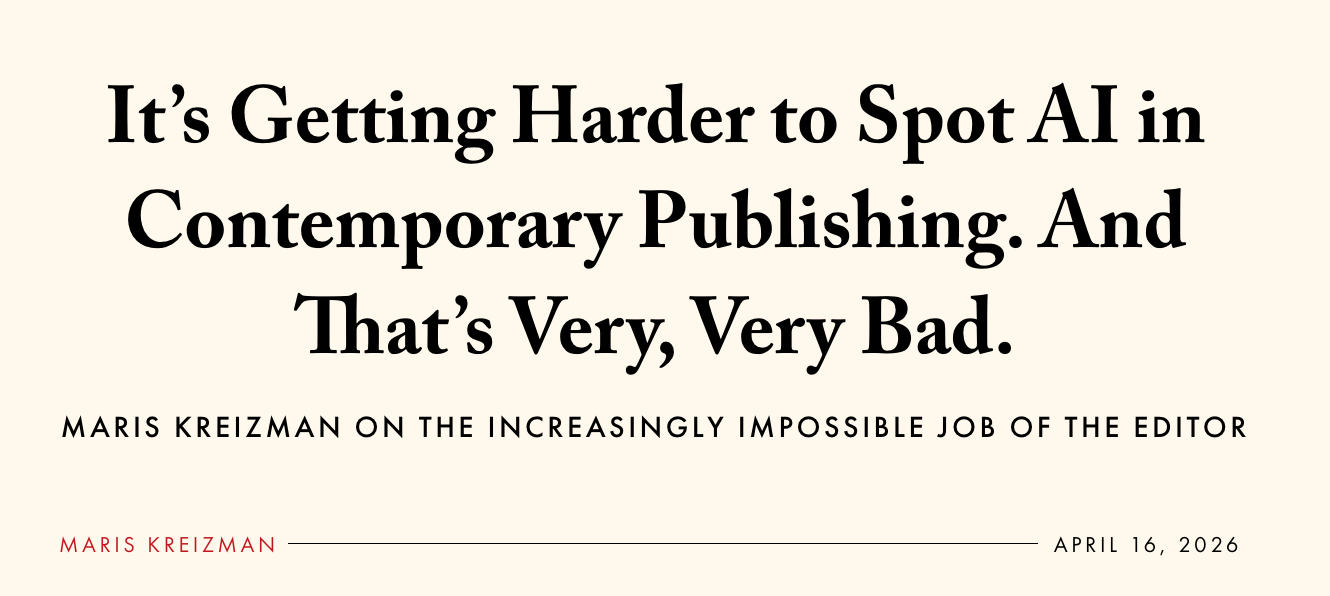
ICYMI, I wrote a bit about how editors should be the ones responsible for making sure that their authors haven't used AI, which is another job they didn't sign up for. I don't know any editors at major publishers who aren't absolutely overwhelmed with work, when corporations value quantity over quality but still laying off staff at alarming rates. When they're doing the work of 2 or 3 people, it becomes increasingly difficult for editors to find the time and space to actually... edit. Once publishers invest more money and resources into the people who are working on books, AI will be less of a threat.
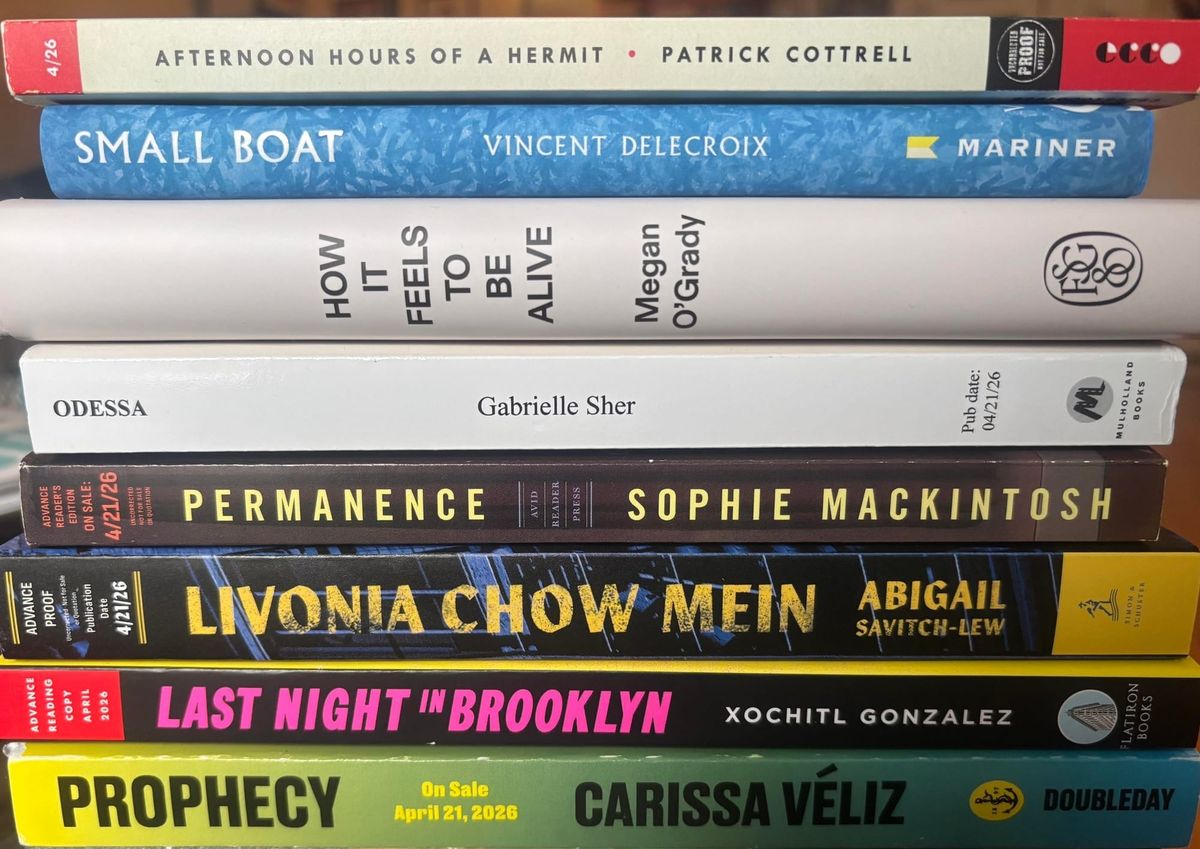
New releases, 4/21/26
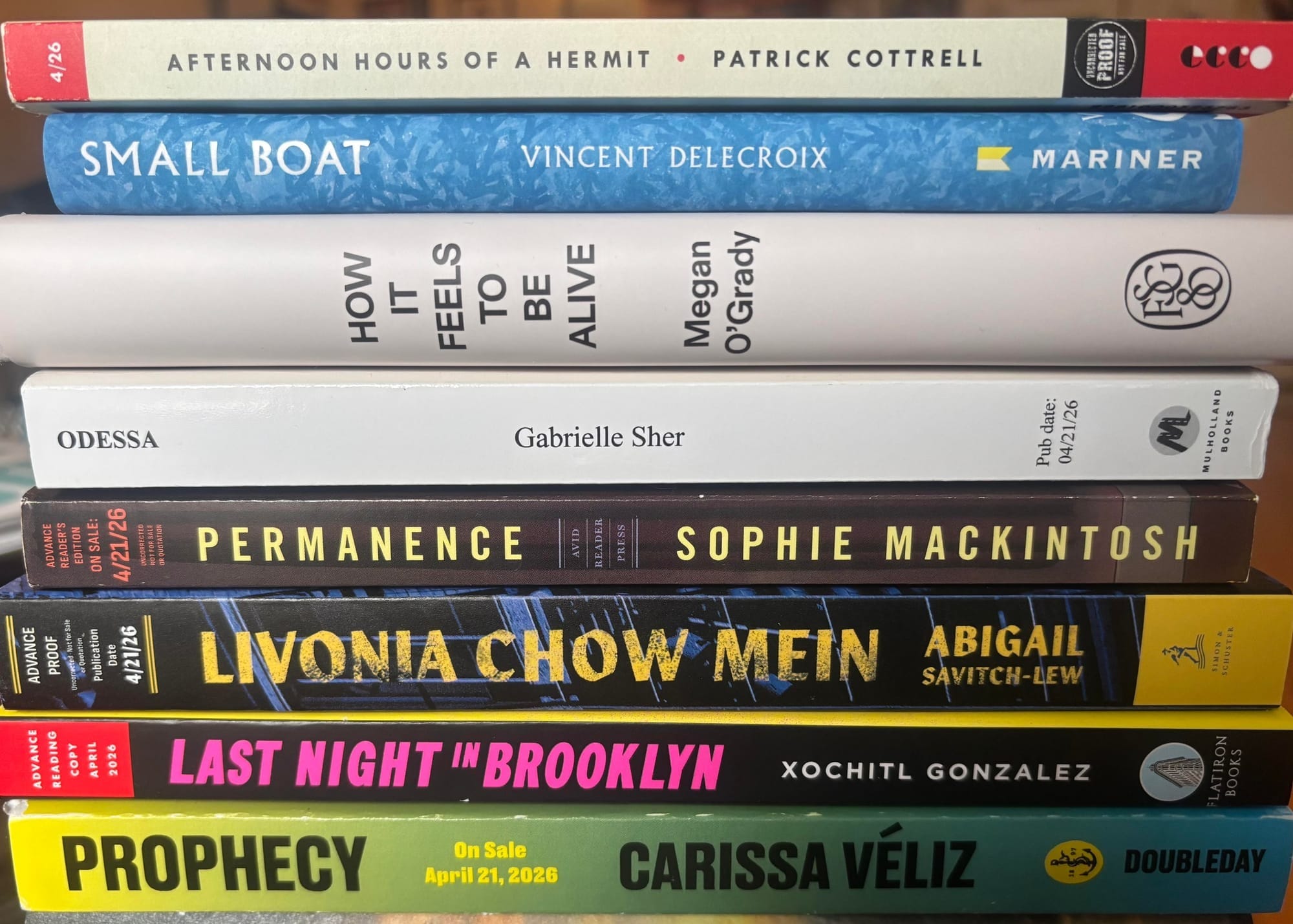
Afternoon Hours of a Hermit by Patrick Cottrell
Small Boat by Vincent Delecroix, translated by Helen Stevenson
How It Feels to Be Alive: Encounters with Art and Our Selves by Megan O'Grady
Permanence by Sophie Mackintosh
Livonia Chow Mein by Abigail Savitch-Lew
Last Night in Brooklyn by Xochitl Gonzalez
Prophecy: Prediction, Power, and the Fight for the Future, from Ancient Oracles to AI by Carissa Véliz
The Fight of Our Lives: AIDS in America by David Levithan and Gabriel Duckels
Small Town Girls: A Writers Memoir by Jayne Anne Phillips
Monsters in the Archives: My Year of Fear with Stephen King by Caroline Bicks
The Scoop by Erin Van Der Meer
Israel: What Went Wrong by Omer Bartov