The Maris Review, vol 109

This week's theme is affordable housing
**Please bear with me this week. On Sunday the sprinkler system in our building went on the fritz, and we had water coming in everywhere. Thankfully most of the books have made it (a few galleys had to go) but everything is now in weird piles in the non-wet places in our apartment. Get renters insurance if you don't have it!!
What I read this week
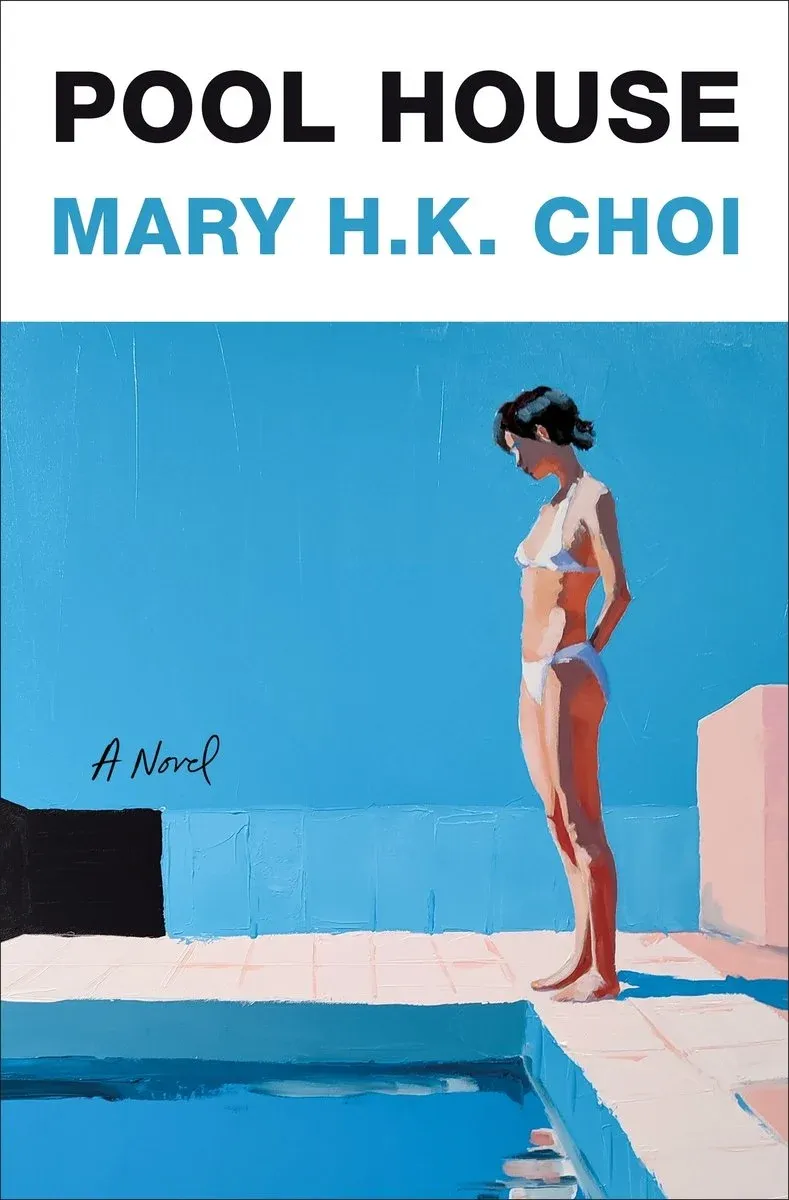
Pool House by Mary H.K. Choi
Isn't it bliss when a novel that is billed as a perfect summer book actually turns out to be one? I'm not sure just yet what the song of the summer is, but the book of the summer is Pool House.
Why? First because reading Mary's sentences and her ultra specific descriptions made me think, over and over again, that AI could never. For instance:
"Stevie has previously never understood the tradition of sending around photos of body parts unless they are literally detached from the body for ransom, but even she can see that this penis seemed eager and well-meaning, the kind of kid who'd wear bowties on picture day."
Second, because of the setting. Moon is a C-list Hollywood actress who's seen better days. She can no longer afford the mortgage payments on the fancy house she bought in better times, so she and her 20 year-old daughter Stevie live in the pool house while renting out the main house. There is a proximity to glamour, which we love in summer reads, even if it feels tenuous.
Third, because the characters are so well drawn. When Moon's (married) decades-long actor boyfriend, who once played her TV husband in a sitcom, dies by suicide, Moon's TV stepson Adam comes to stay with Moon and Stevie in the main house. There, they live as a fucked up family, and the novel is told from each of their often conflicting points of view. We become immersed in each character and see the world as they see it, and then we as readers have to pull back and question how they see reality.
Fourth: it has emotional heft and a really stunning depiction of a less than perfect mother-daughter relationship but it's not so heavy that it will ruin your day. In fact, I predict that Pool House will make it better.
Freedom: Essays by Zinzi Clemmons
First things first: if you haven't yet read Zinzi's debut novel you are in for a real treat. She was on my radar back in 2017 because I loved that book so much. I also saw her online a bunch in that time, when Twitter was still decent. This lovely, angry, hopeful essay collection about how we define (and enact) justice, encompasses much of what came after.
Born to a South African mother and Trinidadian father who met at Penn and raised her in a mostly-white, affluent suburb of Philadelphia, Zinzi writes extensively on the immense failures of liberalism in regards to race and class. Her frequent trips to Johannesburg allow her to capture family history and personal history in the wake of apartheid and its ending. She finishes the collection with an essay on the cultural and literary history of Afropessimism and its flaws that is worth the price of admission.
I've struggled with how to talk about the essay in the book with which I'm most familiar, about Zinzi's experiences with a well-known writer who used his authority inappropriately, and the terrible fallout she experienced when she spoke out publicly about it. "Perhaps you are reading this out of some morbid desire for gossip: to know the who, what, where," she writes. "To piece together the identities behind the pseudonyms and infer all kinds of things about the people involved. Women's pain is always made into entertainment, our tears turned to dollars, black women especially."
With that caveat, I'll just say that it feels particularly brave to retell this story in the wake of the now glaringly insufficient Me Too movement and the reality that "cancellation" is nothing but a myth. I just hope we can find the grace to allow Zinzi, and other women who've experienced similar, to be able to tell her story and to seek some acknowledgment of wrongdoing. I know we can barely keep the rapists at bay anymore (see: The White House) so interactions with powerful people that are painful and humiliating but not illegal are nearly impossible to talk about. And yet we must keep the conversation going. I would love to assign this essay to everyone in the publishing industry as essential reading.
Best of the Year So Far
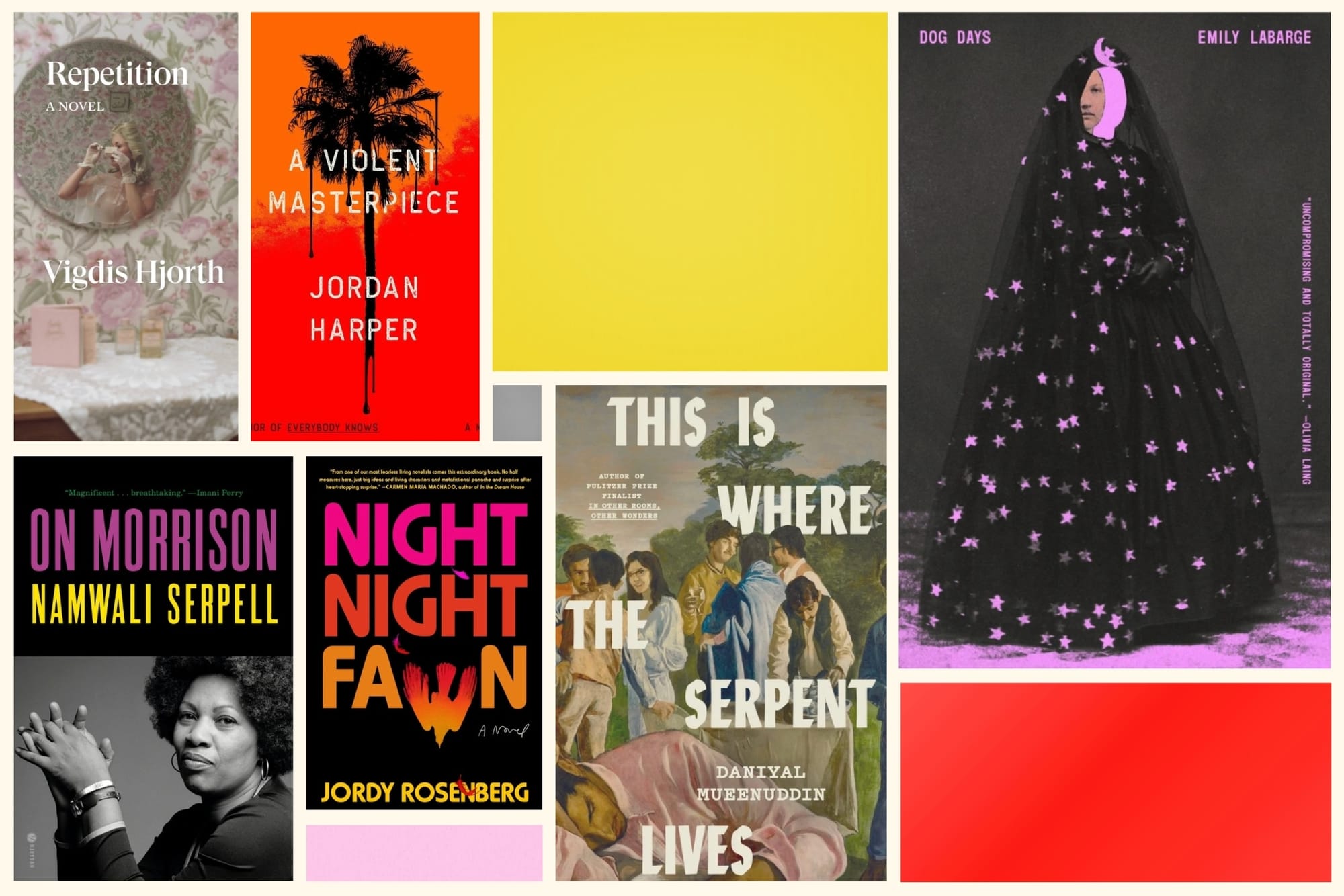
For my column at Lit Hub I wrote about my favorite books of 2026 so far. I am always so conscious of diversity in all manners, particularly of publisher, and so I feel it's important to note that half of my favorites so far were published by imprints of Penguin Random House. And in fact there are other PRH titles I left off the list because PRH was already overwhelming. For the curious: How To Commit a Post-Colonial Murder by Nina McConigley, Here Where We Lives Is Our Country by Molly Crabapple, and Prophecy by Carissa Véliz were the ones I had to leave off but that I highly recommend.
New releases, 6/16
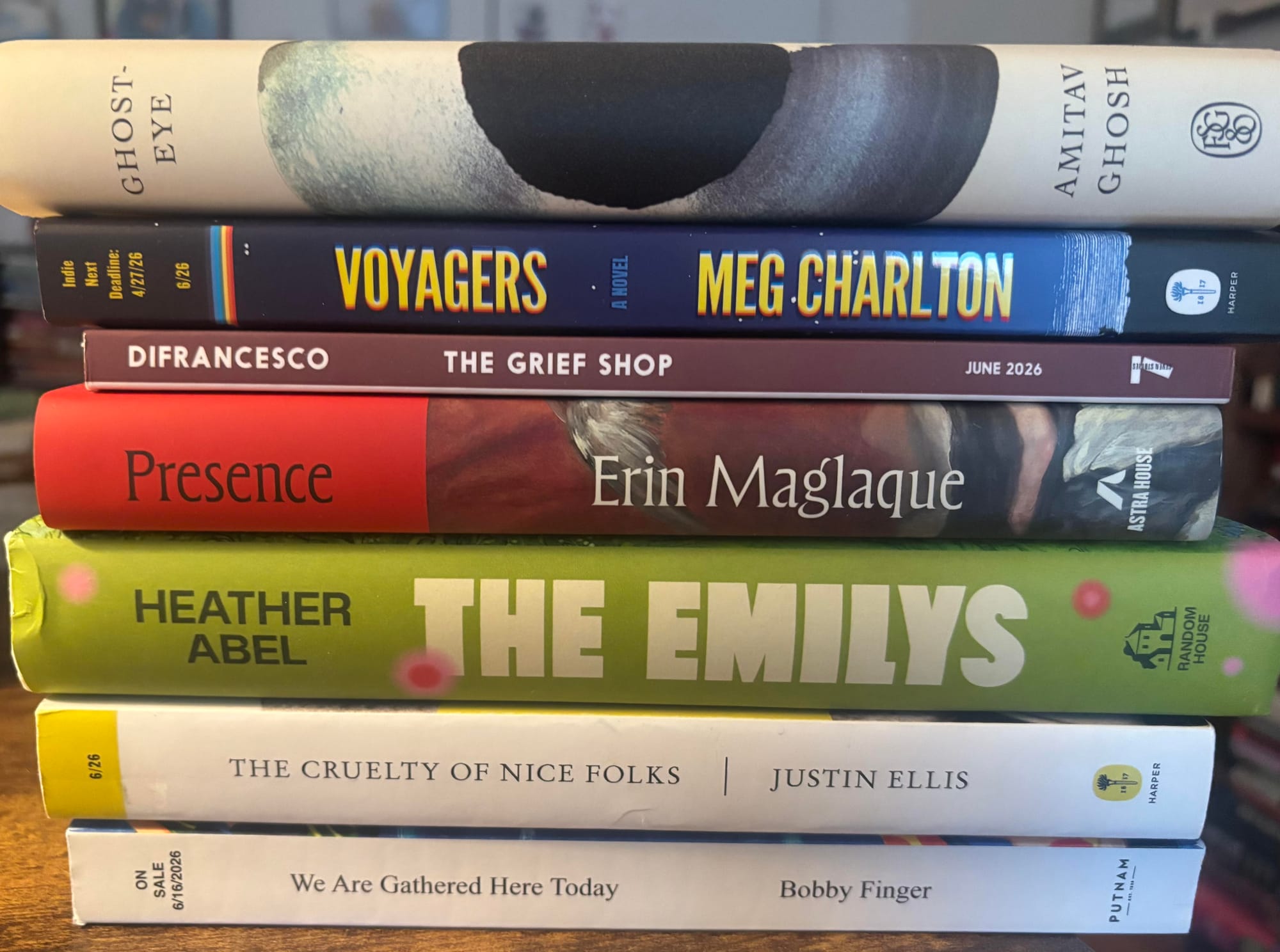
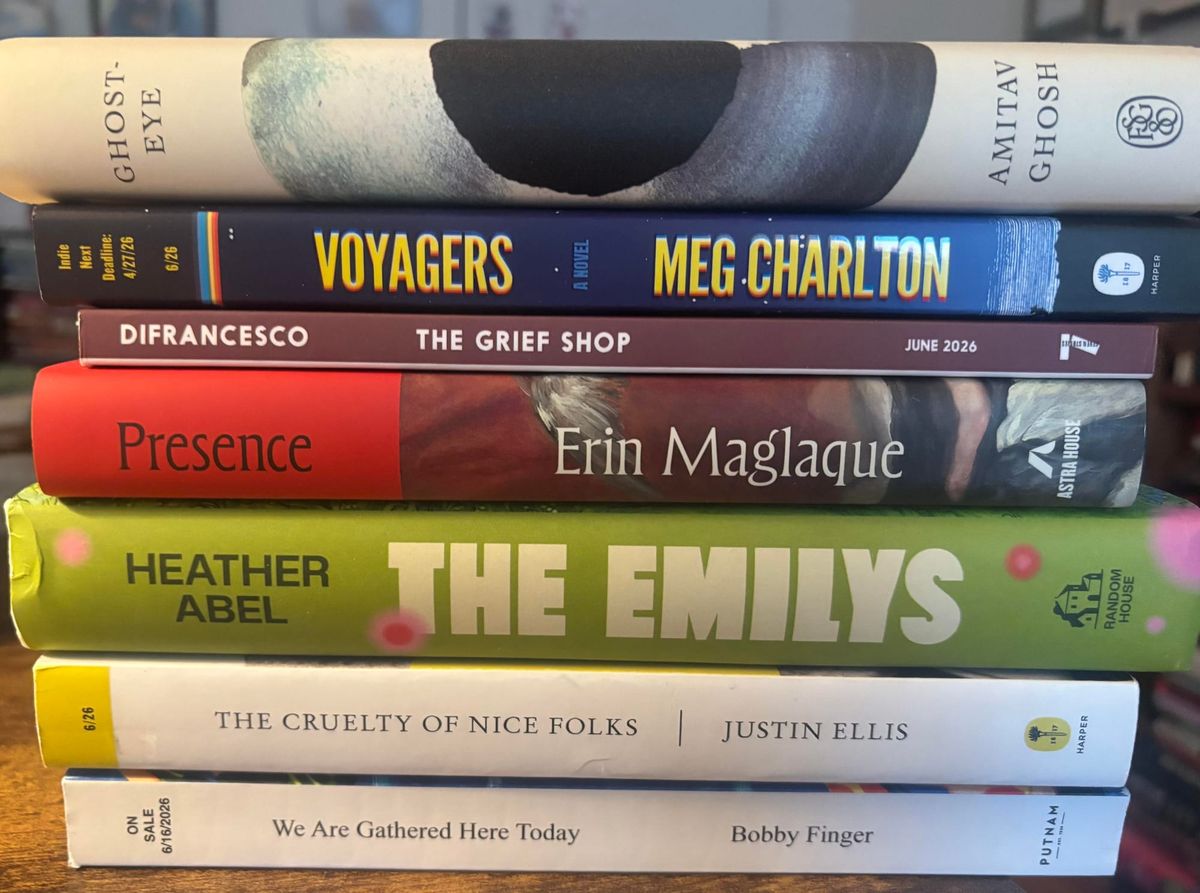
Ghost-Eye by Amitav Ghosh
Voyagers by Meg Charlton
Presence: A Hidden History of the Female Body by Erin Maġlaque
The Emilys by Heather Abel
The Cruelty of Nice Folks: Why Minneapolis Is the Story of America by Justin Ellis
We Are Gathered Here Today by Bobby Finger
The Pinnacle by Abir Mukherjee
A Second Sight: How the Wonder and Vision of Black Mediamakers Push America Toward Freedom by Sarah J. Jackson
Charity & Sylvia by Tillie Walden
Little Blue Dot: How GPS Shaped the Modern World by Katherine Dunn
As If by Isabel Waidner
Trash! A Garbage Man's Story by Simon Paré-Poupart, translated by Pablo Strauss
Come Undone by Eddie Huang
Monster of a Land: On the Road in Search of Modern America by Lauren Hough
The Frenzy by Joyce Carol Oates
The Lowe Job by Grace Alexander