The Maris Review, vol 114

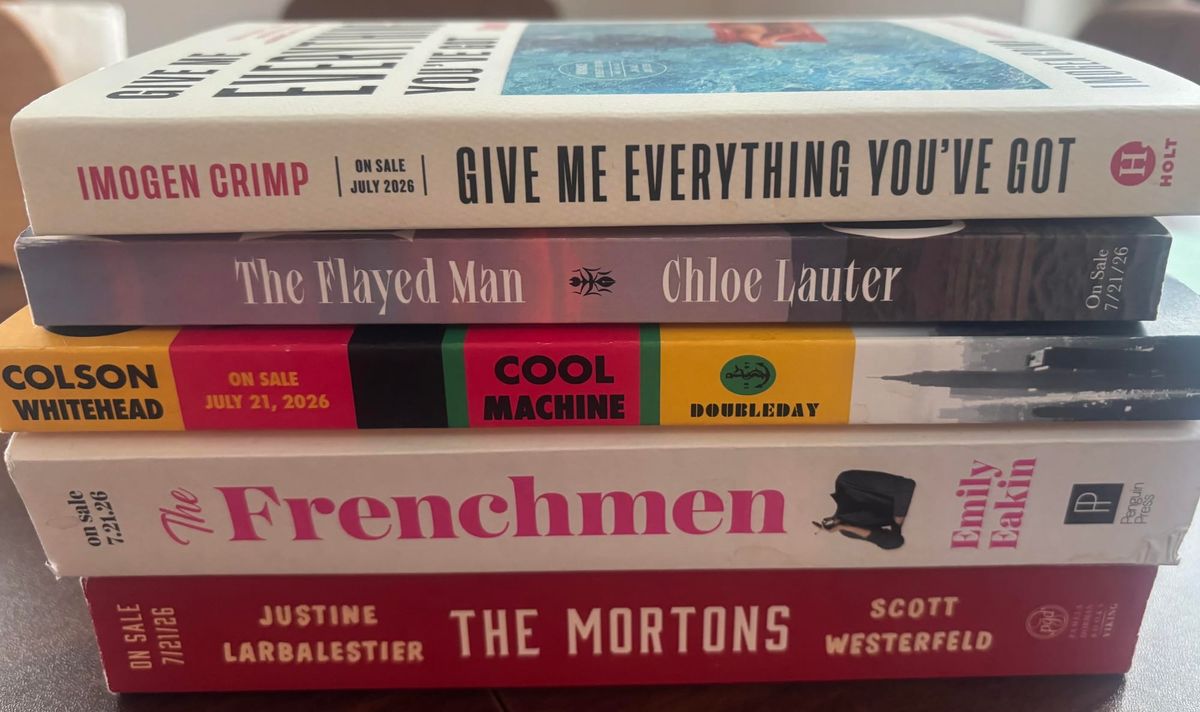
The theme of this week is very simple: two of the hottest novels of summer 2026
What I read this week
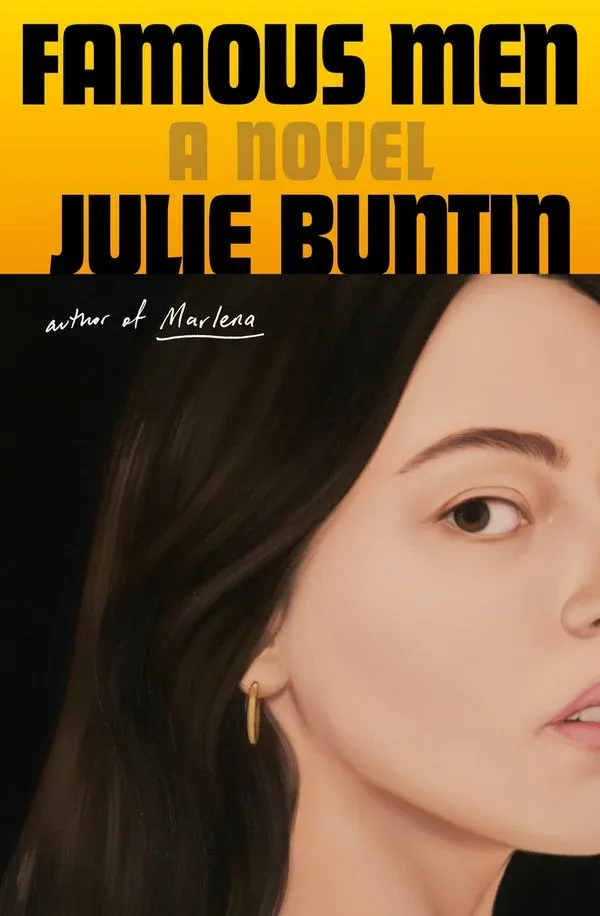
Famous Men by Julie Buntin
"I was naive, but not so naive that I hadn't already heard this story, both of us fitting neatly into our roles. Except he didn't know how hard I worked to get here. And in that way, I almost felt I was taking advantage of him, some balance between us restored."
I have read versions of this novel before, even the heroine of this novel has. I bet you have too. For the most part I enjoy each one, the formula being something like: young woman, older man with lots to "teach" her, navigating a power imbalance, wondering who has agency and how much, etc.
But Julie Buntin has made it feel brand new. How? Well first, Julie can really write the fuck out of a sentence. Also? Her young heroine, Will Miles, has a kind of meta awareness of the cliche in which she finds herself. Which allows Julie to play around with the form and experiment a little, a feature that is only fitting for a novel about a young writer learning her craft.
Yes, we know this story: Will is from a small town in northern Michigan who knows she must leave home for her life to really begin. She is a fan girl of her town's most famous former resident, a poet and prose writer who teaches at an MFA program in New York City, home of pretension. At 23 she arrives in the big city overwhelmed, but manages to make her way towards the 62 year-old poet and entangles herself in his life. He is the main character in the story of her life; she is, perhaps, a footnote in his. There is sex.
Famous Men doesn't mention #MeToo or Harvey Weinstein by name, but they are very much there, front and center. But what if your life involves zero rapists? What if you live in a more wishy washy, gray area that's more difficult to dissect? Where does overwhelming medical debt fit in to this neat little story? What about housing insecurity? Julie makes us sit with this discomfort, and I for one came away grateful for it.
Also lets savor Julie's shoutouts to Housing Works Bookstore of 10-15 years ago. I miss it all the time.
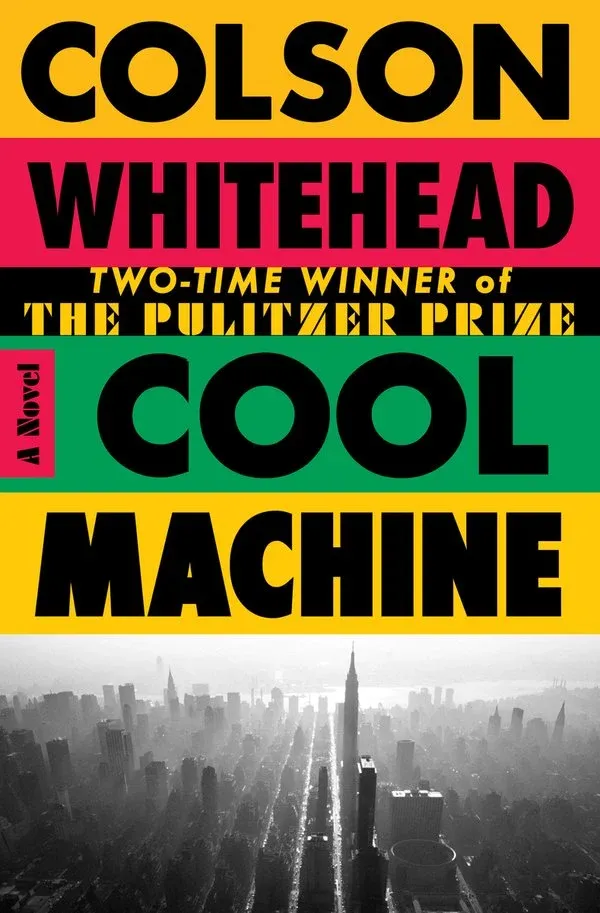
Cool Machine by Colson Whitehead
First thing's first. If you haven't read the first two books in Colson Whitehead's Harlem Trilogy, stop what you're doing and remedy that. The third and final book in the trilogy could functionally stand alone but why would you want to deprive yourself of all of the joy that comes from appreciating the intricacy of the world that Colson has created? All of the jokes!
The Harlem Trilogy's protagonist is a furniture salesman-turned-fence named Ray Carney. We first meet Carney as a young and ambitious new father who will do whatever it takes to provide for his family in the early 1960s. That ultimately involves some petty – and not so petty – crimes and entree into Harlem's criminal underworld, which is not so far beneath the surface. The second book takes place in the 1970s and we watch Carney deal with arson and the unrest of the city in the age of the blackout as he gets involved in another con/heist/caper to score some Jackson Five tickets for his daughter.
Now it's the 1980s, when the hippies are being replaced by yuppies and gentrification is having its way with all of the storefronts on 125th Street that Carney used to know. I won't go into too many details, but just know Cool Machine is as action-packed and dialogue-heavy as the previous two, but with enough space in the middle of doing a heist for Carney to stop and take notice of a particularly inspiring coffee table.
Taken as a whole, the trilogy is one of the best crime series of all time (I said it!), evoking New York so thoroughly through decades of rapid fire change or "churn," as Carney calls it. The books are very much about the brutality of the city ("The rivers – Hudson, East – choked Manhattan like a noose") but they contain so many unexpected bursts of tenderness, often relating to the softer sides of very tough guys. They're also sweeping cultural histories – there are so many throwaway lines about life in Harlem that are worthy of whole books. And the novels are deeply philosophical, of course, with a takeaway I'll summarize as something like this: just about everyone is a little bit crooked, sometimes in legal ways and sometimes otherwise.
RIYL The Odyssey
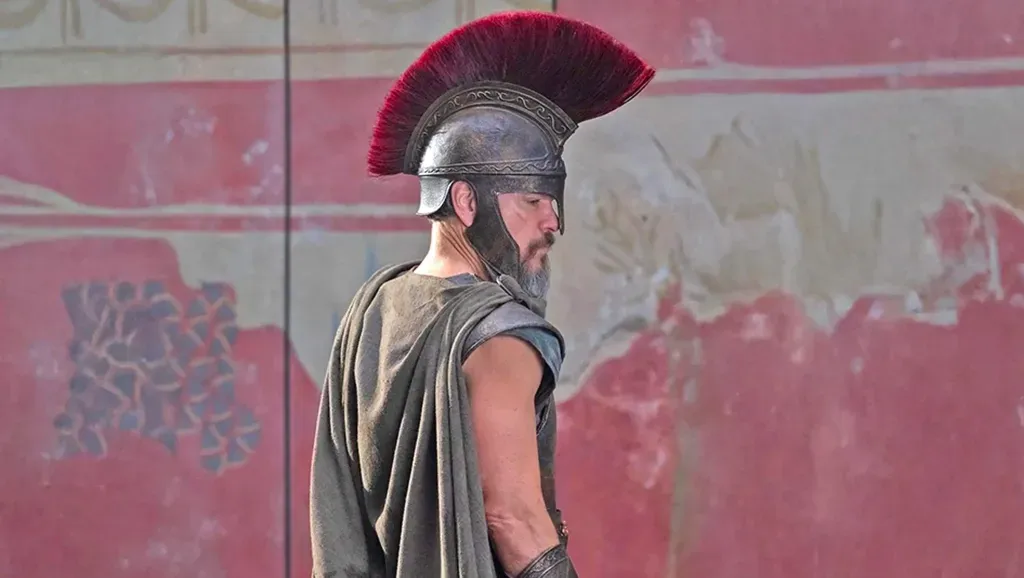
Have you heard about this little film called The Odyssey? Based on a book by the bestselling fiction writer, Homer?
I fully understand why, but I find it so funny how much book coverage the film is getting, so desperate are we book people to cash in on this movie moment that we're willing to bend over backwards to try to make it about us. There are explainers and refreshers and RIYLs and guides to each of the big translations. We are trying!
I will add my 2 cents by telling you about the RIYL categories I've been seeing, along with my favorite books in those categories.
Ancient Works With a Modern Update:
Maria Dahvana Headley's very modern translation of Beowulf is truly the closest feeling you're gonna get to Emily Wilson's Homer translation.
Retellings of Greek Myths:
Madeleine Miller’s Song of Achilles is by far the best. I loved Circe too, but not as much. There are so many imitators – feminist retellings of myths are HOT right now – but no one does it quite like her.
Other odysseys:
My choice has gotta be Jesmyn Ward's road trip novel, Sing, Unburied, Sing.
The Booker Prize also has a great list of other epics.
"Men's adventure novels":
This is the name of the subgenre in which Amazon categorizes The Odyssey. Okay. And to that I say go read Moby-Dick already.
New releases, 7/21
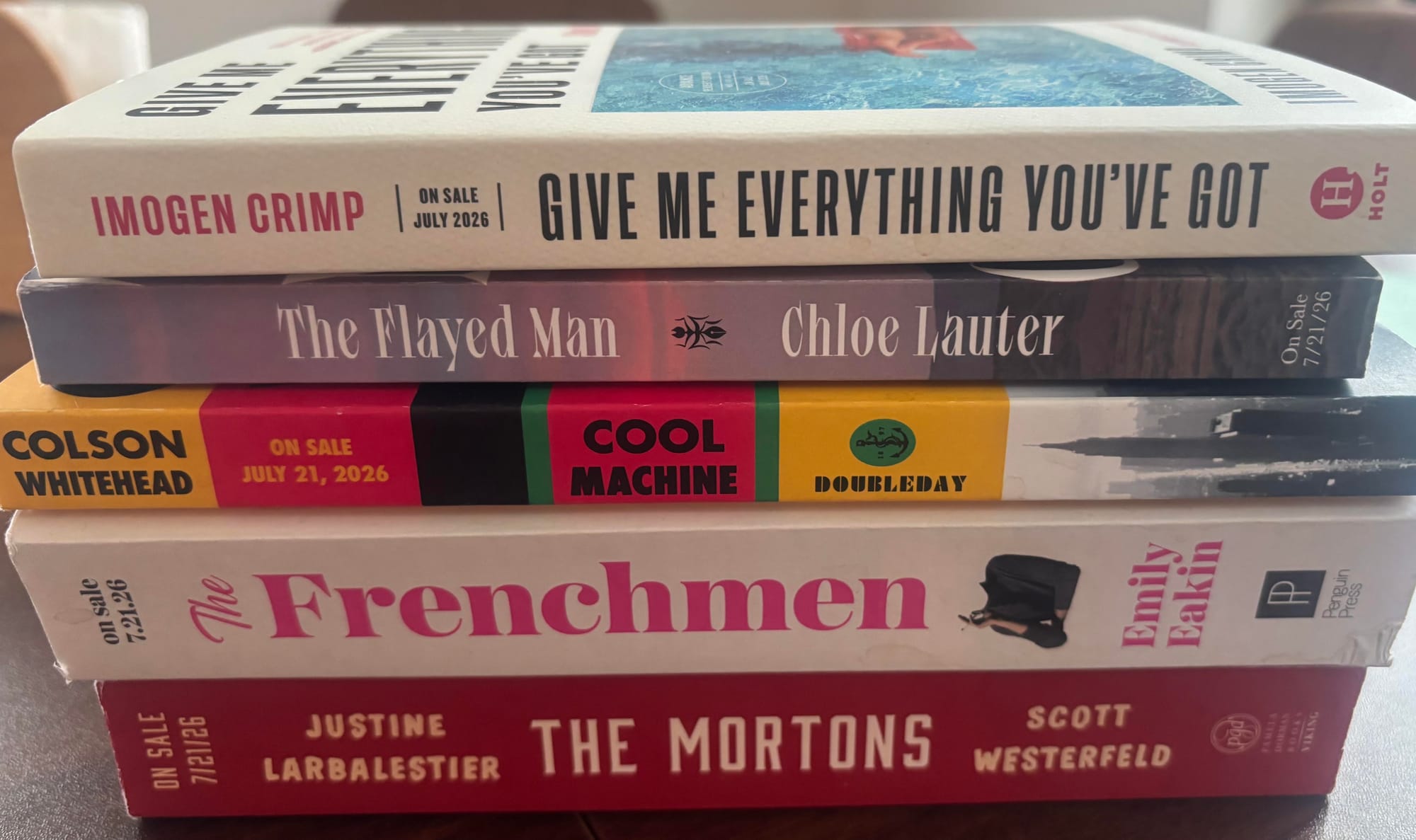
Give Me Everything You've Got by Imogen Crimp
The Flayed Man by Chloe Lauter
Cool Machine by Colson Whitehead
The Frenchmen: Or, My Life in Theory by Emily Eakin
The Mortons by Justine Larbalestier and Scott Westerfeld
The Biggest Lie: The Prehistory of American Fascism, 1818-1915 by Joseph Kelly
Unsayable: A Life in Writing by Michael Cunningham
Rise Above: A Memoir by Matthew Schnipper
Tenderness by Rowan Beaird
The New People by Andrea Uptmor
How to Close a Camp: Dispatches from the Fight Against Immigrant Detention by John Washington
Country of Lords: Neo-Aristocrats, Social Darwinists, Tech Utopians, and the Long Fight Against Equality in America by Kim Phillips-Fein