The Maris Review, vol 126

The theme of the week is the slipperiness of the truth in the stories we like to consume
What I read this week
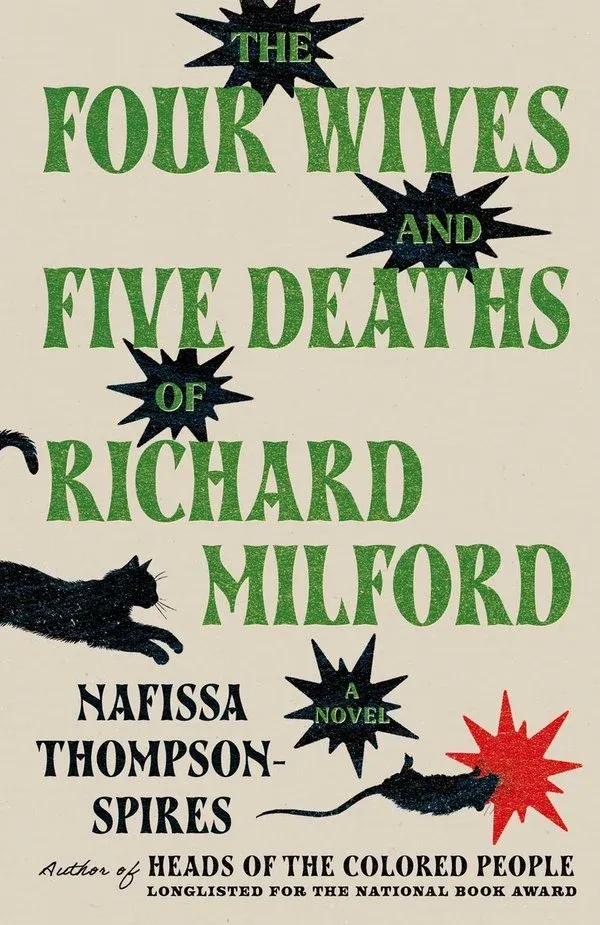
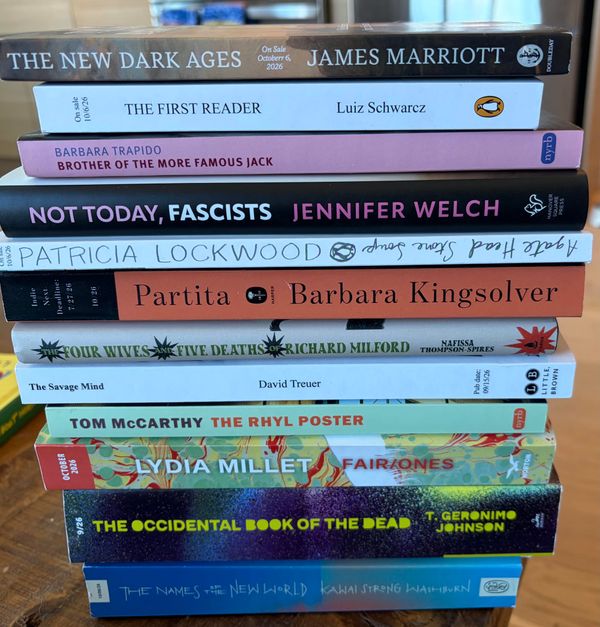
The Four Wives and Five Deaths of Richard Milford by Nafissa Thompson-Spires
I love a novel that's less than 200 pages but packs so much story in that space that it feels epic. I also love a debut that is so self-assured that there's not a word out of place. And I love a work of fiction that's preoccupied with storytelling and how we create a historical record.
Wanna know what I hate? That I read and loved Four Wives so much, and then I went looking for some good writing about it and there was nothing – only three pre pub reviews. I ended up going to Goodreads and looking for nuggets of wisdom there, which is very sad. A few women there were unhappy that they'd chosen the novel as their Book of the Month selection. But I leave it to Ladiami to tell you "The whole idea that truth isn’t one clean, simple thing really comes through... It made the reading experience feel more interactive, like I had to piece things together myself." Beautifully put.
The title character in the novel is a moonshiner and a hustler and an overall despicable man uniformly hated by the entire all-Black town of Newville, Oklahoma. The action in Four Wives takes place only a few years after the Tulsa Massacre of 1921, but it's narrated by the townspeople themselves across vast periods of time. Let me quote two sentences to illustrate exactly what that means: "Since time for us in Newville moves in the shape of a full moon, we could simultaneously Juba and teach one how to Dougie – and detest Richard Milford beyond the infinite in every parallel reality. Excuse us, then, while we alternately stomp, spit, blow our noses, Cakewalk, C-walk, Charleston, Nae-Nae, Macarena, Wobble, Electric Slide, Cha-Cha Slide, and do the Hustle on Richard's grave." Perfection.
The novel is comprised of different versions of town gossip about how the cruel and scheming Richard Milford finally met his end. Interspersed with the townspeople's collective narration are chapters told from the points of view of his four wives (one legal) and his long-suffering maid. It's like Rashomon but with bigamy.
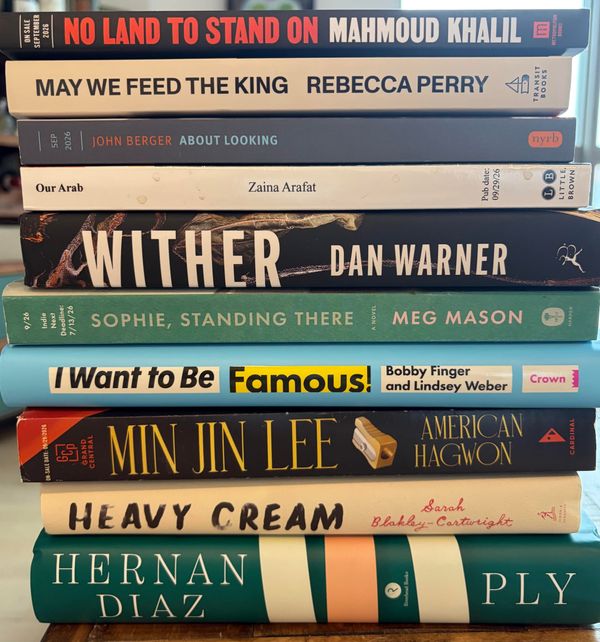
Four Wives reminds me of another favorite novel from this year: May We Feed the King. Though their settings differ wildly, they're both about how stories are told and shared, how the truth depends on who's telling the story, how many different reasons there are for cutting short the reign of a much-discussed man.
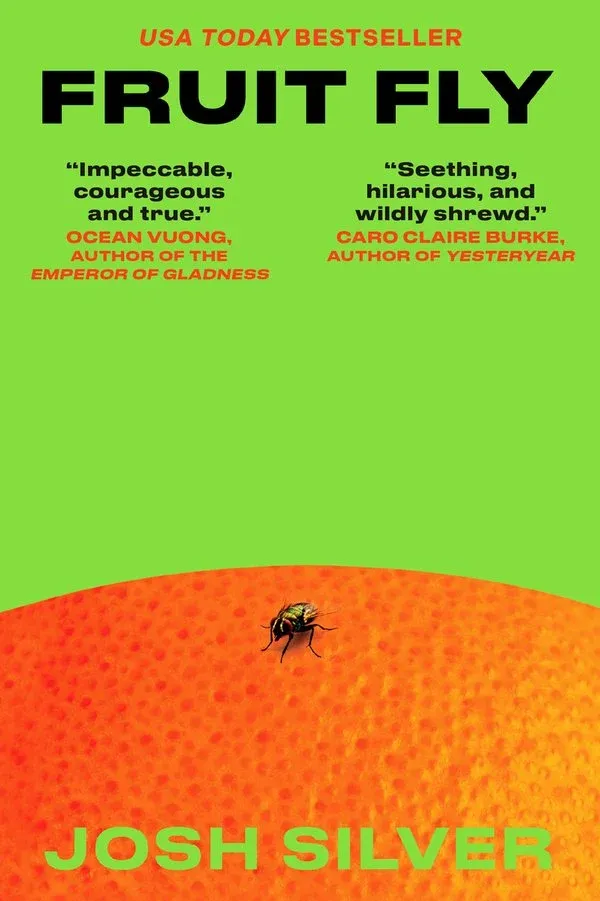
Fruit Fly by Josh Silver
I love to read a buzzy book, and Fruit Fly officially counts – written by a former actor turned writer, it was a bit of a phenomenon in England, and got a good bit of media attention in the US. It was recently optioned by A24 for a TV series. Also, the cover is perfect, even if the prose is a bit clunkier than I had expected.
For a book that's often propulsive, Fruit Fly is a little too long, mostly because it contains so many false endings. Something about the unreliable narrator becoming so bonkers that she can no longer actually tell her side of the story. I have high hopes that the TV show could redeem the plot line by showing viewers all of the action that occurs off the page in the novel and making the whole thing more cohesive
But there are lots of fun parts. It's the story of Mallory, a writer turned (unlicensed) therapist who has been blocked for years and who appropriates the story of Leo, a gay addict she meets on Grindr (this part is great), as her next big novel. If only her controlling husband doesn't get in the way. And, of course, later in the book we discover that Mallory and Leo have more in common than we and they might expect.
It's a book publishing satire that doesn't quite get all of the mechanics right, but it joins Erasure and Yellowface in exploring how (mostly) upper middle class white women consume stories about marginalized people and their trauma. It's the kind of book that questions the failures of empathy, and what kinds of books a book club might enjoy if the goal is to come away with the feeling like you're a better person for understanding another person's pain.
Here's a fun exercise

Last week was the Kirkus Awards, and Megan Labrise, host of Fully Booked and overall queen of author interviews, asked the finalists the perfect question: "If your book had a walk out song what would it be?"
It got me thinking about how the song for I Want to Burn This Place Down would be Rid of Me by PJ Harvey, but the music would have to start when the song gets loud. So basically this part:
"Don't you don't you wish you never never met her
Don't you don't you wish you never never met her
Don't you don't you wish you never never met her"
Now you go.
Here's what my next column will be about
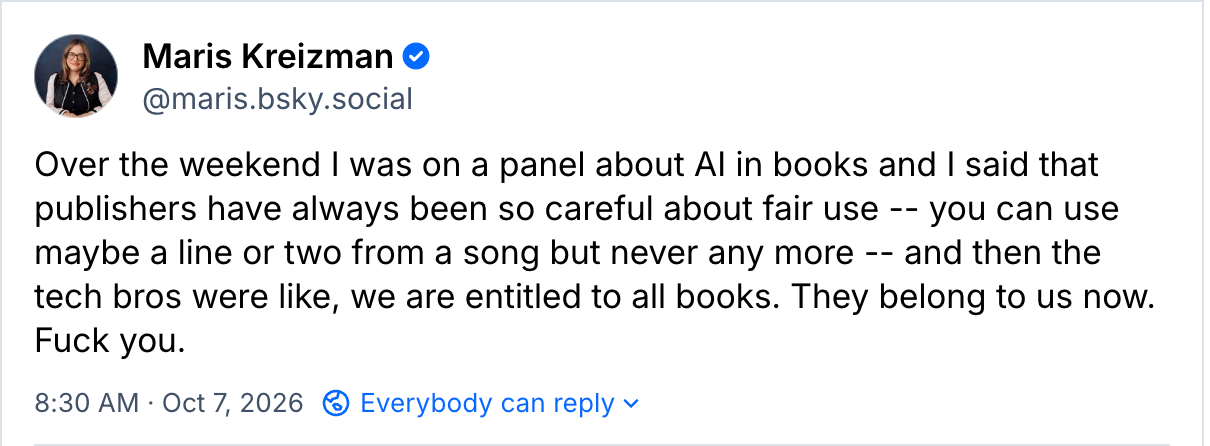
And also this new piece from Adam Morgan for WIRED with the headline Book Publishers Are Quietly Using More AI. Staff Are Revolting.
New releases, 10/13
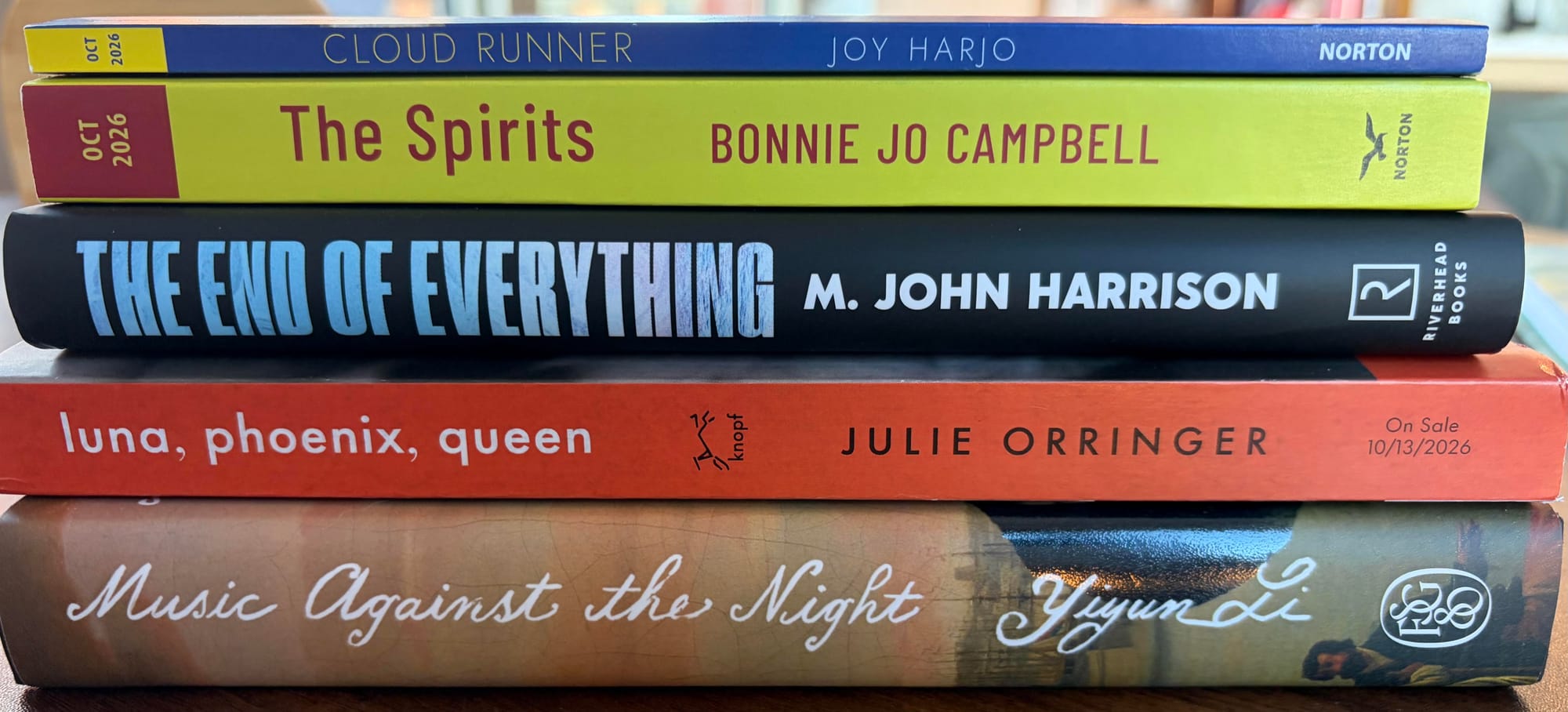
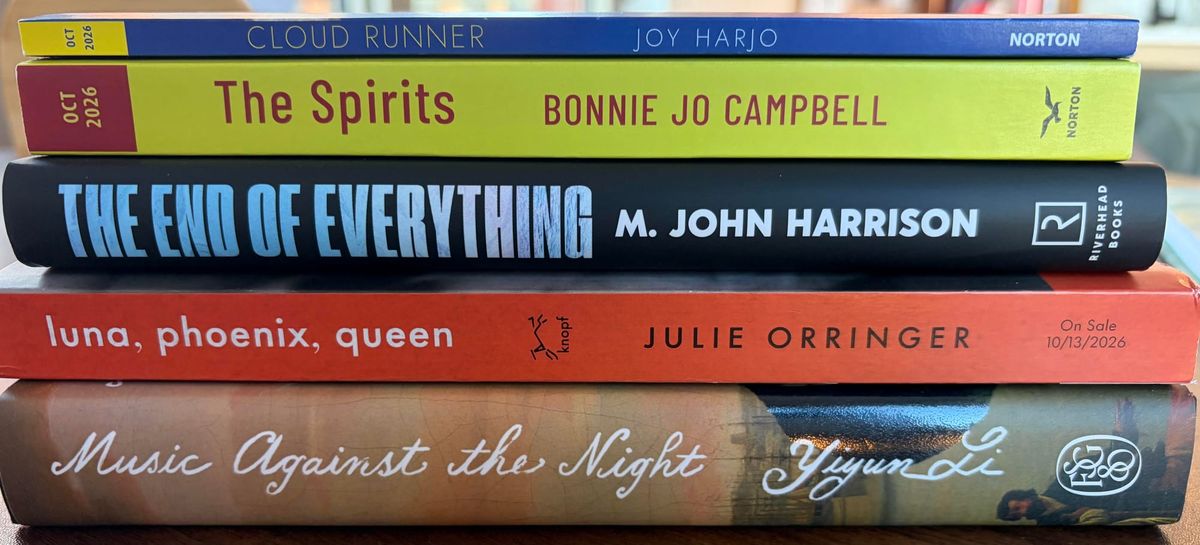
Cloud Runner by Joy Harjo
The Spirits by Bonnie Jo Campbell
The End of Everything by M. John Harrison
Luna, Phoenix, Queen by Julie Orringer
Music Against the Night by Yiyun Li
On Another Planet, They Can Save Me by Lieke Marsman, translated by Sophie Collins
Off the Reservation by Stephen Graham Jones
Rottenheart by Kat Dunn
Serling: A Journey Into the Twilight Zone with TV's First Visionary by Alan Sepinwall
On Un/Certainty: The Uses of Doubt in Dangerous Times by Natasha Lennard
To God by Esther Yi
American Socialist: The Life and Legacy of Eugene V. Debs by Shawn Guide
The Last Best Place on the Internet: A Human History of Wikipedia by Richard Cooke
I'll Believe in Anything: The Making of Heated Rivalry Season 1 (The Annotated Scripts) by Jacob Tierney with an intro by Rachel Reid
Solace House by Will Maclean
I Never Knew You at All by Christine Pride and Jo Piazza
Freedom's Gate: Maya Angelou, Lorraine Hansberry, Abbey Lincoln, Miriam Makeba, and Nina Simone Live at the New York Nightclub That Shaped the Civil Rights Movement by Soyica Diggs Colbert
Yap! A Short History of Small Dogs by Stephanie Howard-Smith
Goodbye to Goodbye: Selected Stories from the Stephen Dixon Collection