The Maris Review, vol 127

The theme of the week is resurrecting the dead in service of authorial appropriation, but in a really, really good way
What I read this week
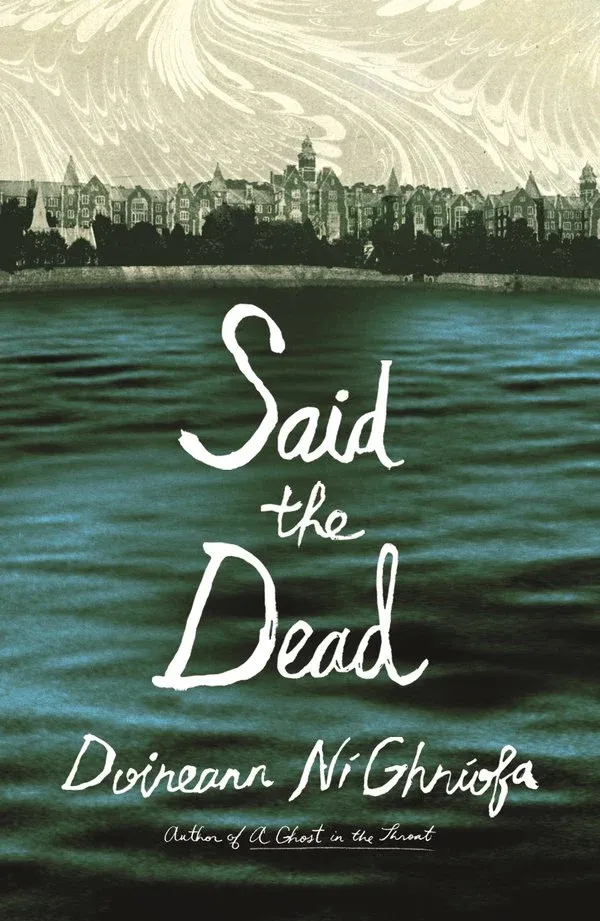
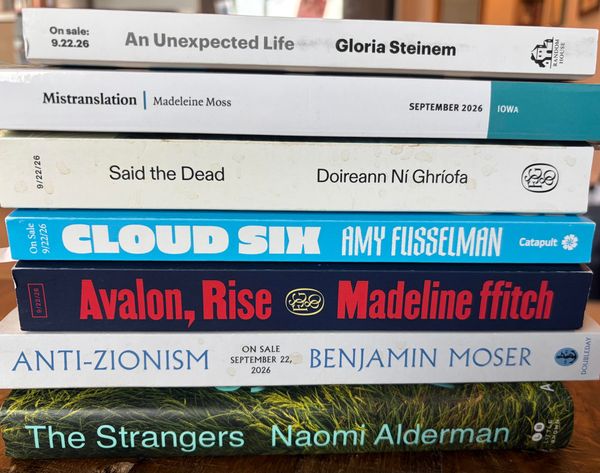
Said the Dead by Doireann Ní Ghríofa
This book. This book lit up all of the best parts of my brain. Said the Dead is shelved in the nonfiction section of the bookstore or library, but it's one of those books that mixes genres masterfully, with true events inspiring beautifully imagined scenes about the lives of the people who were mere footnotes in the historical record. Just like Wayward Lives, Beautiful Experiments by Saidiya Hartman and a more recent favorite, When Women Kill: Four Crimes Retold by Alia Trabucco Zerán, trans. by Sophie Hughes, Said the Dead is what happens when an extraordinary writer gets lost in archival research and is then able to make informed and deeply empathetic decisions about the flesh and bone and brains and hearts of the people she's studied. This is perhaps my favorite micro-genre?
Said the Dead revolves around an asylum in Cork, Ireland that existed during the Victorian era, some of which has already been bulldozed to make way for apartments. As the rest of the demolition looms, the narrator, who refers to herself only as The Reader, develops a sense of urgency to recover all that she can: she spends days studying the massive archives of doctors' case notes that give us small glimpses of the lives of the patients but not much more.
Why does the Reader care so much? We don't know a ton about her and we're certainly not offered a well-rounded portrait – which makes sense here, a kind of meta commentary. She's just beyond our reach. What we do know is that she is a wife and the mother of small children who has tons to do but can't stop thinking about the occupants who once populated the rooms of the former mental hospital. Given that the Reader herself has "known the lure of the river's dark silks and the horror of being dragged back from her ending," it's no wonder she looks to the women who had been locked in Cork Mental Hospital more than a century before as her spiritual sisters.
In her frenzied research the Reader encounters countless portraits of women described with a few biographical facts and some adjectives and an ambiguous status update, often "no change." She finds some photographs and letters, and maybe a newspaper clipping or two, all of which are included in the book. Between the lines it becomes apparent that many "crazy" women of the early 1900s were simply suffering from afflictions that were yet unnamed: PTSD, postpartum depression, etc. Names repeat. There are countless Marys in the case books, too many for even the Reader to make one particularly stand out.
But thankfully for the Reader and for the readers, we get a singular heroine: Lucia Strangman was a lady doctor who became an assistant physician at Cork Mental Hospital in 1896. Her case notes are the ones the Reader most seeks, and the details of her life are the easiest to track down.
Even while the Reader creates backstories and emotions and dreams for the women of the asylum, she never thinks of herself as a reinvigorator or a truth teller. In her mind the Reader is an intruder, trespassing in someone else's story. Or she's a ghost, haunting people of the past and even, perhaps, inspiring some of the women's delusions.
Muddying the water further is commentary from another voice, this one in the first person singular, who seems to be taking poetic little notes on the Reader as Lucia did for her patients. "What might it reveal of her own pain / that she chooses to immerse herself / entirely in the lives of others?"
Said the Dead may not be for everyone, but I think those who are apt to love it will really fucking love it.
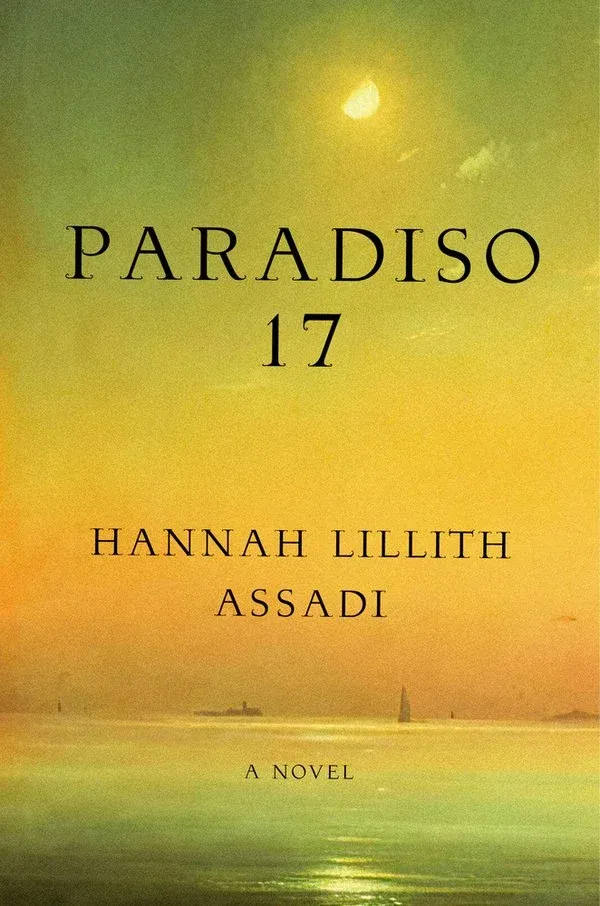
Paradiso 17 by Hannah Lillith Assadi
An imperfect yet lovely novel about what a life in exile does to one's psyche. It's a tough read mostly because it encompasses the life story of a protagonist – apparently based on the real life of the author's father – who keeps fucking up. Sufien loves his family but he's seemingly incapable of giving them what they need. The weariness always seeps through.
And maybe that's the point. Sufien isn't very good to the world, but what has the world ever done for him? Forced at gunpoint from his home in Palestine as a young boy, he spends the rest of his life, no matter where he is – Syria, Kuwait, Italy, the US – as an outsider.
I love that we don't get a model minority in Sufien. He's complicated and kind of a dick, and he deserves our empathy anyway. His life was radically altered by the shattering effects of the Nakba, which is, of course, a well-documented historical event that took place in 1948 but I didn't learn about until I was long outside Hebrew School and well into adulthood. It's really scary and uncomfortable to look back on events that were framed to you in one way, when an entire other group of people looks back on that time as The Catastrophe.
I did another rant and I have no regrets
My latest column for Lit Hub is about how publishers have always been pretty conservative about fair use when it comes to publishing, say, lyrics in a book. But now the tech oligarchs have declared that all books are theirs, and we’re barely even putting up a fight. It's really depressing but more than that it's infuriating.
More AI shenanigans
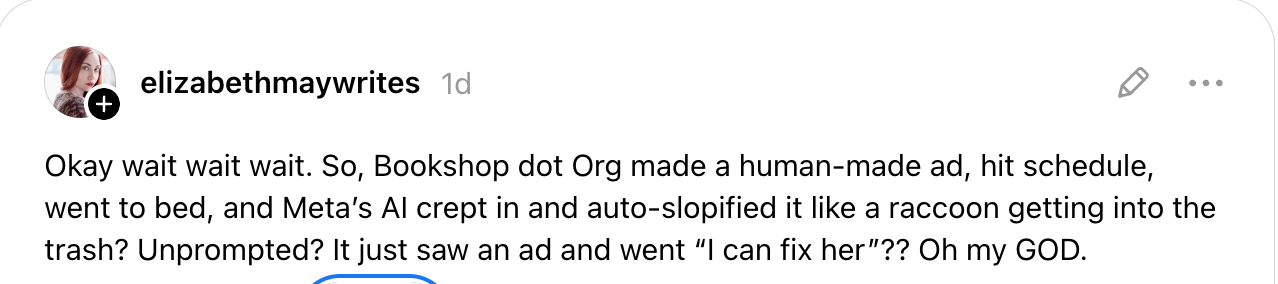
My beloved Bookshop.org got a lot of shit over the past week on Threads, and I was so relieved (and pissed!) to realize that the reason why people were mad wasn't the fault of Bookshop at all.
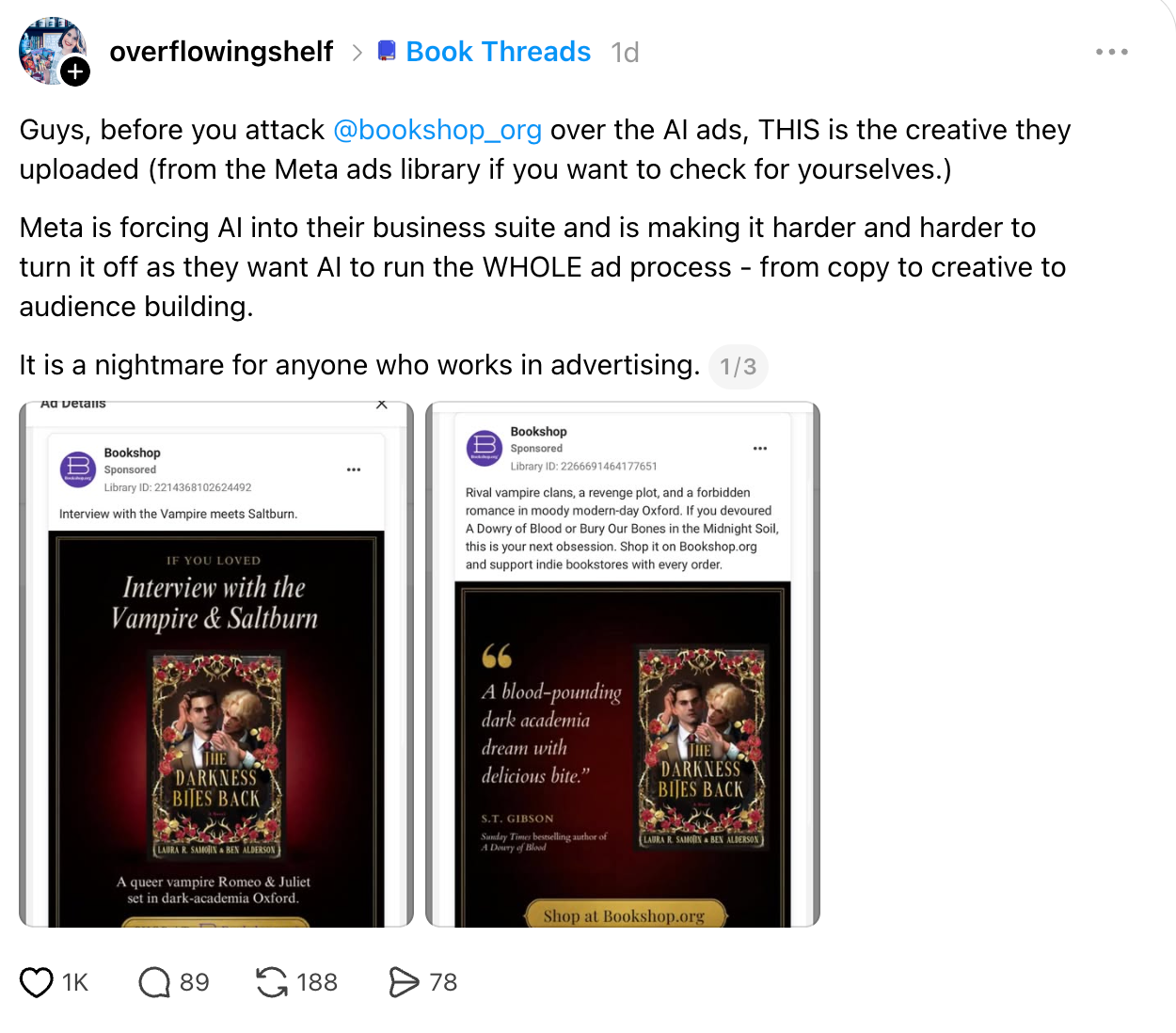
Bookshop submitted and ad to Meta, and with no warning at all Meta replaced Bookshop's copy with AI slop. Tell me again how AI makes anything better?
Look at the comparison below and how egregious this is (although it delights me to no end that AI is absolutely terrible at providing book recommendations and/or comp titles).
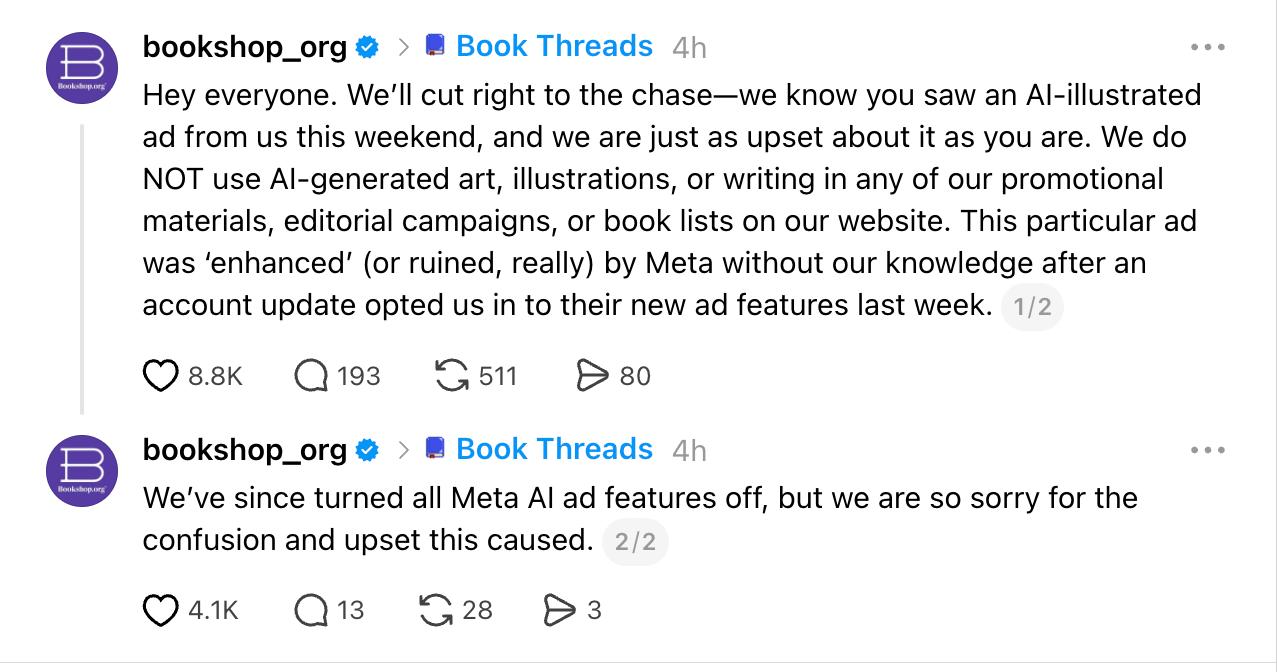
Here's Bookshop on the mess:
As always, burn it down.
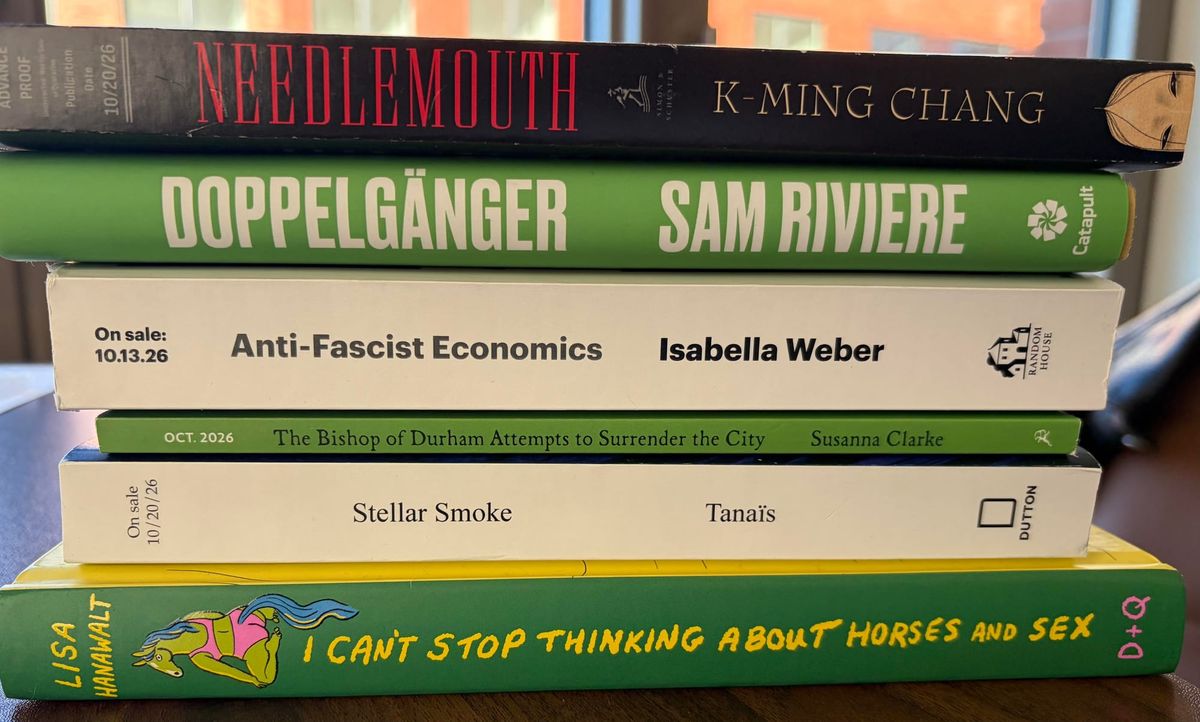
New releases, 10/20
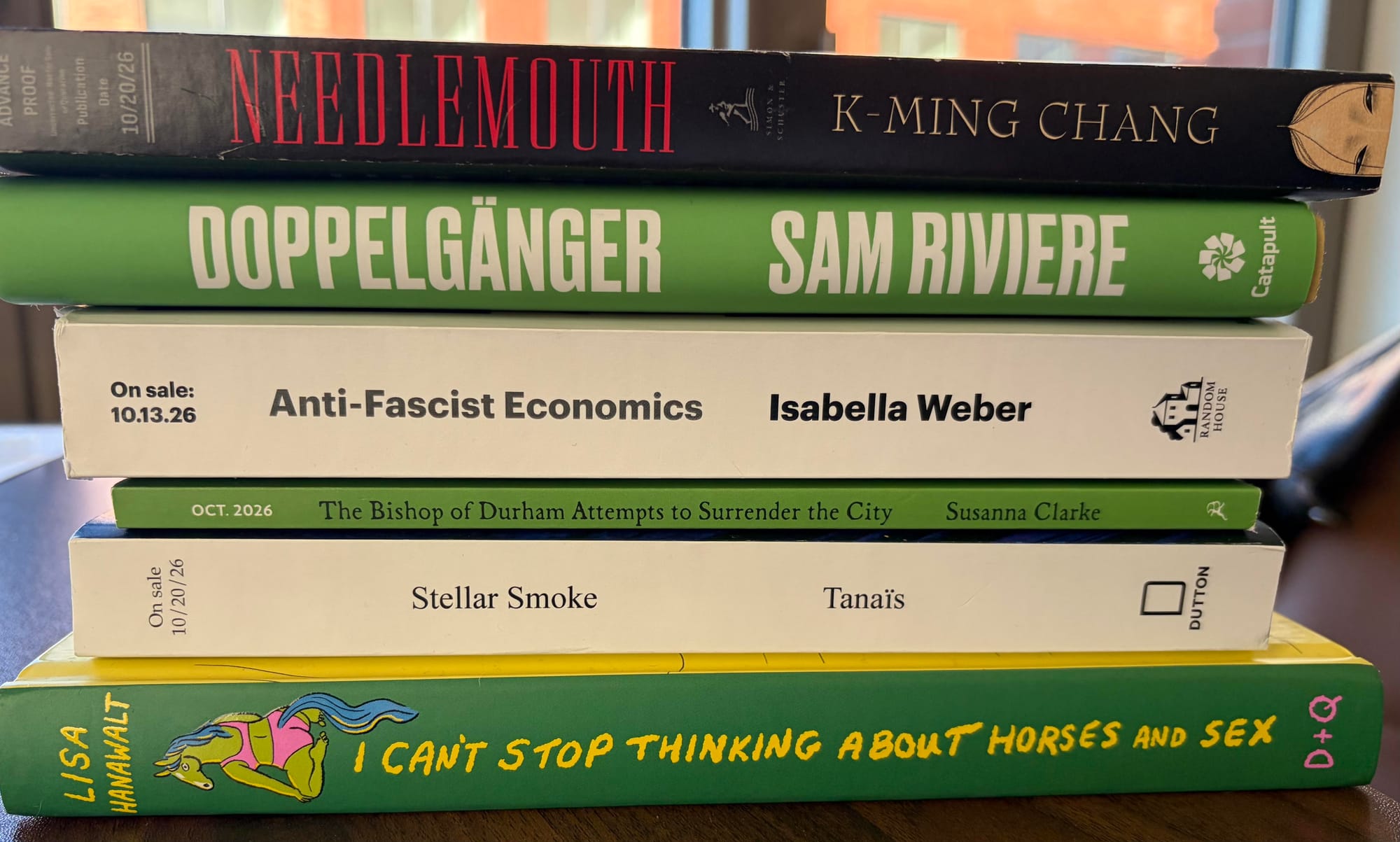
Needlemouth by K-Ming Chang
Döppelganger by Sam Riviere
Anti-Fascist Economics: In Defense of Affordability, Dignity, and Democracy by Isabel Weber
The Bishop of Durham Attempts to Surrender the City by Susanna Clarke
Stellar Smoke by Tanais
I Can't Stop Thinking About Horses and Sex by Lisa Hanawalt
The Shadow of the Object by Chloe Aridjis
Paradise Burns by Pol Guasch
Hyperscale: The Ambition and Excess of Big Tech's Data Empires by Paris Marx
The Bullwhip's Algorithm: Artificial Intelligence and America's Racial Caste System by Kamau Bobb
Emperor of Nothing: The Making of Larry David by Blake J. Harris
The Girl in Blue: Renoir's Portrait of a Dynasty Erased by Doreen Carvajal