The Maris Review, vol 121
The theme of the week is reasons to become a misandrist, and also English pubs
What I read this week

The Palm House by Gwendoline Riley
I have not read Gwendoline Riley before but now I'm in it. Her latest novel, long-listed for the Booker Prize, really got me. Perhaps it's because I related so much to narrator Laura, a woman of a certain age who's still trying to find her place in the world. But The Palm House is also thrilling because of how the plot unfurls. This is not an explain-y novel. There's very little exposition, and Riley trusts the reader to go along with her as she introduces new characters and situations in Laura's life even when we don't immediately have all of the information we need to appreciate them. Even within the text of the novel the reader must find their way. I love this.
I would be remiss if I didn't mention that the first section of the novel spoke to me so thoroughly that I was very much inclined to fall in love with the rest of it. It's all about Laura's friend, Ed Putnam. Putnam is leaving his job as an editor of a literary magazine after a 25-year career because a man named Shove was brought over from some a sports magazine to run the place. What an incurious dude from sports can do to your entire identity and the life that you've built. This is like Megan Greenwell's famous essay that I still think about every day about the idiots from private equity who were brought in to run Deadspin, but in novel form.
Towards the end of the novel, Putnam says something about Shove that is so relevant to what's happening to the arts and journalism right now that I could puke: "He didn't have any interest. We knew he had no knowledge. But no curiosity, either. Loudly enthusiastic, but without a scrap of interest."
HELP.
The specter of Shove hangs over the rest of the novel even if we don't encounter him in most of it. It's about how impossible it is to live in London as a working class person, and how that difficulty only increases with age. It's about real estate and loss and how refreshing a drink and bitch session with a good friend can be. It's about romantic failure: we meet a stream of losers from Laura's past in brief glimpses, including a terrible (adult) comedian whom Laura met as a teenager.
It all adds up to a portrait of life in a precarious world in middle age, and how we make peace with where and who we are. Each distinct section had me thinking about what Riley chose to include in the novel versus what remains unsaid. I love a novel that makes me think about its mechanics and also gives me a quote to put in bold in my newsletter.
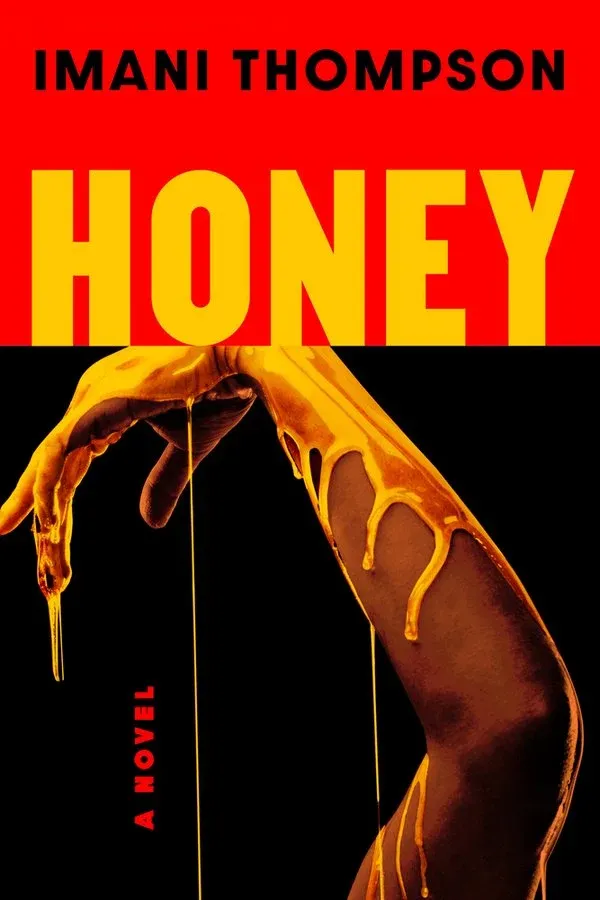
Honey by Imani Thompson
After I finished watching Furious last week and absolutely loved every moment, I wanted to go back and revisit some of my favorite novels about women vigilante killers. This is the kind of trend piece I would have pitched some book publication or another a few years ago, but now pitching feels impossible? So I slap it in the newsletter instead.
I read Imani Thompson's debut novel with female rage and the seeking of catharsis in mind. I did not get what I was searching for, and that is more than okay. I got something else, something much trickier.
Honey is the story of Yrsa, a confident, angry young woman who's working towards a PhD in sociology at Cambridge, particularly focusing on the theory of Afropessimism. It's an apt topic for a burgeoning killer: Afropessimism, to quote Vinson Cunningham in the New Yorker, quoting David Brooks (!!!) in the New York Times who himself was quoting Frank B. Wilderson III's Afropessimism, purports that “the spectacle of Black death is essential to the mental health of the world.”
In such circumstances it's no wonder a Black woman would feel murderous.
After Yrsa does absolutely nothing when a professor – who was fucking a student and taking credit for her work – dies from a bee sting, Yrsa decides that she could get used to this. She compiles a kill list including men who've wronged her personally, a vile manosphere influencer, and a banker that sex workers warned each other about on message boards. But as the book continues she needs fewer and fewer reasons to go in for a kill.
Spoiler alert: In Furious there was no ambiguity around the ultimate villain of the series: he was a bad rich man who enjoyed raping children for his whole life. This is classic Jeffrey Epstein shit. There must be so many — hundreds of? thousands of? – people who knew what was going on and did nothing and said nothing, allowing an entitled millionaire pedophile to fuck with the lives of his victims at will. And as we all know, there were so few consequences. The anger is there and it is white hot. In Furious murder is the only sane thing to do in a world in which our institutions will never provide justice to those who've been brutally wronged. It is satisfying to watch sex trafficking victim Catherine (Lola Petticrew), get her revenge.
Honey is murkier: the narrator is an asshole, for one. At first Perry presents Yrsa as the kind of strong woman who is not a people pleaser and doesn't care about ruffling feathers. She is also a really good friend to her 90 year-old neighbor. But along the way it becomes apparent that Yrsa is more of a psychopath than simply a woman wronged. She enjoys playing God, she derives pleasure from killing, and she twists political theory in order to justify her actions.
The novel ends abruptly: Yrsa must decide if she will kill an entirely innocent person – a woman. We don't know what she chooses. The unanswered questions linger long after the final pages of the book.
Other woman vigilante books I highly recommend:
A Certain Hunger by Chelsea Summers
Sensual and delightful!
My Sister, the Serial Killer by Oyinkan Brathwaite
So much fun.
Discipline by Larissa Pham
This one is a little more ambiguous, but it's about a young artist who has an affair with a much older professor and then writes a novel in which she kills him.
The Power by Naomi Alderman
What if a mysterious virus allowed for vigilanteism became a mass movement?
How to Commit a Post-Colonial Murder by Nina McConigley
The circumstances in Nina McConigley's pitch perfect debut novel are a little different: it's the story of two sisters, young children when their uncle from India comes to live with them in the suburbs in the 1980s. Vinny Uncle is a monster of the all-too common kind that prey upon family members. The girls decide they must act, and their parents just so happen to have antifreeze in the garage...
Advanced Weird Girl Lit
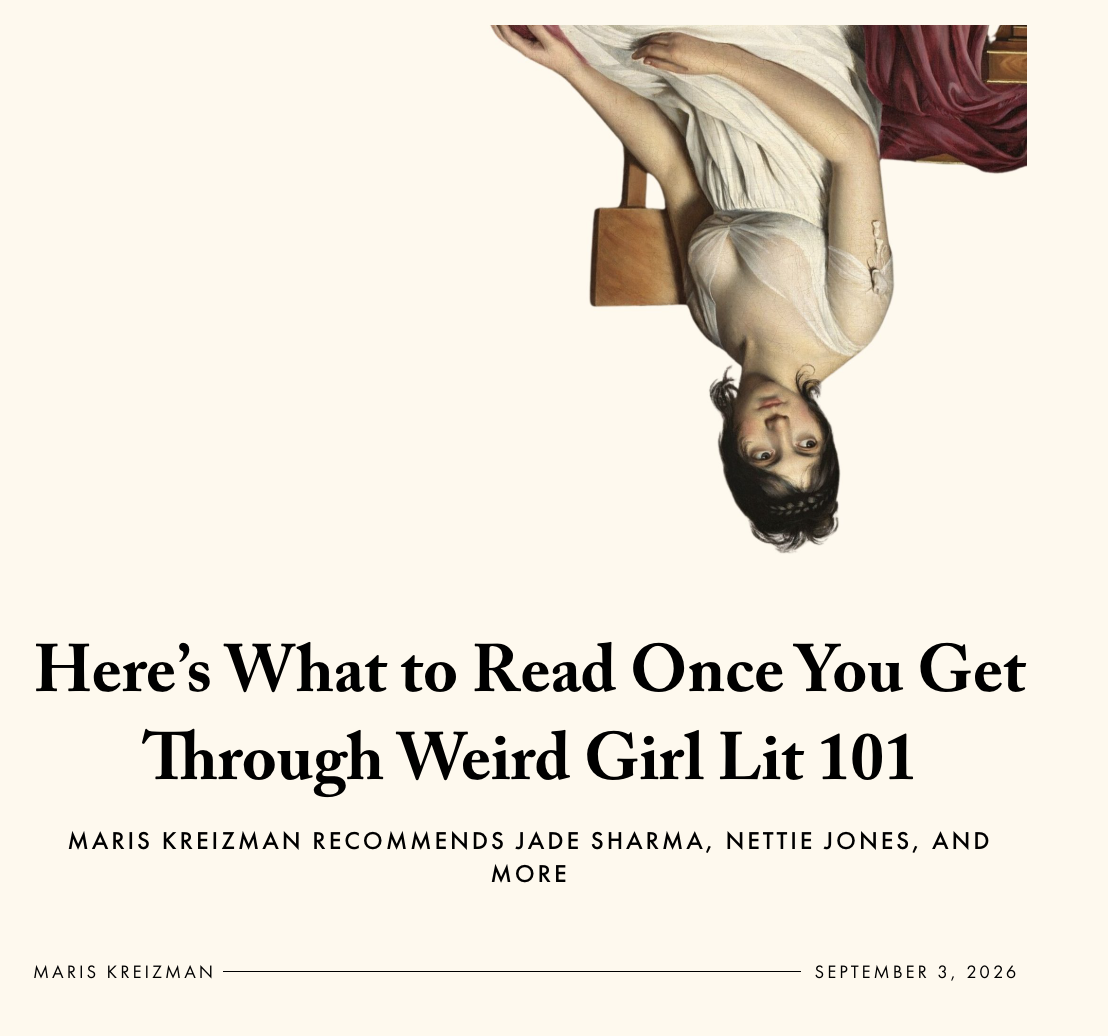
For my Lit Hub column I wrote about what to read after you've read all of the Weird Girl Lit basics: "As a reformed weird girl, I’m here to tell you that the category designation may be new, but books for and about weird girls have existed for a long time. We love Ottessa Moshfegh, but she didn’t invent weird girls, nor did Mona Awad. Nor, for that matter, did Sylvia Plath or any of the Bronte sisters."
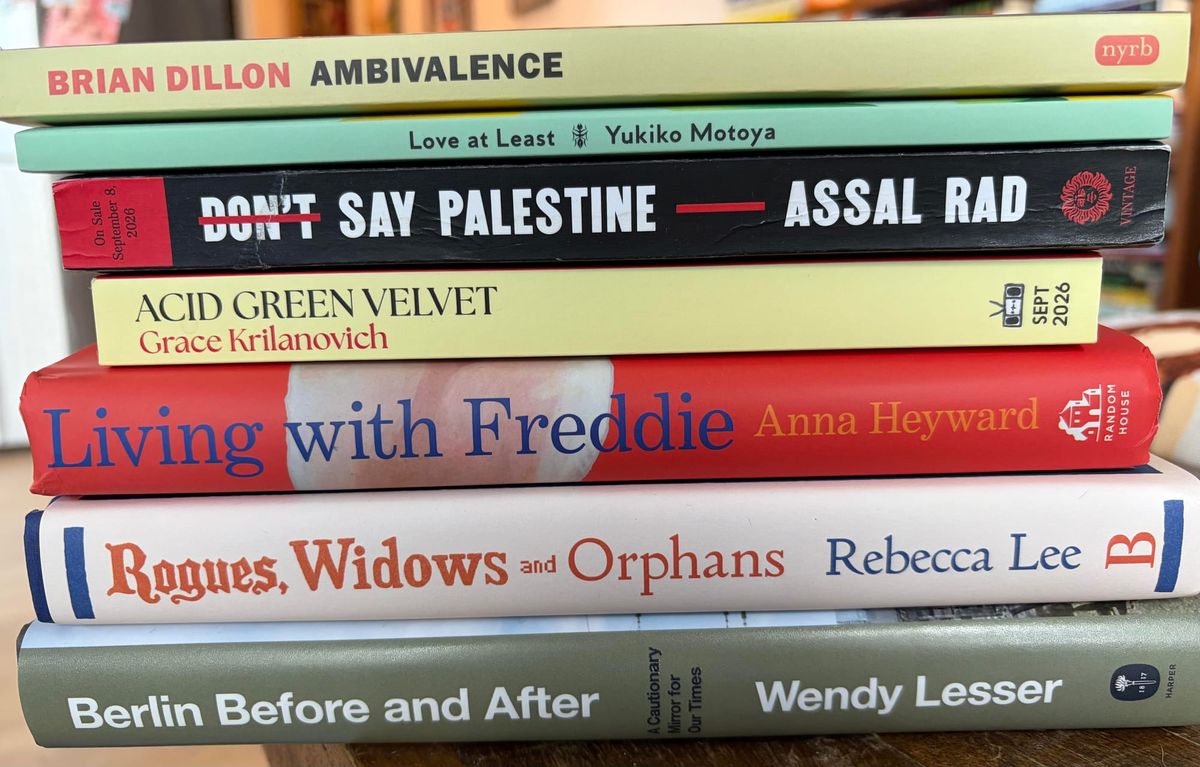
New releases, 9/8
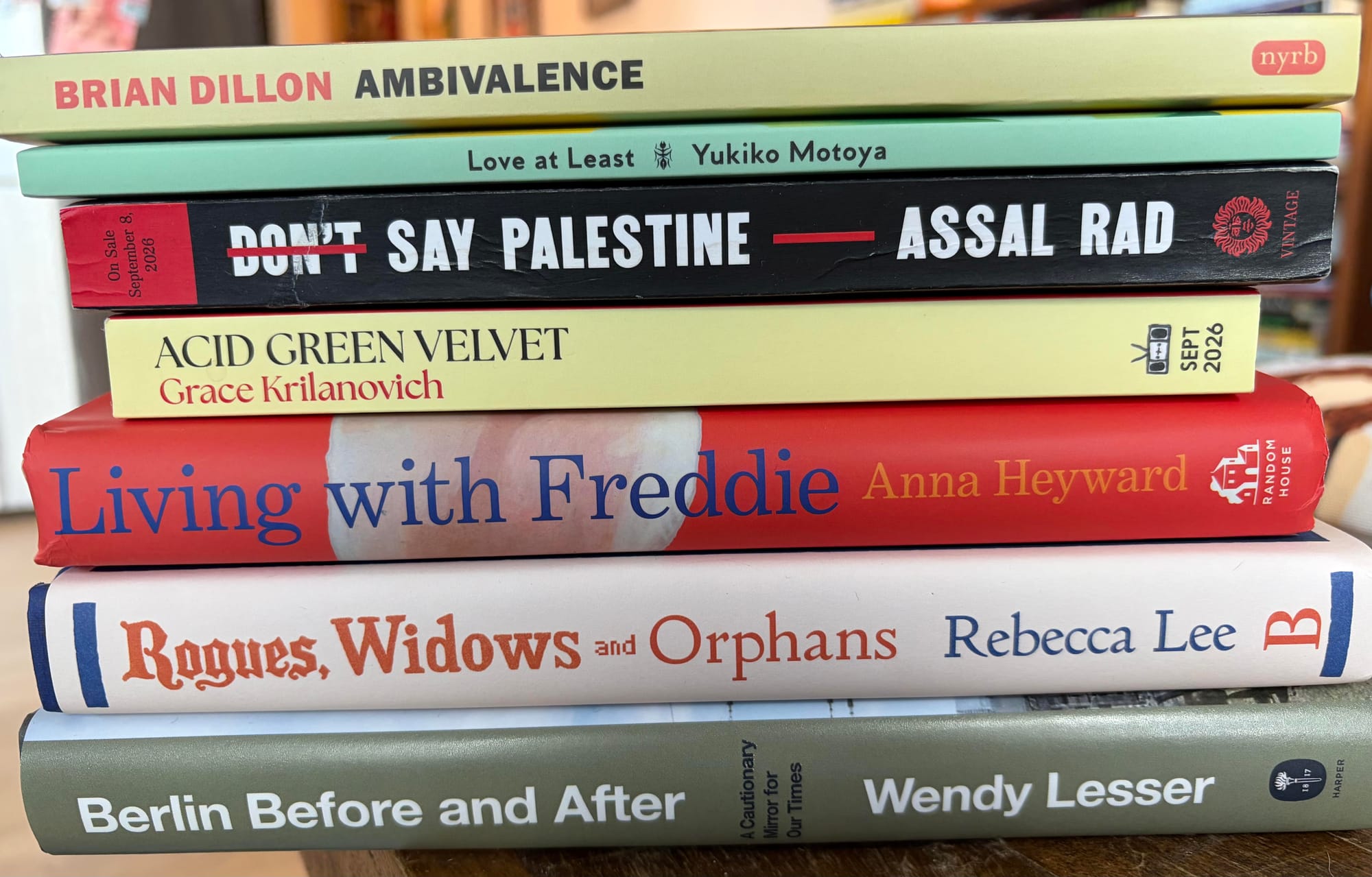
Ambivalence: An Education by Brian Dillon
Love at Least by Yukiko Motoya, translated by Kamil Spychalski
Don't Say Palestine: How the Media Manufactured Consent for Genocide by Assal Rad
Acid Green Velvet by Grace Krilanovich
Living with Freddie: How a Dog Taught Me to Be Human by Anna Heyward
Rogues, Widows and Orphans: Mischief and Misadventures in the World of Books by Rebecca Lee
Berlin Before and After: A Cautionary Mirror for Our Times by Wendy Lesser
Switzy by Emma Cline
The Art of Fighting by Priya Parker
The Living Realm by Jordan Tannahill
All the Presidents' Wars: Twenty-Five Years of America's War on Terror by Peter Bergen
Inconceivable: The Impossibility of Family in an Age of Uncertainty by Anna Louie Sussman
Punk in 50 Pieces: Punk Rock, Post-Punk, New Wave, and the Five Years That Changed Pop Music Forever by Kevin Dettmar
Taipei Story by R.F. Kuang
The Witches of Cambridge by Alice Hoffman
Black Arts: Stories by Megan Giddings
The Pirate Queen by Ariel Lawhon
Lords of Serendipity by Randy Boyagoda