The Maris Review, vol 122

The theme of this week is death comes for us all! (I added an exclamation point at the end so you'll know I'm being peppy about it.)
What I read this week
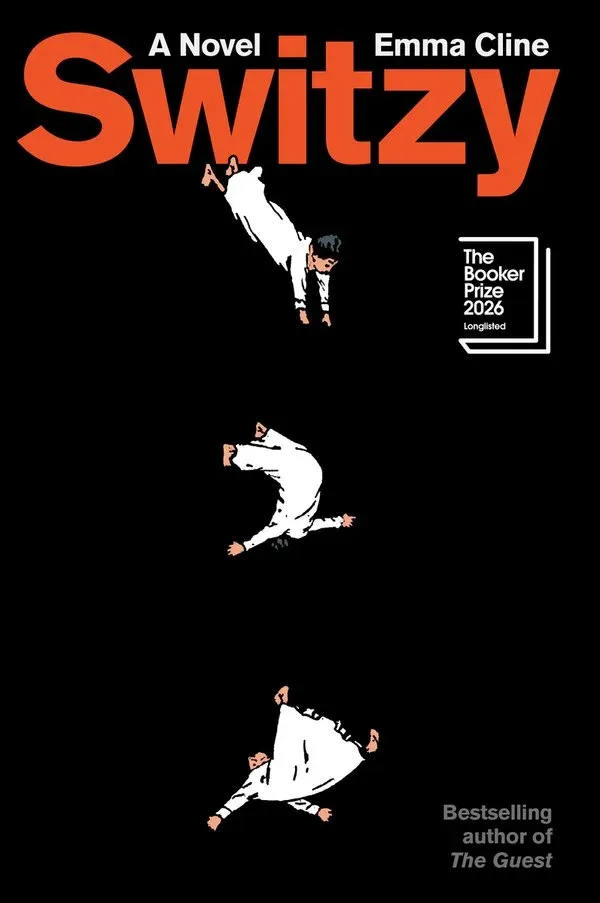
Switzy by Emma Cline
and
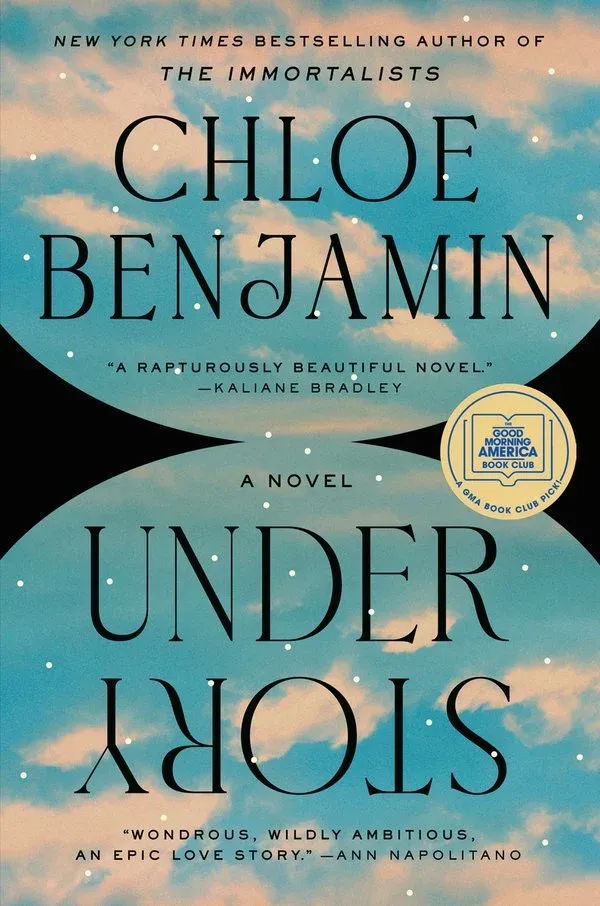
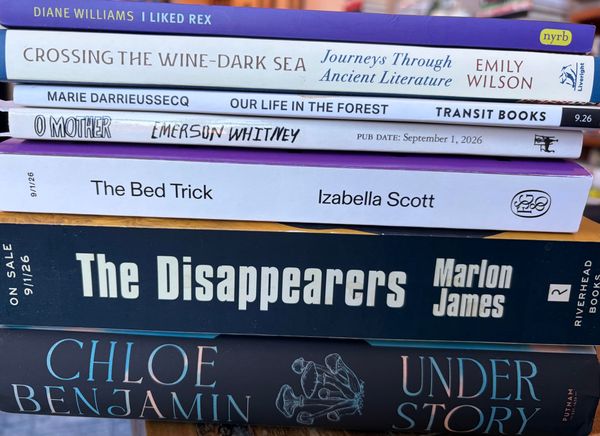
Understory by Chloe Benjamin
Sometimes by circumstance I come across books that seem unrelated, but because I read them both in the same week I tend to make connections between them. So this week I'm gonna write about both novels I read this week at the same time because they begged a question:
What if one novel is structurally perfect, and line by line doesn't miss a beat, but is unrelentingly bleak, while another novel is often unwieldy, sometimes a little too sentimental, and doesn't always cohere, but is so much fun to read?
I want to say off the bat that there's value in both, and I highly recommend both of these books, but for very different reasons. You can decide what appeals to you based on what kind of reading experience you're looking for.
Switzy is a feat partly because it is such a sea change for Emma Cline. How did a hot still-young novelist (who may be dating Nathan Fielder – can someone confirm ifshe's dating Nathan Fielder?) so thoroughly occupy the addled mind of David Hastings, a former CFO in his mid-seventies? We follow David during his last days in the lead up to his medically assisted suicide in Zurich before Alzheimer's takes what's left of him. By contrast to Cline's other works, this is not a beach read, at least not in the sense that it's "fun" in any way, or that it encompasses any part of "hot girl summer." But it's a true mastery of character and conscience. Even David's random memories and the little advertising taglines and nursery rhymes that intrude on his present day thinking feel just right.
The novel opens with David traveling on a private plane where he gets to use the bedroom. But David is not Logan Roy. The plane is borrowed from a richer man, and David is more of an also-ran, a persnickety kind of guy who devoted his life to numbers and figures and corporate bullshit but who never got to be the main guy. We meet David when he's already enfeebled, dependent on a young assistant named Cody to guide him through the rest of his life and manage his affairs. It's a lonely way to live out the final years of one's life, with hired help as his closest companions. We see this man who lived by upper class social conventions at his most vulnerable, and it's a weird but tender place to be. We watch as he takes care of a few final tasks: connecting with his daughter and grandson, and expressing remorse to his boarding school roommate. All the while he plays solitaire on his phone, a sad and sorry metaphor. It's excruciating in the most wonderful way.
Understory, meanwhile, is a big and messy and lovely second novel by Chloe Benjamin. It requires a suspension of disbelief that sometimes feels difficult to overcome because the rules of the world of the book keep changing. Like any time travel novel, you just have to turn off that part of your brain that has a zillion questions because they won't be addressed, and just focus on what will happen next. The novel is overstuffed with plot and backstory and emotion, and you must let its insistent maximalism wash over you (If you enjoy Understory you might also love Lightbreakers by Aja Gabel).
The novel follows Laurel Salter, a grieving mycologist (that means she studies mushrooms!) as she journeys to Antarctica to get as far away from her world as possible and then, spoiler alert: discovers a portal to an alternate universe. The duoverse is built around a Benjamin Button life trajectory, a world where time moves backwards and Laurel and her ex-husband can try to undo the mistakes of their past. People in this other universe are born as (if they're lucky) old people and then regress through life until they're once again babies. It's a world in which losing one's wrinkles brings you a step closer to death, and where the colleges are filled with 60 year-olds.
Understory contains at least five different deus ex machinae (including dreams, which are my least favorite plot device) and a full on Back to the Future ripoff ending and still I couldn't put it down. In fact, I enjoyed the wackiness of the plot on its own terms. It reminded me of how they keep trying to market the Sterling Brown show Paradise as an important television drama, when I enjoy it even more so for its ridiculousness and high camp. It's truly a feat to create a world where so much silliness occurs but to still leave readers feeling profoundly moved by the last page.
AI is killing us spiritually and professionally and environmentally, and that's what matters
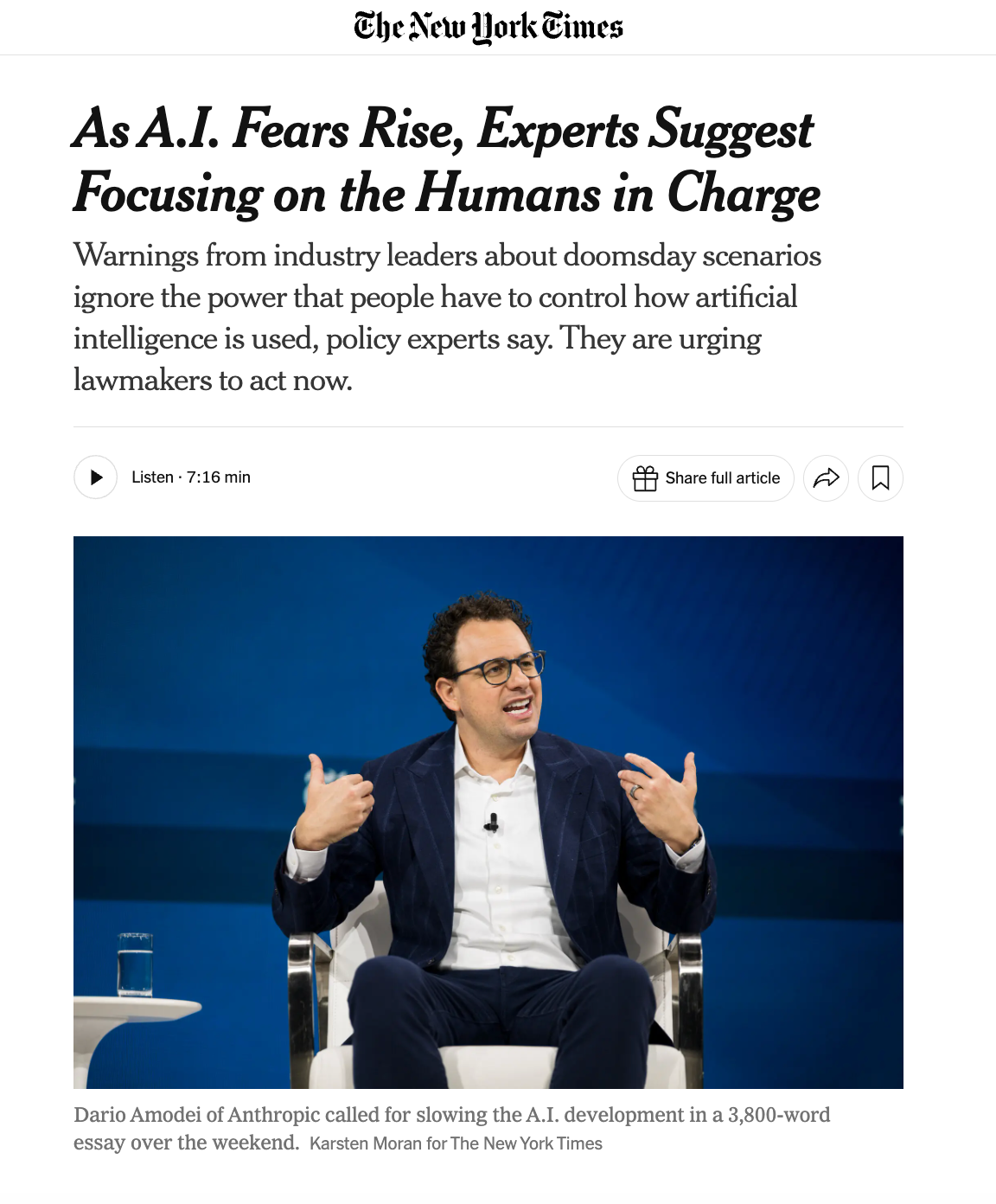
I must plug, once more, The AI Con: How to Fight Big Tech’s Hype and Create the Future We Want by Emily M. Bender and Alex Hanna. I kept thinking about the book this week as more and more tech moguls and futurists or whatever are getting a new round of attention for saying that AI could very likely turn against us and destroy the world. Bender and Hanna advise us to ignore the hype over AI as some future weapon of mass destruction and to look at how it's already ruining the world: spiritually and intellectually and environmentally.
They urge us to stop thinking about AI as an inevitability, as so many institutions and organizations are doing (I see you, Publishers Weekly). Just as people are mobilizing across the country to protest the building of data centers, we can still come together and show the technofascists who currently run the world that we're not buying what they're selling. And that's what they're doing even now: selling.
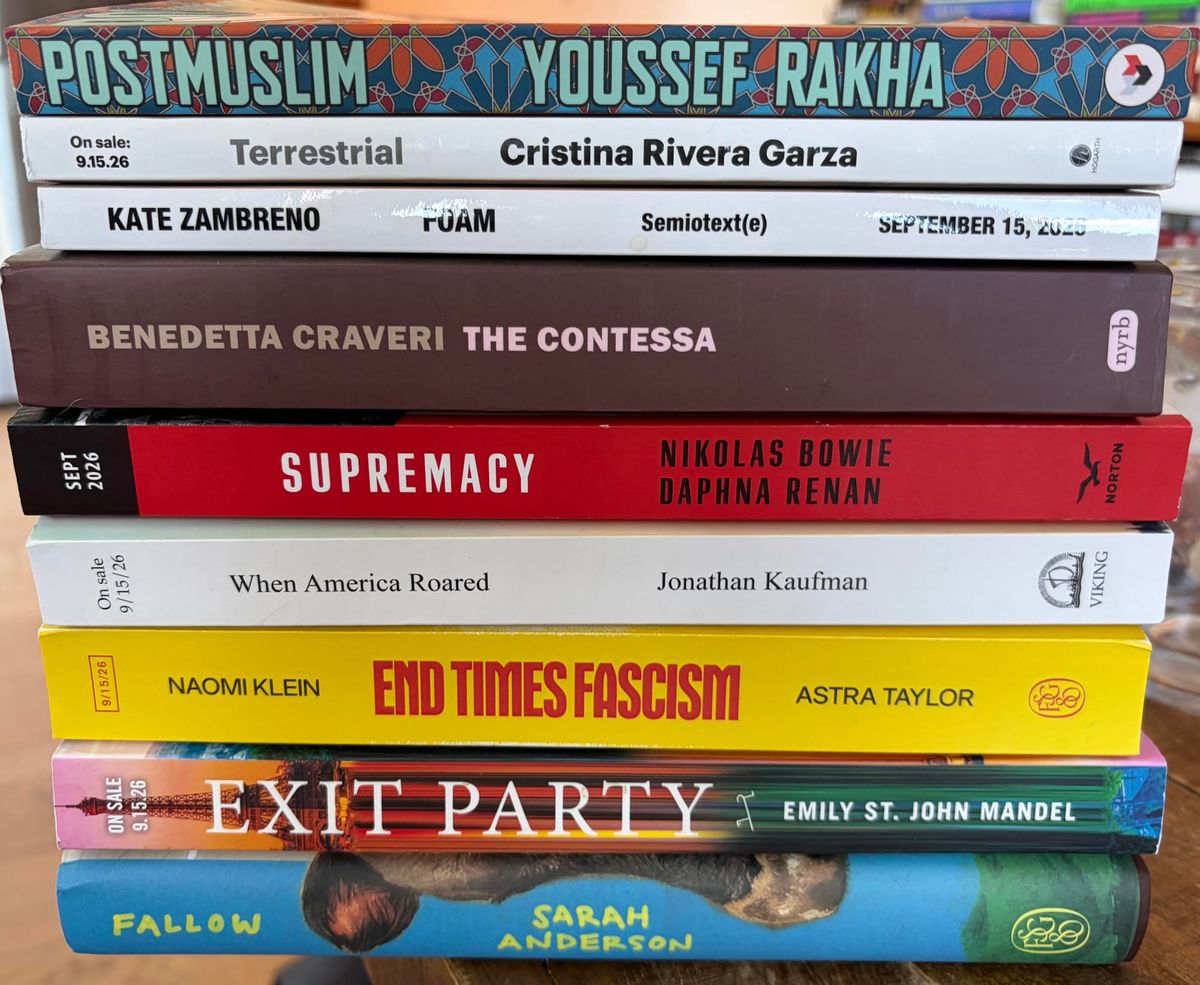
New releases, 9/15
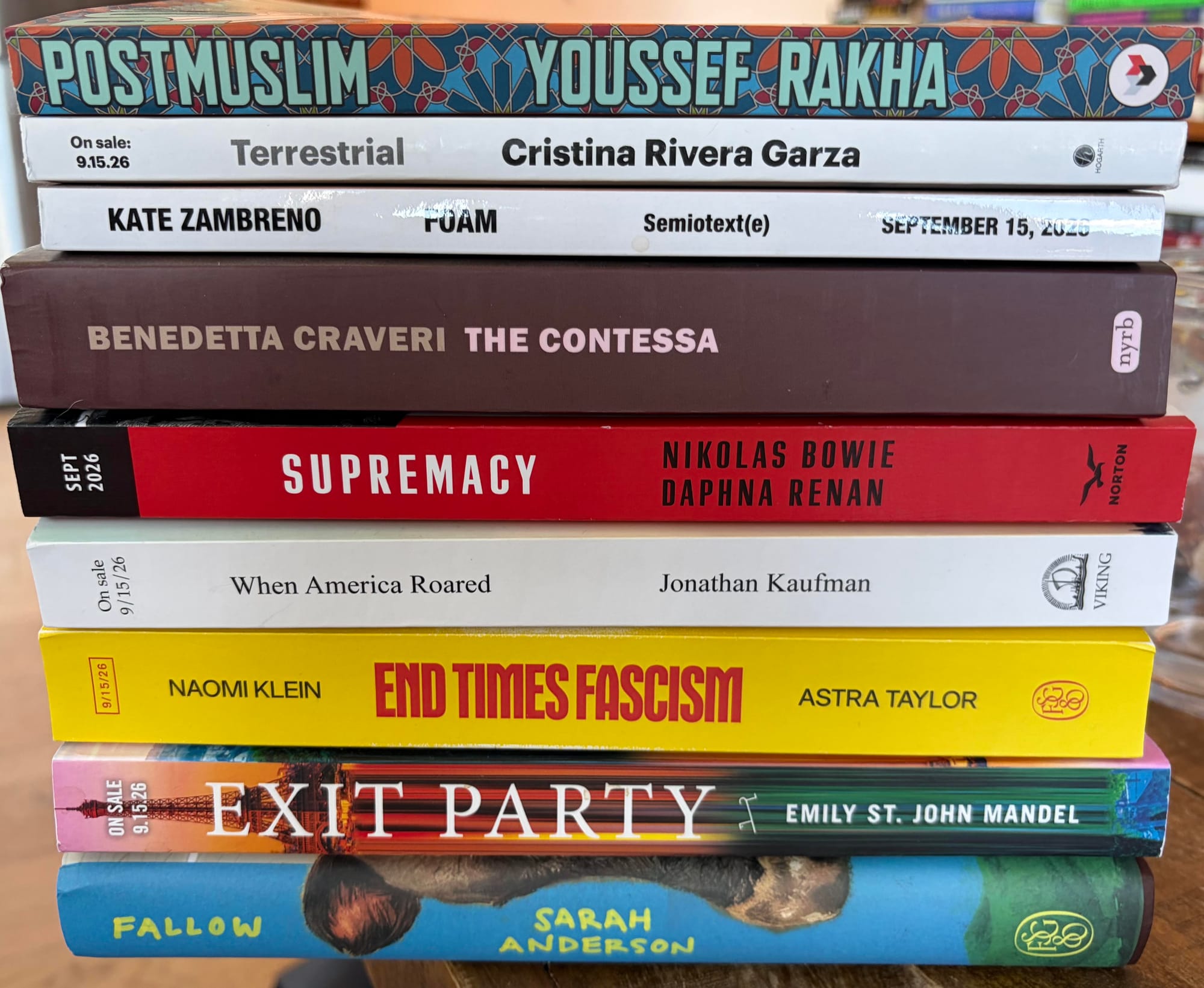
Postmuslim: A Testimony by Youssef Rakha
I blurbed this one and loved it. Here's what I said:
“We are so lucky that in this beautiful book Youssef Rakha has done the hard work of reimagining what personal identity might look like if we take all of the lovely and necessary parts from our heritage and our former ambitions and discard the rest.”—Maris Kreizman
Terrestrial by Cristina Rivera Garza, translated by Christina McSweeney
Foam by Kate Zambreno
The Contessa by Benedetta Craveri, translated by Alex Andriesse
Supremacy: How Rule by the Court Replaced Government by the People by Nikolas Bowie and Daphna Renan
When America Roared: How the 1980s Saved, Then Broke, the Country--and Led Us to Today by Jonathan Kaufman
End Times Fascism and the Fight for the Living World by Naomi Klein and Astra Taylor
Exit Party by Emily St. John Mandel
Fallow by Sarah Anderson
Profiles in Cowardice: A Study of Collaboration in the Trump Era by Jacob Weisberg
The Power of No: A Celebration by Anna Holmes
Observer by Nicholas Russell
We Chase Shadows: A We Solve Murders Mystery by Richard Osman
Live Laugh Love: The Secret History of White Christian Women and the World They Made by Kristin Kobes Du Mez
Our Noble Selves by Kate Atkinson
The Rouse by China Miéville
The Queen of Bad Influences: Stories by Jim Shephard
Redwood: The Untold Story of the Cold War's Most Extraordinary Spy by Ben Macintyre