The Maris Review, vol 129
The theme of the week is how the culture we consume informs who we are. Also, "Can horror be comforting?"
What I read this week
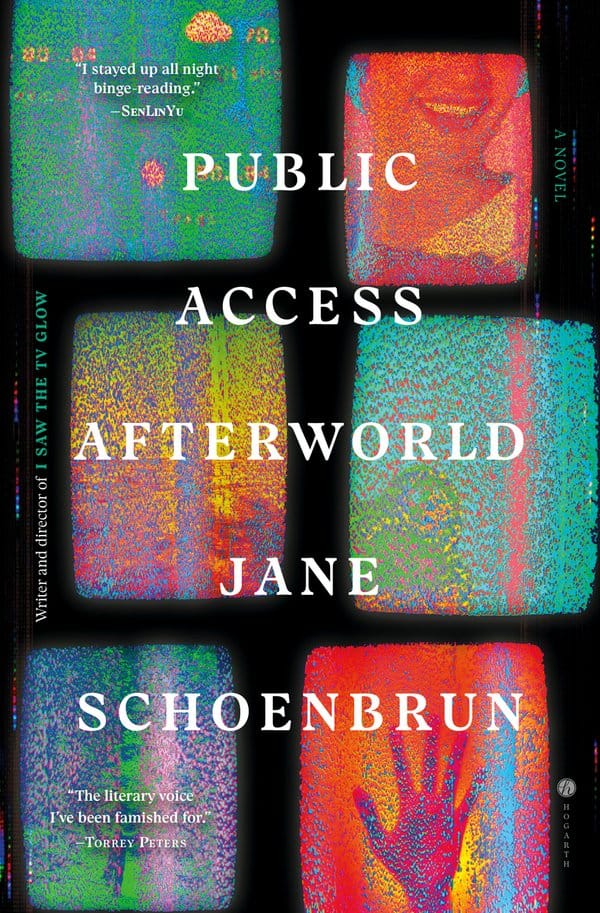
Public Access Afterworld by Jane Schoenbrun
I think this is it. My favorite novel of 2026.
I should say, before I begin, that about a decade ago I worked with Jane briefly at a tech company that I will not name, partly because Jane mined that experience for details that are included in the book and they are not so flattering (but very accurate). This is very thrilling to me. Now they are a full-fledged auteur and I write a book-themed newsletter. Cool, cool.
If you've seen any Jane's films you'll know that Jane is a pop culture devotee whose work is about loving things like TV shows and video stores and slasher films and internet legends, and how such modes of escapism can be a essential lifelines for people who don't fit in. But it's also about the darker sides of these obsessions and how cruel the outside world can be offscreen.
Public Access Afterworld is very much a part of this larger body of work that is distinctly from Jane's expansive mind. Their debut novel comes with the assurance of someone who truly knows the kinds of stories they want to tell. It's smart as hell, but also it's well-paced and fun. When I picked it up I thought about what it might it have been like to open up The Stand in 1978 and know that you could get lost in this whole other, vividly drawn world for 823 pages. I devoured Public Access Afterworld because it was such a pleasure to consume and I needed to see what would happen, but now I need another read to really linger on its themes and ideas.
Jane's debut was first conceived as a TV show, and that gives the novel its structure – it's told in 29 different episodes (we love a long season!). But the material works so well as a novel because, of course, in fiction the only constraints are the words. There is no studio budget to consider. It's just how big you can dream. And Jane has dreamed big.
And because this is my newsletter I've decided that I'm not gonna make myself try to summarize a "plot" for you. You can look that up if you'd like to.
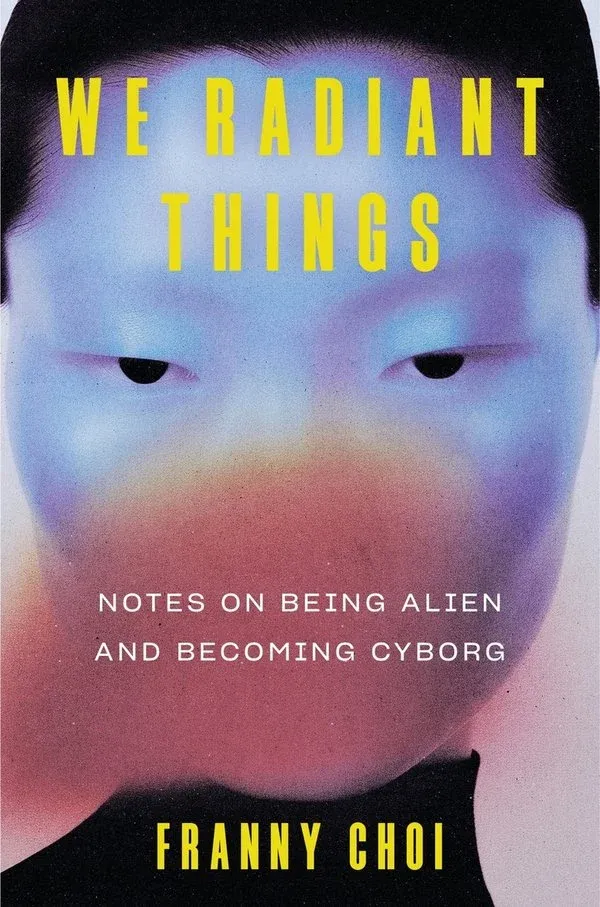
We Radiant Things: Notes on Being Alien and Becoming Cyborg by Franny Choi
The personal essay collection infused with cultural criticism is my favorite kind of book and also the kind of book that doesn't get published much anymore. So it's a pleasure to see that in We Radiant Things the form is alive and well, and to watch a poet mess with the form so beautifully.
In these essays Franny Choi considers her identity as a Korean American woman in a Western culture that has so often equated Asian people with robots. She compiles a whole range of examples of art that casts the Asian as Other, as Object, in literature and films and TV shows, and even in one particular concept album (yes, it's the one by the Flaming Lips). Such depictions reflect what we (Americans) expect a model minority to be – hardworking, docile, incapable of complex thought. And yet, even while understanding the racism behind these depictions, Franny interrogates why she still loves so many of them. The questions are unanswerable, but I love the way she asks them.
Along the way Franny writes about the allure of the murderous android played by Sonoya Mizuno in the 2014 film Ex Machina, fabricants in the The Cloud Atlas and how rote work affects our humanity, and why Terminator 2 is a fundamentally Korean film. There is so much joy in this collection, driven by Franny's fandom and her fearless exploration into what it means to love art that perpetuates stereotypes.
A beautiful Halloween coincidence
I didn't plan to discuss Jane and Franny's books together for any particular reason, but they do complement each other. In her essay on Battlestar Galactica and the uptick in Asian hate during Covid, Franny asks,"Can horror be comforting?" Which is as good a description of Jane's most recent film, Teenage Sex and Death at Camp Miasma as I can imagine. I love a moment of symmetry.
So I was thrilled to come across this Instagram photo of Franny dressed for Halloween as the serial killer from Camp Miasma, whose acts of savagery could only be soundtracked by the Counting Crows.
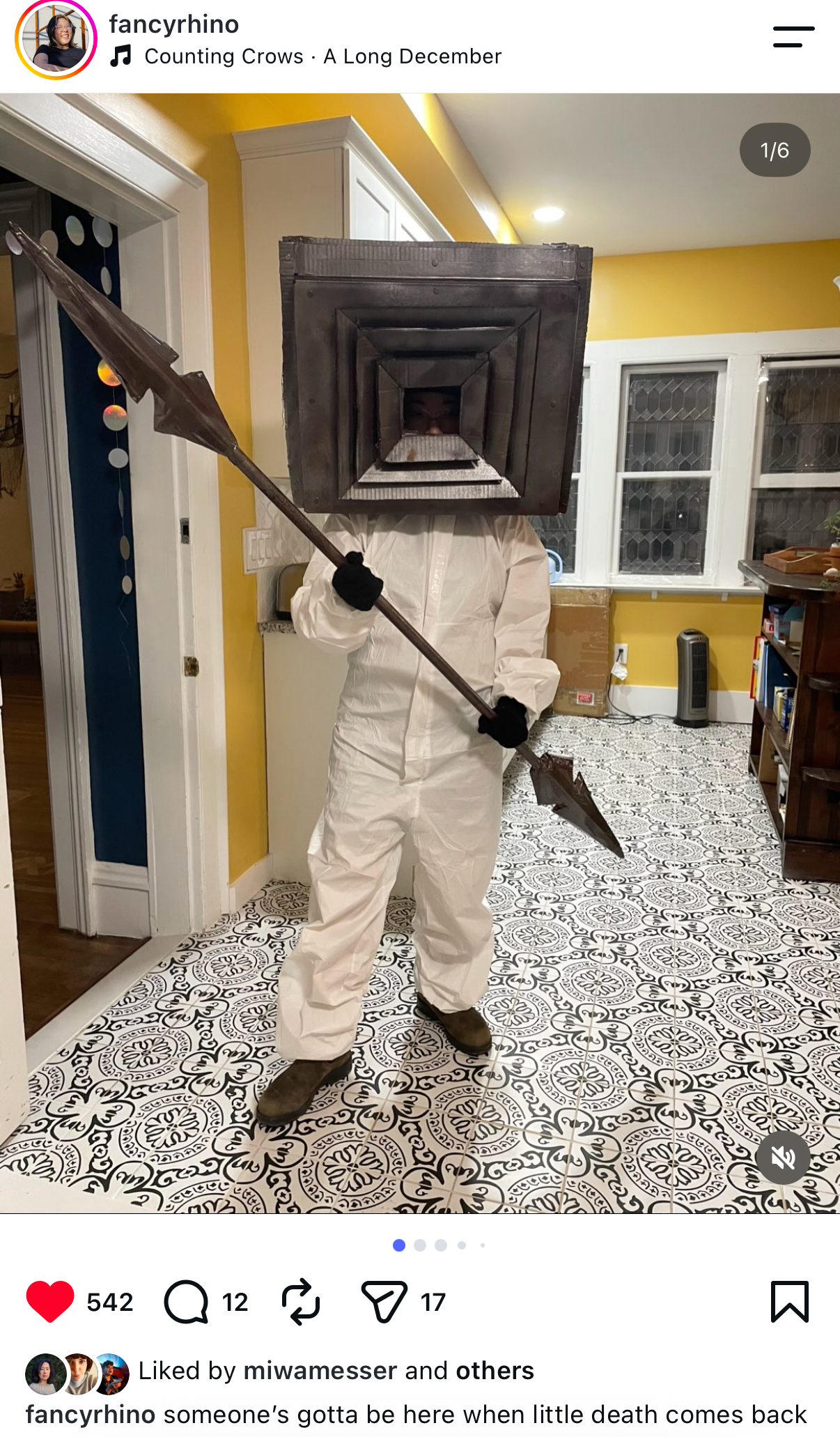
Can you tell I loved both of these books?
On the rise and fall of the "make book"
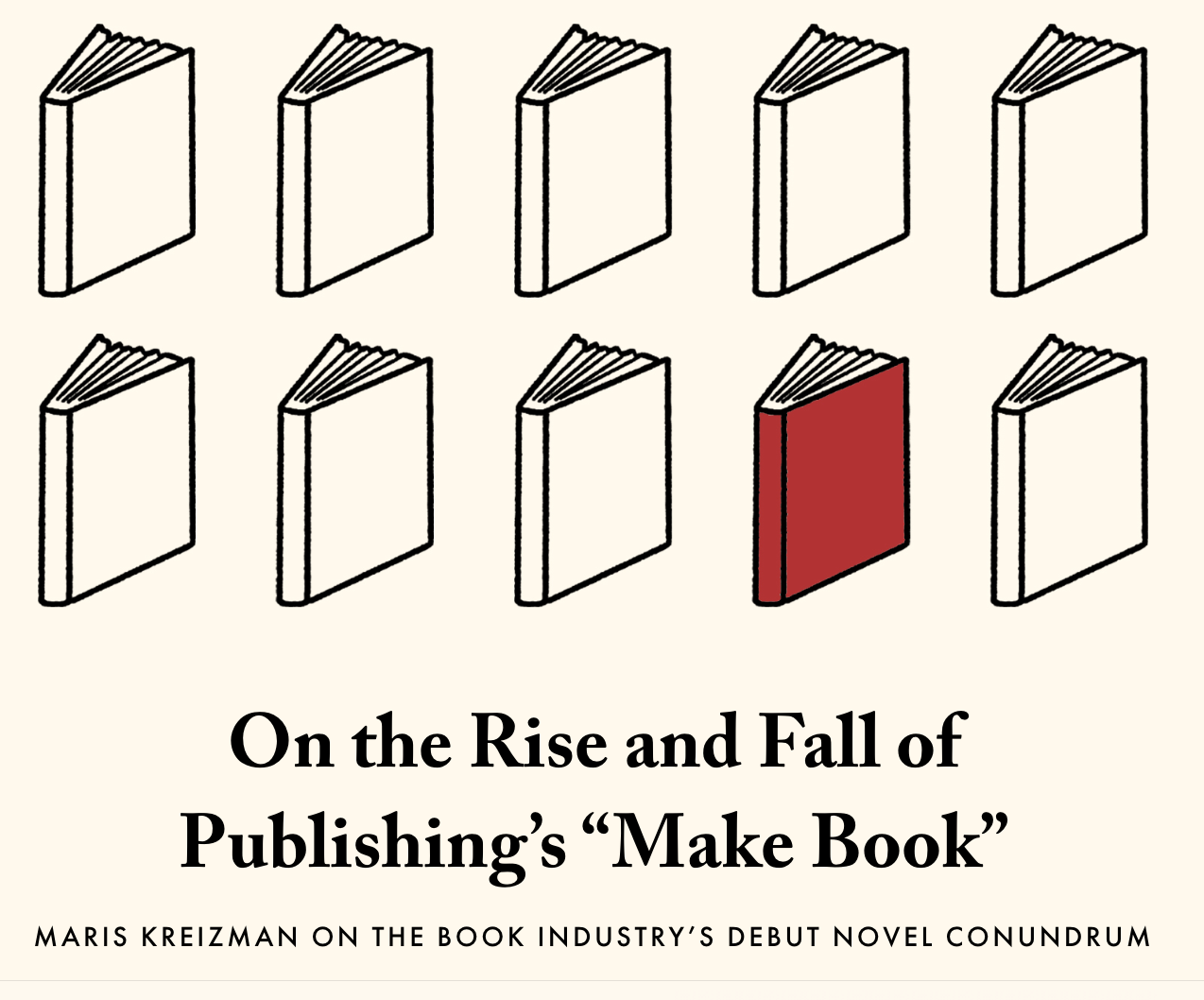
For my latest column at Lit Hub I wanted to mourn the loss of Catapult Books without making the entire essay about Catapult. So I wrote about how, when I was in editorial at Simon & Schuster in the early aughts, I was taught about the "make book" – the book that doesn't have a big name attached or a high concept but is pushed hard by publishers simply because the publishing team believes in it. We've grown increasingly dependent on smaller publishers to take "make" books and take chances on new authors. We need small presses.
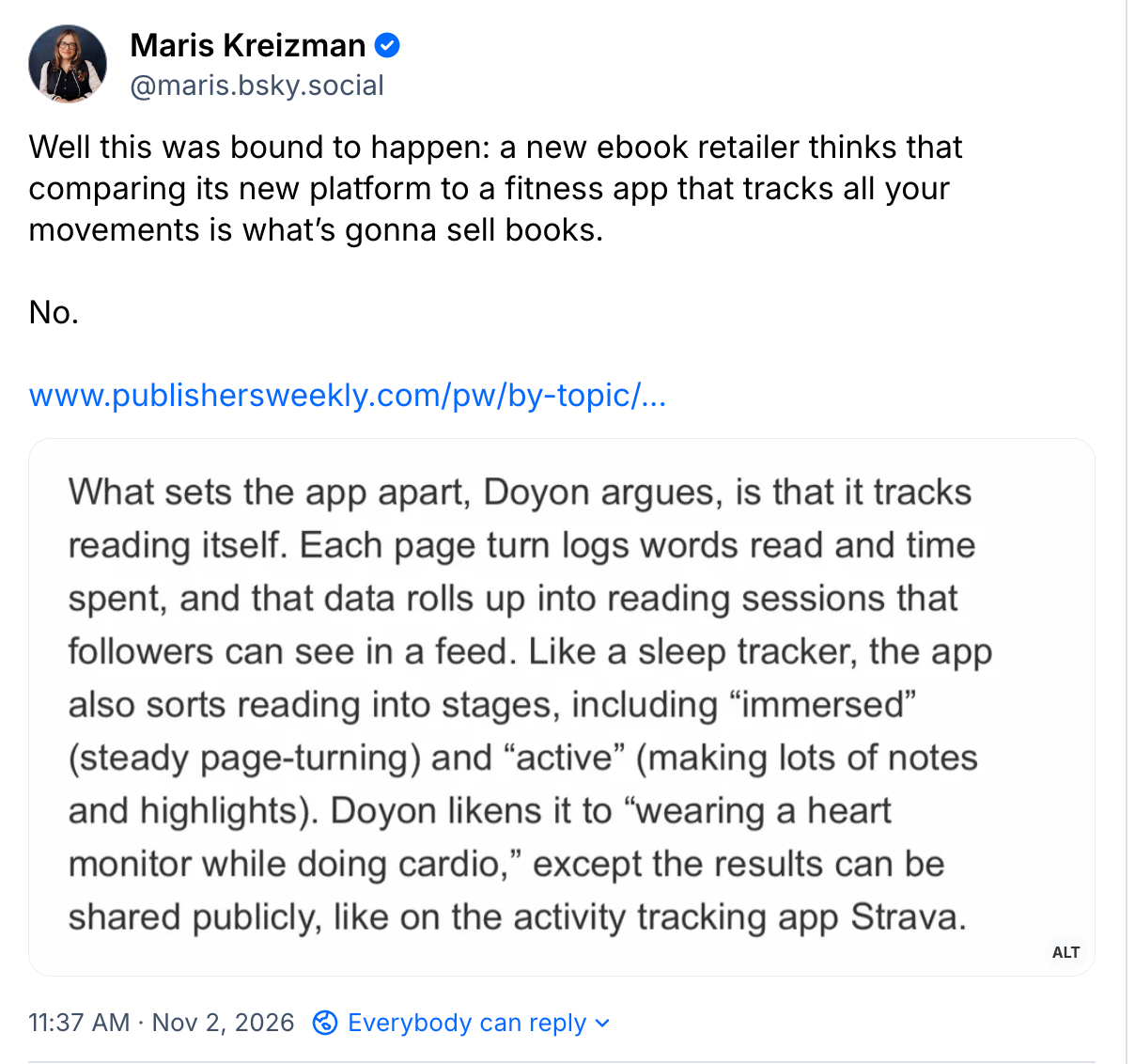
Today in e-reading as a tool of surveillance
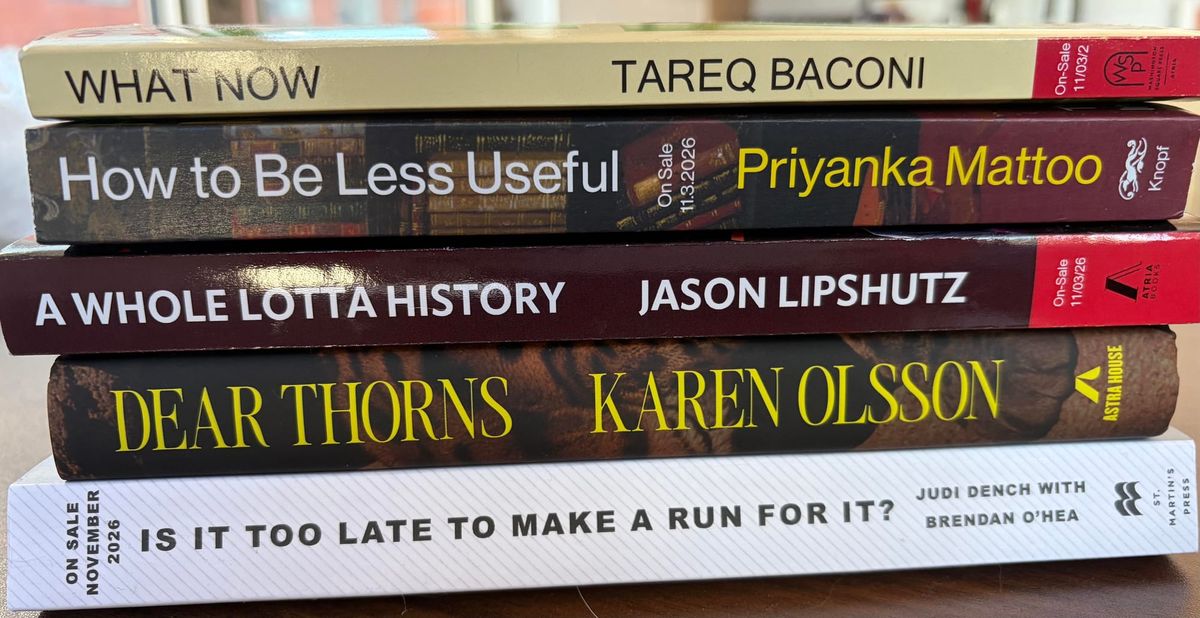
New releases, 11/3
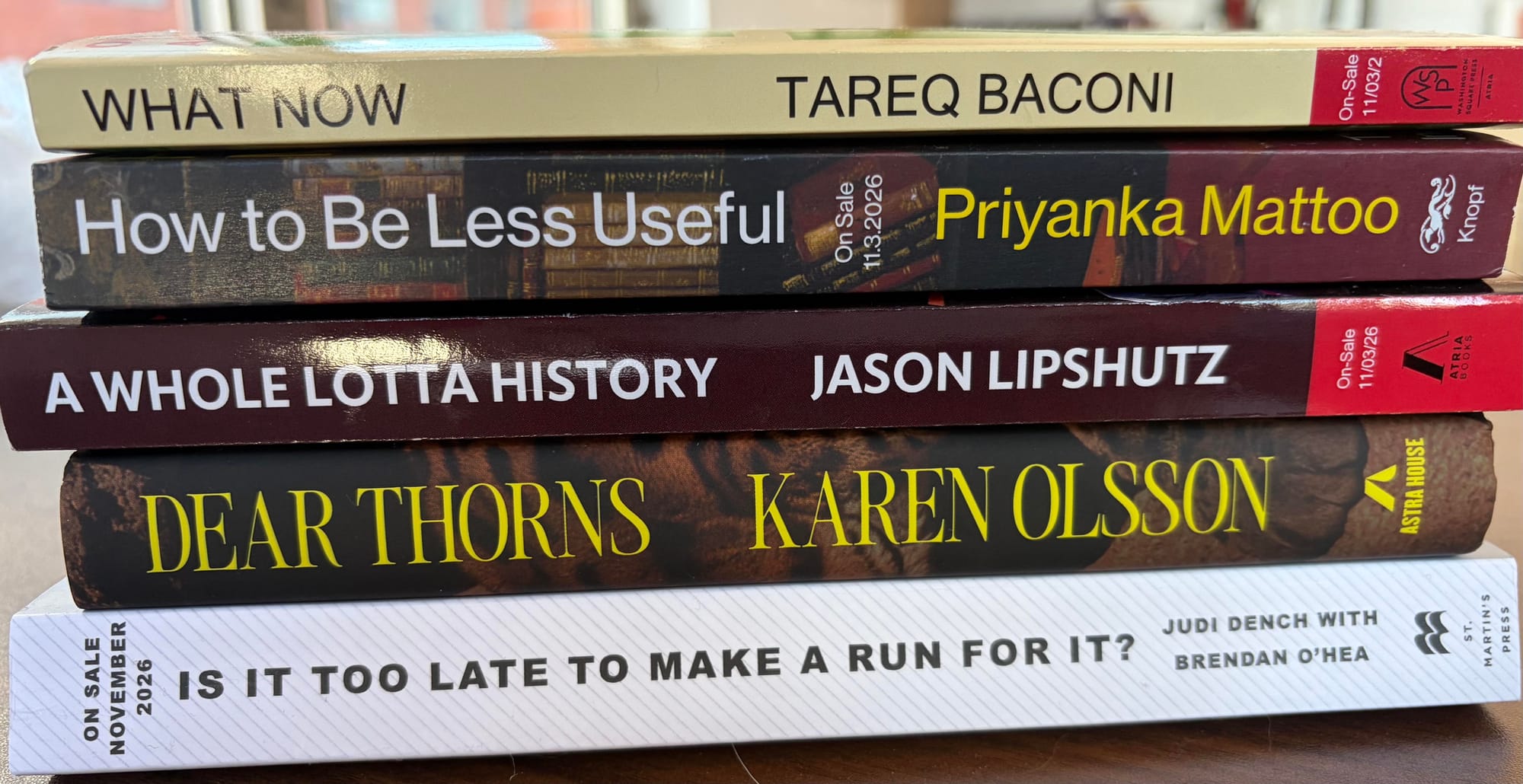
What Now: On Palestine, Freedom, and Our Global Future by Tareq Baconi
How to Be Less Useful by Priyanka Mattoo
A Whole Lotta History: One Direction and the Sound That Shaped a Generation by Jason Lipshutz
Dear Thorns by Karen Olsson
Is It Too Late to Make a Run For It? by Judi Dench with Brendan O'Hea
Monsters of Ohio by John Scalzi
The Pen: A Human History by Simon Garfield
Seven Stories About Tammy by Elizabeth McCracken
There Used to Be People Here by Kennedy Cole
Friends of the Devil: West Texas Cowboys, Brown-Eyed Women, and Other Sunshine Daydreamers from the Songs of the Grateful Dead by Alex Pappademas, illustrated by Joan LeMay
Stations by Louise Kennedy
The Space Behind the Face: Life Stories by Robert Wilson with Keith McDermott
West of Loveland by Tom Drury
Gloria Don't Speak by Lucy Apps