The Maris Review, vol 130
The theme of the week is trying, desperately, to let go
What I read this week
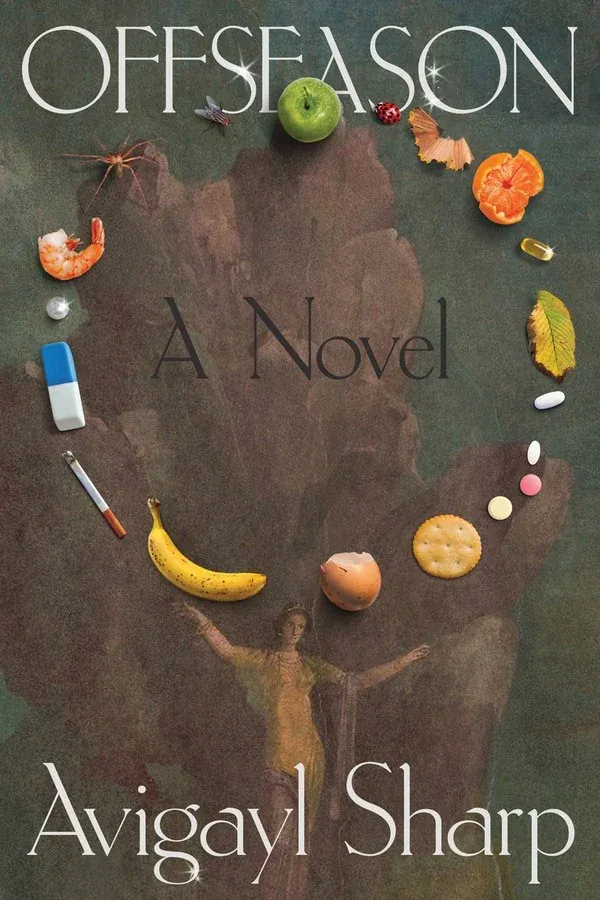
Offseason by Avigayl Sharp
I didn't expect to love this novel, but once I started I couldn't stop. Voicy debuts about twenty-somethings trying to figure out their lives are kind of a dime a dozen, so in order to get my attention the voice has to be extraordinary. This one is. I'd say Sharp's voice is less Ottessa and more like Halle Butler, bluntly capturing the ugliness in the everyday, but with an eye towards the absurd. Sharp's unnamed heroine is entirely unfiltered about so much all the time, and yet she still manages to lie to us (and herself) more often than you'd think. She is a little deranged and I love her.
This unnamed heroine is hired, for a year, to teach English at a boarding school for girls located in an East Coast shore town that tourist destination during the summer. Dead Poets Society, this is not. Literature of the City, spend the entire year reading Bleak House because "This depth of thought would serve them well... in whichever career path their passions guided them toward, whether business administration, SEO strategy, LLM modeling, or even UX design."
This is Weird Girl fiction featuring a character who is insistent on laying out why she's weird. Rattle off a list of "my truths," traumas large and small that she puts forth in order to explain why she is the way she is, including a close relationship with her chorus teacher who turned out to be a pedophile but with boys, "the thing that happened to me at Benjamin Leichter's seventeenth birthday party," and "vagina pH" undermines the idea of the trauma plot as she has already explored and dissected and talked widely about her traumas at length even while simultaneously lying to us and herself at every opportunity.
Both the author and main character are Jewish, which feels important at this moment when a whole swath of people think that Jewish people can't get book deals anymore, an idea that was thoroughly and definitively debunked by Josh Lambert and Dan Sinykin in Jewish Currents. This one has a heroine who frequently remarks about how her family "got Holocausted." If the Holocaust is the pinnacle of generational trauma for entire generations of American Jews, then what happens after therapy and self-reflection and learning about the past? There are no easy answers here. "'In the camps, my mother texted, 'they probably made your grandmother shovel shit with her bare hands'.... I reacted to my mother's first message with a thumbs-down."
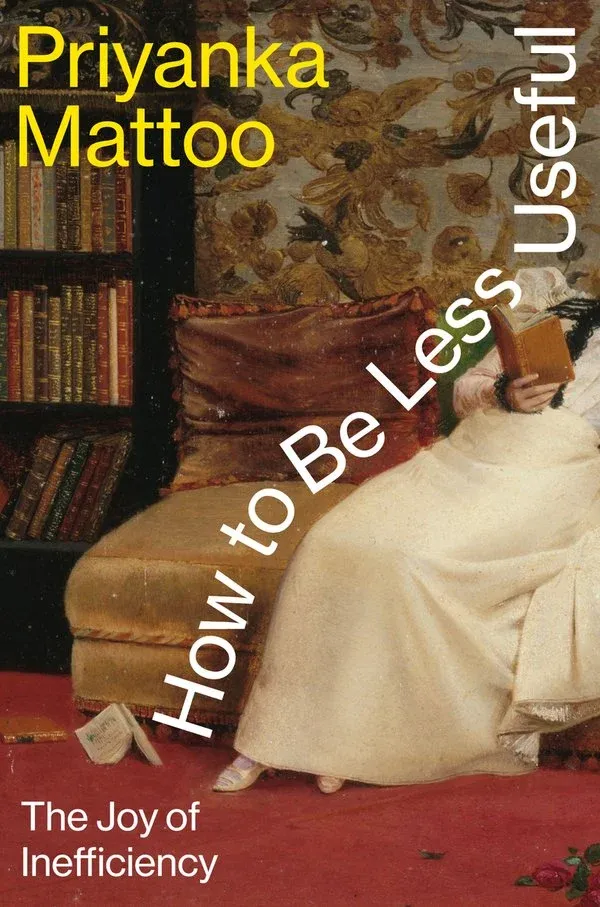
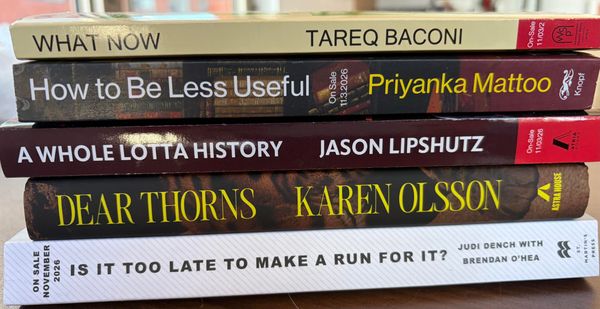
How To Be Less Useful: The Joy of Inefficiency by Priyanka Mattoo
The thing about Priyanka is, even if she's still trying to figure things out, for the most part I think she's figured out way more than most of us. To put it another way, I'm allergic to just about any book that could be interpreted as living in the realm of self-improvement, but Priyanka is one of the few people I'd trust to give life advice. This personal essay collection documents Priyanka's efforts to make changes in her life (running her family like a "small business," for example) in order to experience more joy: small pleasures like eating a piece of candy or singing really loud or trusting one's family to be able to feed themselves without her. It's a testament to Priyanka's warmth and skill as a writer (don't miss her charming as hell debut collection about her childhood in Kashmir, Bird Milk and Mosquito Bones) that reading this book could count as one of those delights.
If I find Priyanka particularly inspiring, then perhaps it's because we have many similar hangups. We are planners, routine-keepers, seekers of a sense of control. But that doesn't mean we don't want to be able to take some time to enjoy things. Even when our brains tell us that we must constantly keep working. It's so much fun to watch Priyanka try her best to let go and to sometimes succeed. Does this perhaps sound familiar to you?
Bonus: Last week I got to talk to Priyanka, along with Emily Nemens, at the Portland Book Festival. We did a lot of laughing. My big question for both of them was what happened to the classic midlife crisis where you, like, buy a fancy sports car and have an affair? Today's midlife crisis for women is more about reading Jenny Odell's How To Do Nothing and reassessing how you want to spend your time and attention. It's more about opting out (or trying/wanting to opt out) than attempting to become something else. The screens are making us all so boring!
Just wanted to say...
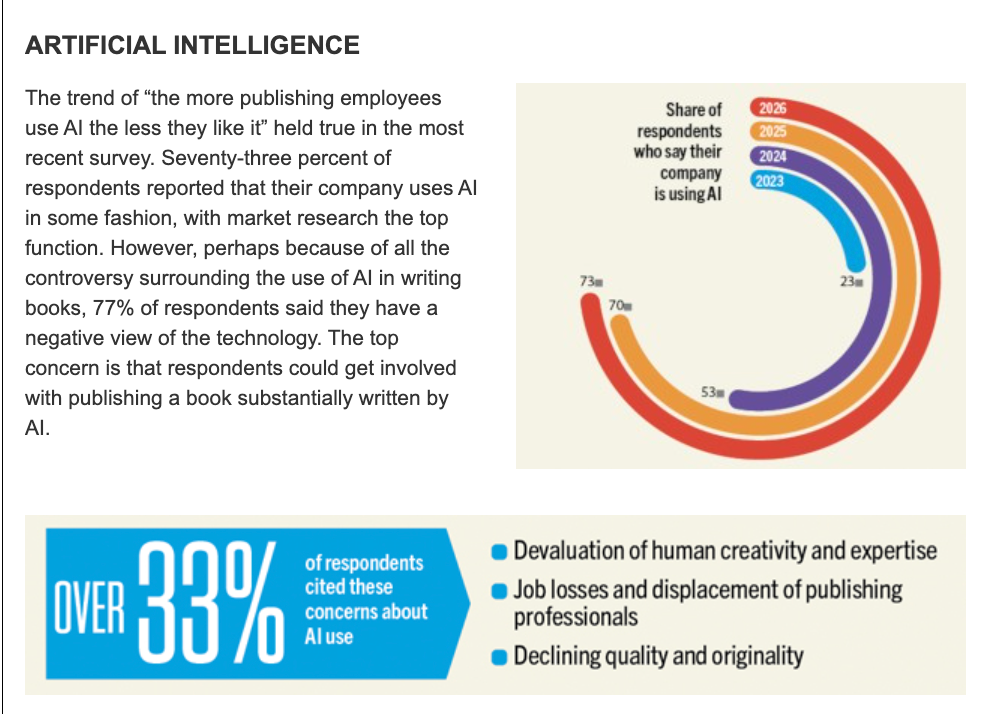
73% of those surveyed in this Publishers Weekly report said their company uses AI in some fashion; 77% said they personally have a negative view of AI overall. Really makes you think, doesn't it?
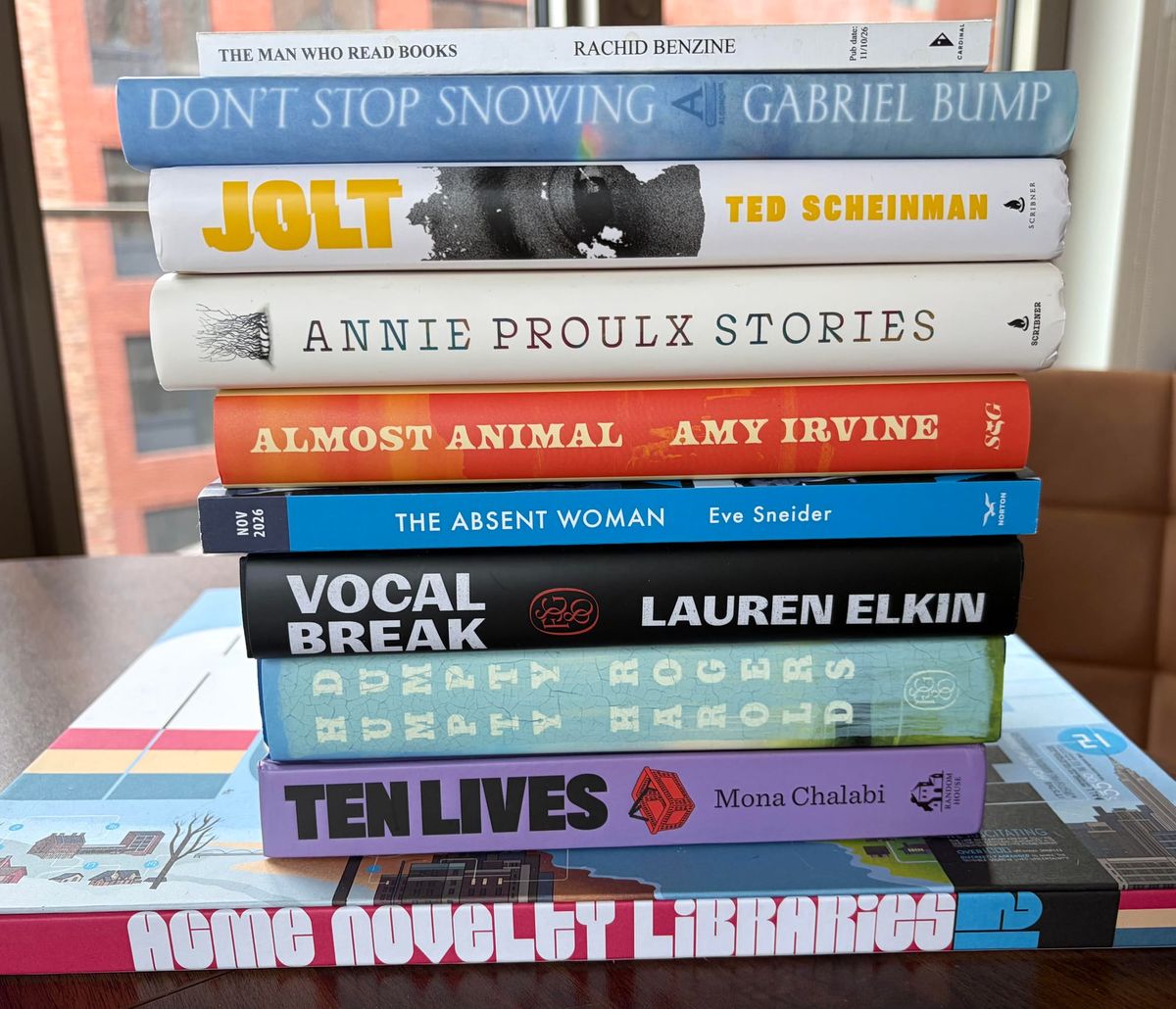
New releases, 11/10
It's the final big drop of the year. Why not explore a little?
My answer to the question "why are contemporary novels so bad" is that you're simply not looking hard enough.
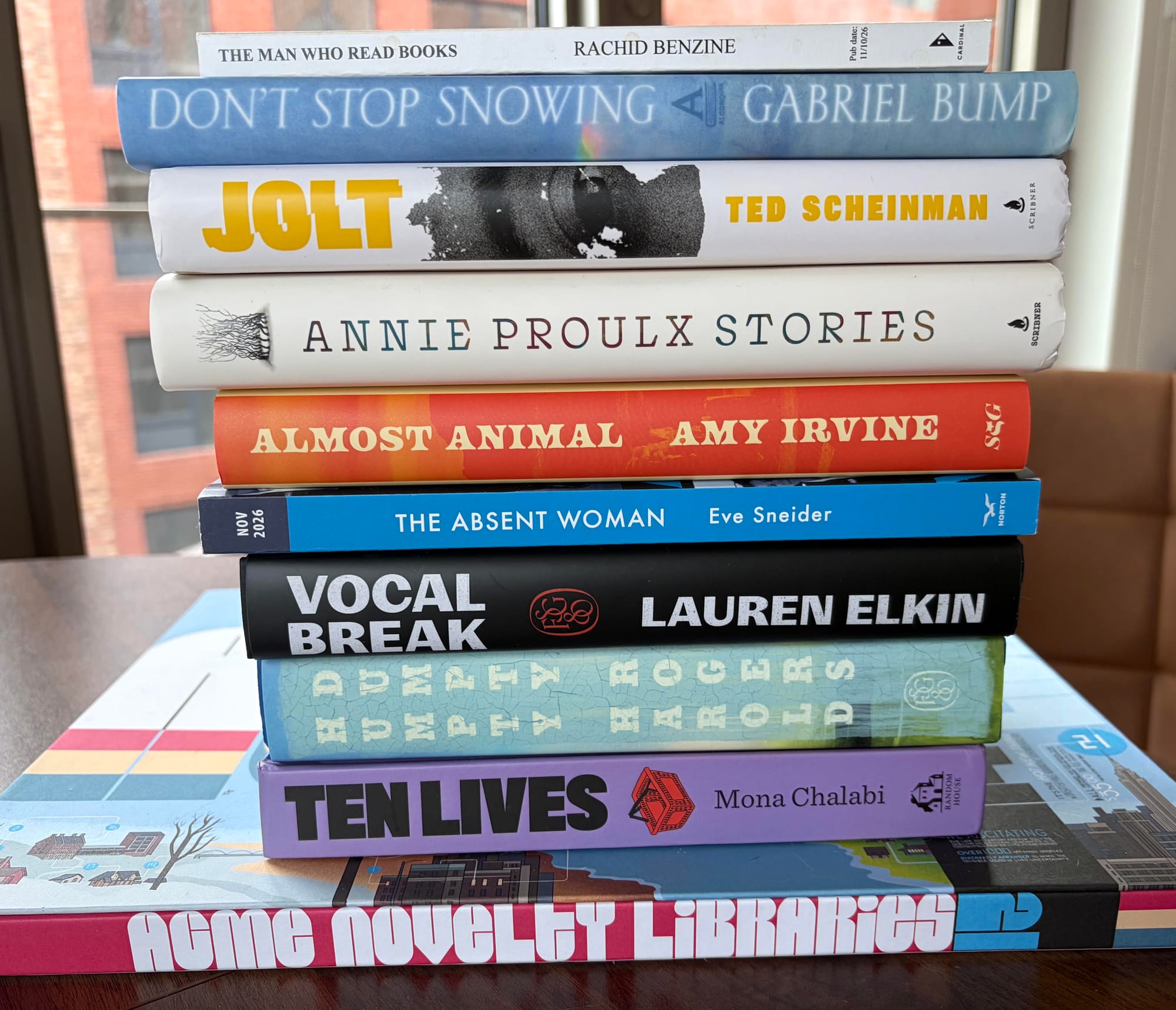
The Man Who Read Books by Rachid Benzine, translated by Sam Taylor
Don't Stop Snowing by Gabriel Bump
I will be speaking with Gabe at Community Bookstore on Friday if you're around!
Jolt: My Electric Journey Out of Darkness by Ted Scheinman
Annie Proulx Stories: New and Selected by Annie Proulx
Almost Animal: A Memoir of Motherhood, Wildness, and the American West by Amy Irvine
The Absent Woman: The Genius of Janet Malcolm by Eve Sneider
Vocal Break: On Women, Music, and Power by Lauren Elkin
Humpty Dumpty by Harold Rogers
Ten Lives: How What We Have Shapes Who We Are by Mona Chalabi
The ACME Novelty Library #21 by Chris Ware
Shut Up, I Love You, I'll Call You Tomorrow: Stories by Sloane Murphy
Roadshow by Nikki Ervice
The Key Biscane Affair by Xita Rubert, translated by Julia Sanchez
Aristocracy, American Style: Class Privilege and the Persistence of Elite Power by Nancy Isenberg
Revenge Plot by Stephanie Robel
We Did OK, Kid: A Memoir by Anthony Hopkins
Take My Word for It: A Memoir by LeVar Burton with Michae'l Lewis-Giggetts
I Regret I Am Able to Attend: A Life Among Artists by Jessica Craig-Martin
This Impossible Life by Chinelo Okparanta
The First House by Avni Doshi
No Such Thing as a Monday by Siân Hughes
The Squatters by Saba Brelvi