The Maris Review, vol 131

The theme of the week is mentors, good and evil
What I read this week
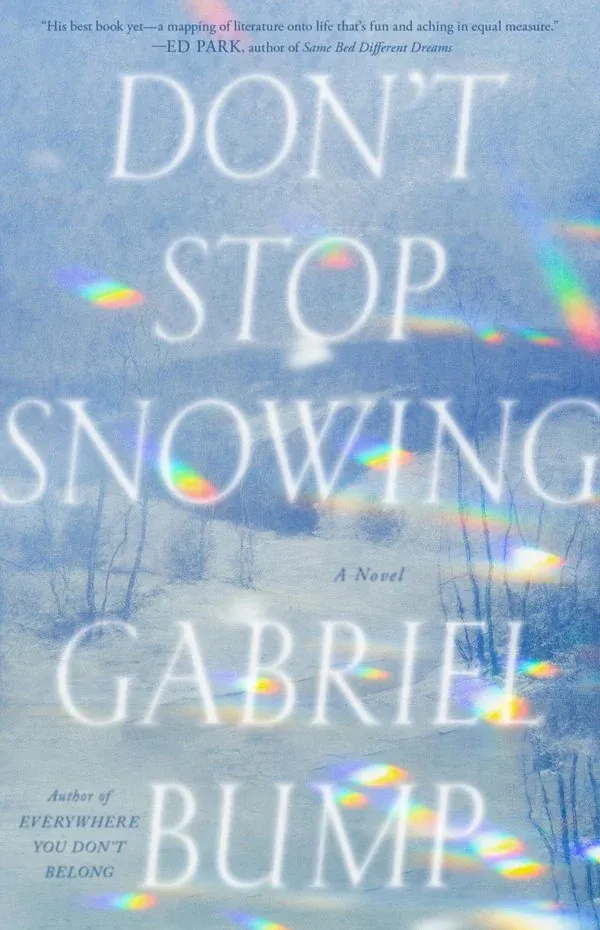
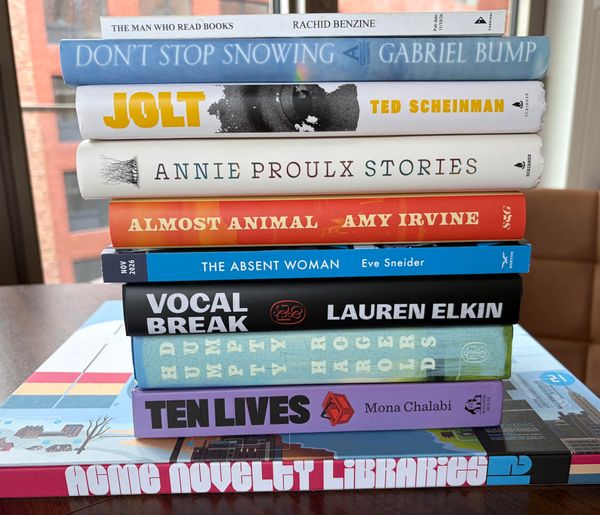
Don't Stop Snowing by Gabriel Bump
Gabe Bump's third novel pokes and prods at a question I think about a lot: how do you know if and when you're okay? If you've struggled with mental health in the past and you know you'll never be entirely free of depression's cruel, illogical pull, how do you know if you're "normal," whatever that means?
Don't Stop Snowing is narrated by David, a man in his fifties who owns a bookstore and has a happy marriage and seems pretty successful, but who looks back on a year or so in his late twenties when he was flailing. David has watched his father, a failed Joyce scholar and an alcoholic and a narcissist, struggle with depression his whole life. He fears genetics will come for him too.
After a suicide attempt in Michigan following a terrible breakup, the younger David moves to Buffalo to decompress and try to heal. I know, I wouldn't have considered Buffalo the place you go on a mental health journey, but Gabe has some tricks. David moves in with his cousin, Flip, and it becomes apparent almost immediately that Flip needs just as much help as David, if not more. It's only when one generous bookstore owner named Quadberry (named for a character in a Barry Hannah story) takes both boys (I think they need to be called boys here, even though they're over 18) under his wing that the boys start to make good decisions.
There is no quick fix; the novel is so lovely because we get to watch as David's world slowly opens up. We watch him stumble and pick himself up time and again. Ultimately it's not the act of reading that makes David (or anyone) whole, it's being out in the world with other people. Don't Stop Snowing is a love letter to bookstores and their denizens, and how the people and the books can both nourish you. You should know that nearly everyone in this novel, even the fuckups, no especially the fuckups, are incredibly well read and there are a lot of Big Opinions about books in these pages. I loved every bit.
How do you get better? Anyone who says they know the answer is lying to you. But Gabe's novel lays out a beautiful vision of what it takes to see the world differently, and to feel differently about your place in it.
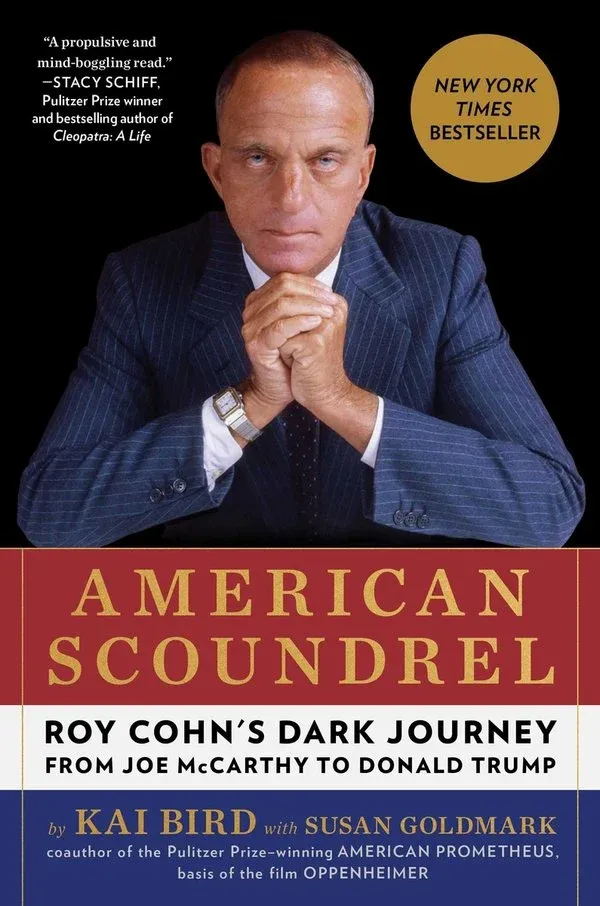
American Scoundrel: Roy Cohn's Dark Journey from Joe McCarthy to Donald Trump by Kai Bird with Susan Goldmark
I have been disgusted by and entirely fascinated with Roy Cohn ever since I saw Angels in America for a theater class in college. And then he was a frequent guest on The Simpsons as the Blue Haired Lawyer, nearly as iconic as Thomas Pynchon bag head.
I never thought we'd be living in Roy Cohn's America in 2026, decades after he died of AIDS in the 1980s while insisting until his dying day that it was cancer, and that he was never a [insert your favorite slur for gay man here]. But Kai Bird makes a really compelling case for how Roy shaped current day Republican ideology. It's McCarthy-era paranoia, plus blatant lying whenever and wherever, plus virulent racism proudly and unabashedly communicated.
We know Roy was a monster: he was a cheat and a liar and a thief and a sadist and a terrible hypocrite, but it was in American Scoundrel where I learned he was also a mama's boy. I would read a whole book about Roy's mom Doris, who seems like she could have been the model upon which Sigmund Freud based his entire philosophy about mothers. Roy lived with Doris until her death – she was in her eighties.
That mama's boy grew up to be a very young prosecutor who killed Julius and Ethel Rosenberg (he didn't flip the switch himself but he said he would have) in 1953, and then went on to further notoriety for being Joseph McCarthy lapdog during McCarthy's era of red scare witch hunts. This execrable human being then went on to run his own firm and be a fixer and a man about town. He attracted the attention of the American liberal elite against whom he was always railing. This was what I always picture when I think of Roy Cohn: a true charmer to a select group of people to whom he wanted to be charming, and a real nightmare to everyone else.
He seemed fun, like maybe if he wasn't actively stealing from you or otherwise persecuting you he'd be a good hang? He held parties at Studio 54. He went to sex parties. He knew everyone in New York City. He loved dogs. He loved gossip. He was a hypocrite and a traitor but he had a good time, which is not nothing.
But he also had a young acolyte named Donald Trump for whom his life strategies functioned, the author argues, as a blueprint for how to be (shitty). See if you find any of this familiar: Roy never paid for anything. He was incredibly flashy but too cheap to ever both paying a bill. He lied about anything that would aggrandize him. He never admitted defeat, even when he was losing badly. He was a double-dealer who managed to break the law quite often but never really got caught. He was transactional above all.
In a recent opinion piece in the New York Times the author of American Scoundrel purports that Stephen Miller is the new Roy Cohn. Yes, Roy and Miller are both Jewish. And they're both virulent racists who don't care how many lives they destroyed.
But Roy Cohn was also camp. He was a piece of shit, but he was a fascinating piece of shit who could be (every liberal famous person quoted in the book is like, "I hated Roy Cohn and all he stood for, but he was very charming"). The people who met Roy were often quite taken with him, often becoming lifelong friends. Is Stephen Miller at all fascinating to anyone?And has he ever charmed anyone (aside from Donald Trump)? That's the big takeaway from the biography: our modern day bad guys are dumb and boring as fuck, they're missing that fundamental pizazz that makes someone worthy of being a supervillain.
My 10 favorite [adult novel] debuts of 2026
For my Lit Hub column I wrote about 10 debut novels from 2026 you might have missed. I was motivated by my previous column, in which I mourned the closing of Catapult and worried about the health of debut fiction in general. I don't want to be someone who makes a comment about the overall industry and then doesn't name specific books.
I hope you enjoy these. Please note I left two of my favorite debuts off the list because they will end up on my Best of the Year list, which I'll try to publish in the next week or two...
New releases, 11/17
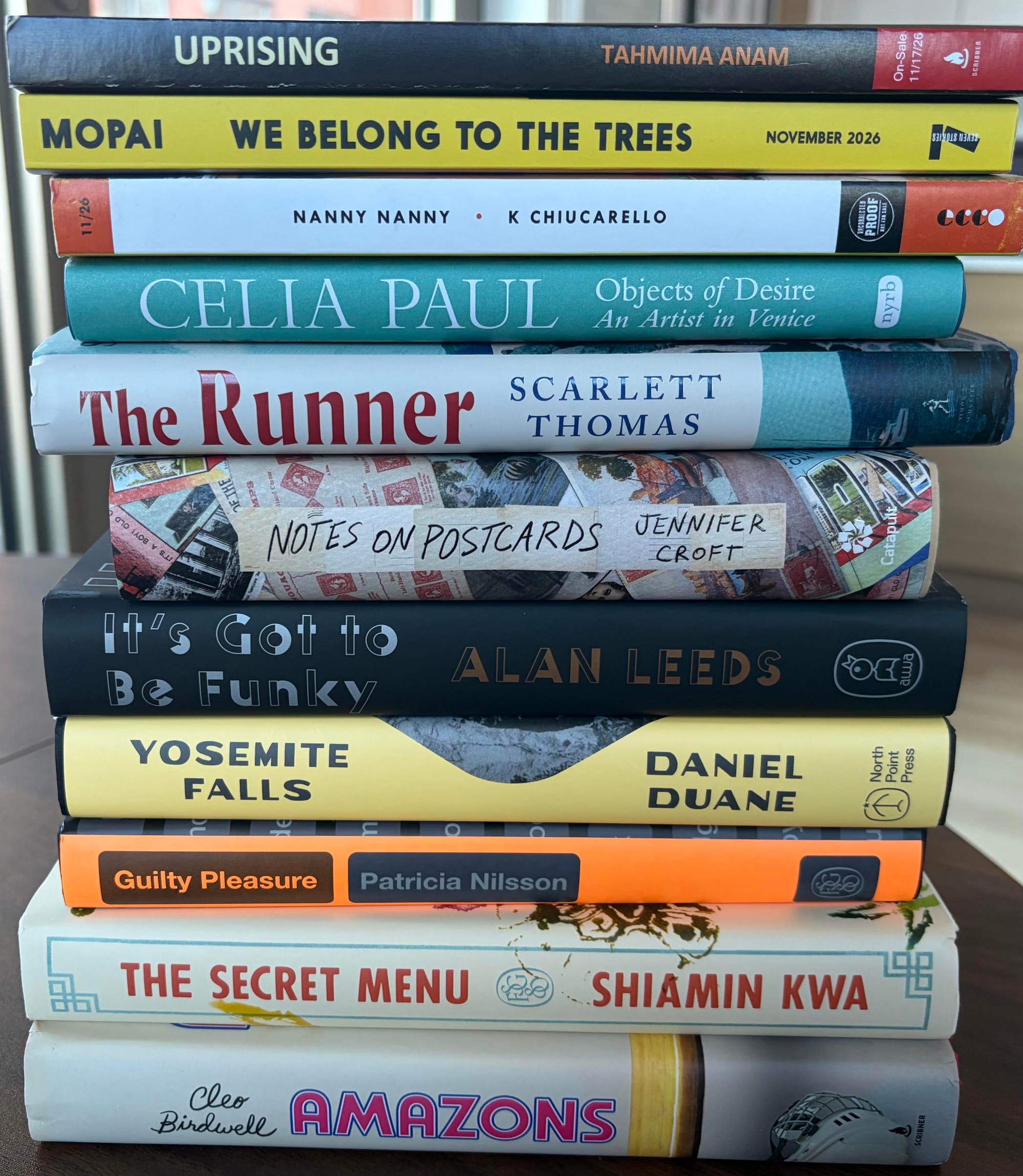
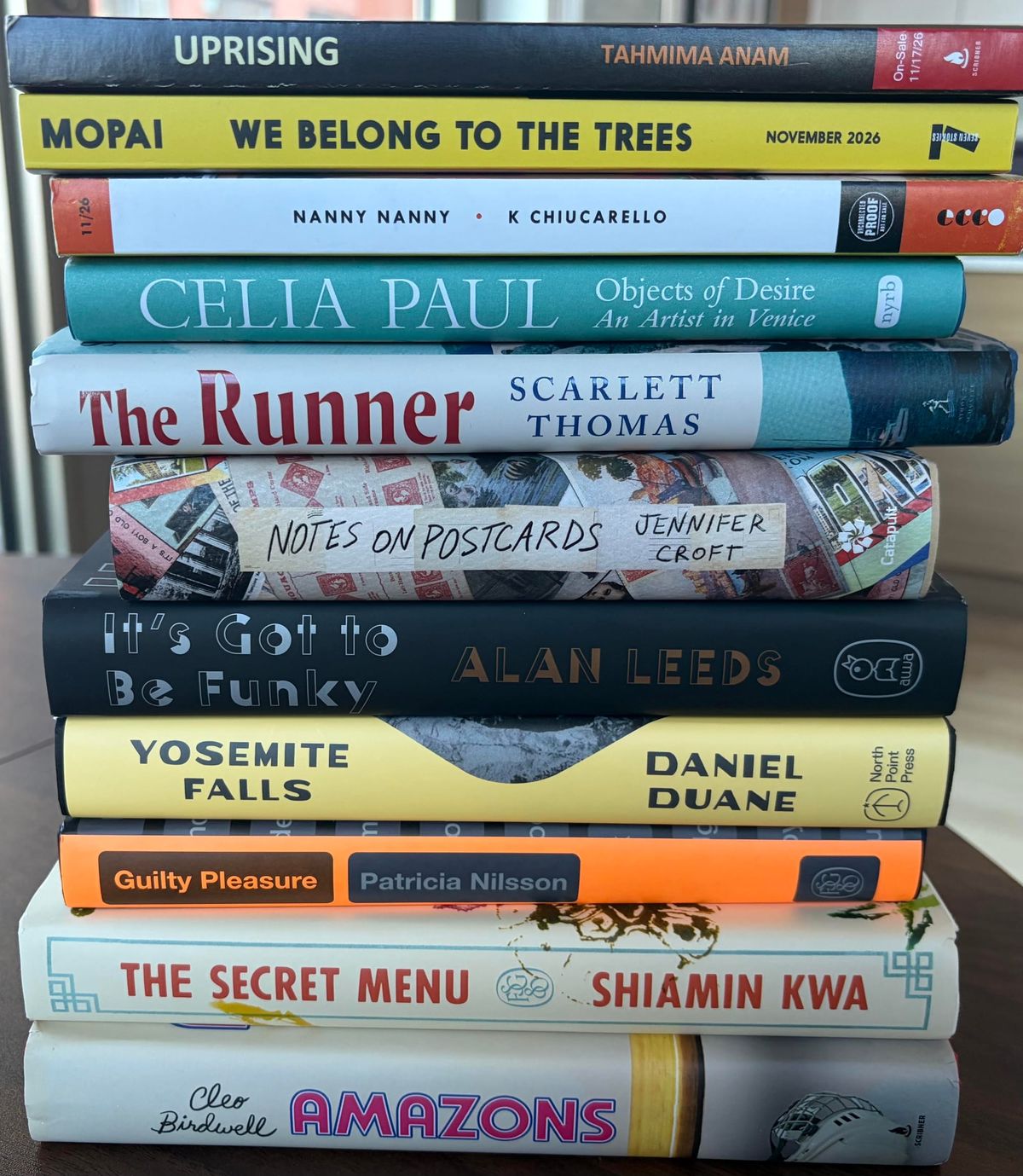
Uprising by Tahmima Anam
We Belong to the Trees by Keletso Mopai
Nanny Nanny by K Chiucarello
Objects of Desire: An Artist in Venice by Celia Paul
The Runner by Scarlett Thomas
It's Got to Be Funky: My Life in Music by Alan Leeds
Yosemite Falls: Reckoning with California History and the Gospel of John Muir by Daniel Duane
Notes on Postcards: A Memoir by Jennifer Croft
Guilty Pleasure: The Pornification of the Internet, the Economy, and Everything Else by Patricia Nilsson
The Secret Menu: Chinese Food in America, and How I Made It by Shiamin Kwa
Amazons: An Intimate Memoir by the First Woman Ever to Play in the National Hockey League by Cleo Birdwell (AKA Don DeLillo)
On the Calculation of Volume, Book V by Solvej Balle, translated by Jennifer Russell and Sophia Hersi Smith
Mario Vargas Llosa: A Life by Gerald Martin
Super K: The Making, Breaking, and Remaking of Henry Kissinger's Legacy by Barbara J. Keys
Tiger's Mouth by Lucy Tan
Jealousy: A Memoir by Sarah Haas
Between the River and the Railroad Tracks: A Memoir by Nicole Fleetwood
Anita Brookner: Art and Life by Hermione Lee
Mona: An Immodest Memoir of Race and Rebellion by Azra Liaqat Khan
Murmuration by TJ Klune
The Imperfect City: Design, Serendipity, and the Real Life of Cities by Paul Goldberger