The Maris Review, vol 132

The theme of the week is women trying to figure out their narratives
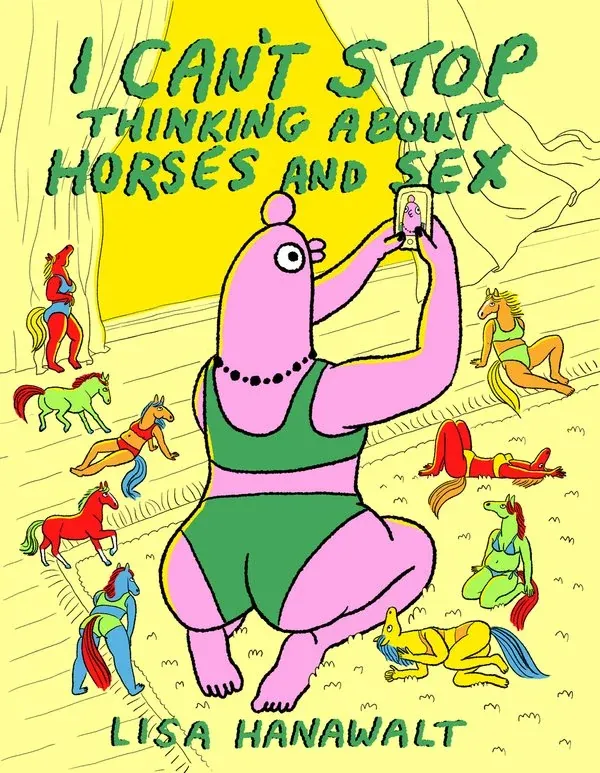
I Can't Stop Thinking About Horses and Sex by Lisa Hanawalt
I was never a horse girl but Lisa Hanawalt has turned me into one. Her cartoon depictions of horses have brought me so much joy over the years, from BoJack Horseman (her series with writer Raphael Bob- Waksberg) to Coyote Doggirl and finally to her excellent new graphic memoir.
Lisa's vision of the world remains consistent: it's colorful, it's bright (but also so dark), everyone is a little bit animal, or every animal is a little bit human, and most of them have boobs. There are boobs everywhere; in Tuca and Bertie even the buildings have boobs. It all adds up to feeling like what a little girl's fantasy of grown up life, a balance between silliness and wonder and a great heaping dose of vulnerability. I love being inside her mind.
I Can't Stop Thinking About Horses and Sex is exactly what it sounds like. Judge this book by its cover. After being a lifelong fan, Lisa finally buys a horse and they have adventures! And she also goes through a rough breakup and gets back into dating and sex, which leads to some misadventures! But there are also many side quests in which she indulges her fantasies/hangups/darkest fears and those are the best. See in particular: her ode to Kevin Costner.
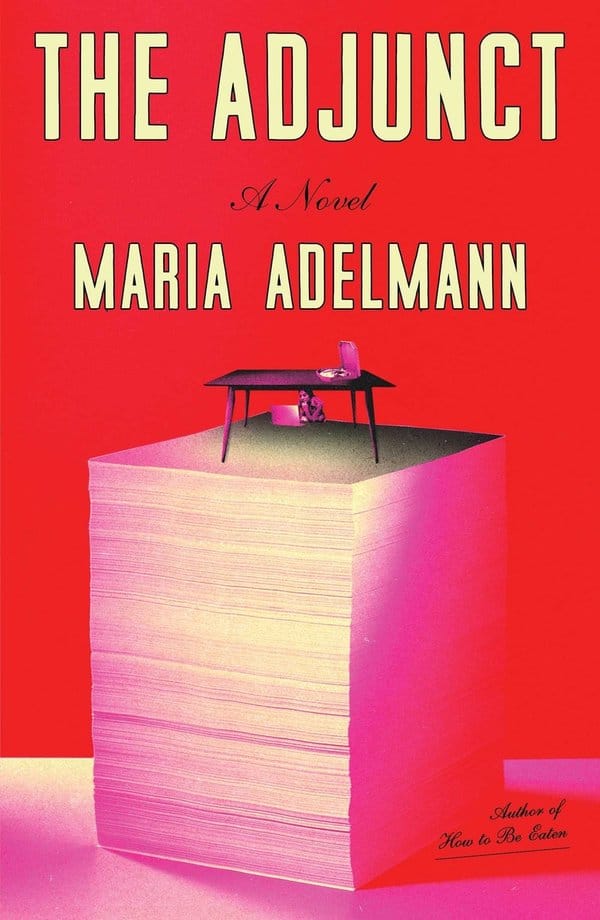
The Adjunct by Maria Adelman
This book fucked me up so bad that I didn't sleep last night. I think that's a good thing but I'm not sure? I'm still trying to figure out how I feel about it and how I want to talk about it. There will be mild spoilers here, because I don't think I can consider the novel as a whole without taking its ending into account.
The Adjunct begins as a clever takedown of the campus novel, told from the perspective of Sam, a "part-time lecturer" who has a lot of fancy degrees but who is no more than a glorified gig worker. For adjuncts, money is impossible and respect is just as difficult to find, scorned as they are when they try to do things like use the faculty printer or get a cup of coffee from the faculty lounge. Sam is wry and smart and so funny but she is hanging on by a thread – desperate to find full-time work and a steady paycheck and health insurance and some stability.
When Sam gets a job adjuncting at Rosedale, a small liberal arts college in Baltimore, she fills in for a tenured (male) professor who taught courses called The Masculine Voice and The Campus Novel. This stuff is ripe for satire, and Sam is a great guide: astute and clever and angry on the page, if not necessarily in front of her classes.
At Rosedale Sam runs into her former grad school advisor, a man whom she's been trying to avoid for years. Tom Sternberg is a character you'd meet in any campus novel, a tortured genius with a bit of a drinking problem whose debut novel was a huge deal, and who spent many years afterward teaching and being too familiar with his students. Now Tom has finally written book two: a novel that's at least partly autobiographical, about a scandal in which he was involved just around the time when Sam was in his program. Coincidence, or nah? Tom's novel is supposed to be a post- MeToo confession/mea culpa from the era when we were talking about how men might make reparations for the shady but not illegal things they may have done. Will Sam disclose their past? Will she ever get to tell her side of the story? Does she event want to?
Just when you think The Adjunct is setting itself up as a great critique of academia and sexual politics, the book ultimately becomes so laser-focused on class that all other issues fall to the side. When you're struggling to survive you simply don't have the attention span to care about the politics of feminism and MeToo. I'm not sure I've ever read a campus novel that ended so jarringly. I won't say more. Let me know if you read it?
Did you hear? AI perv glasses are literary now.
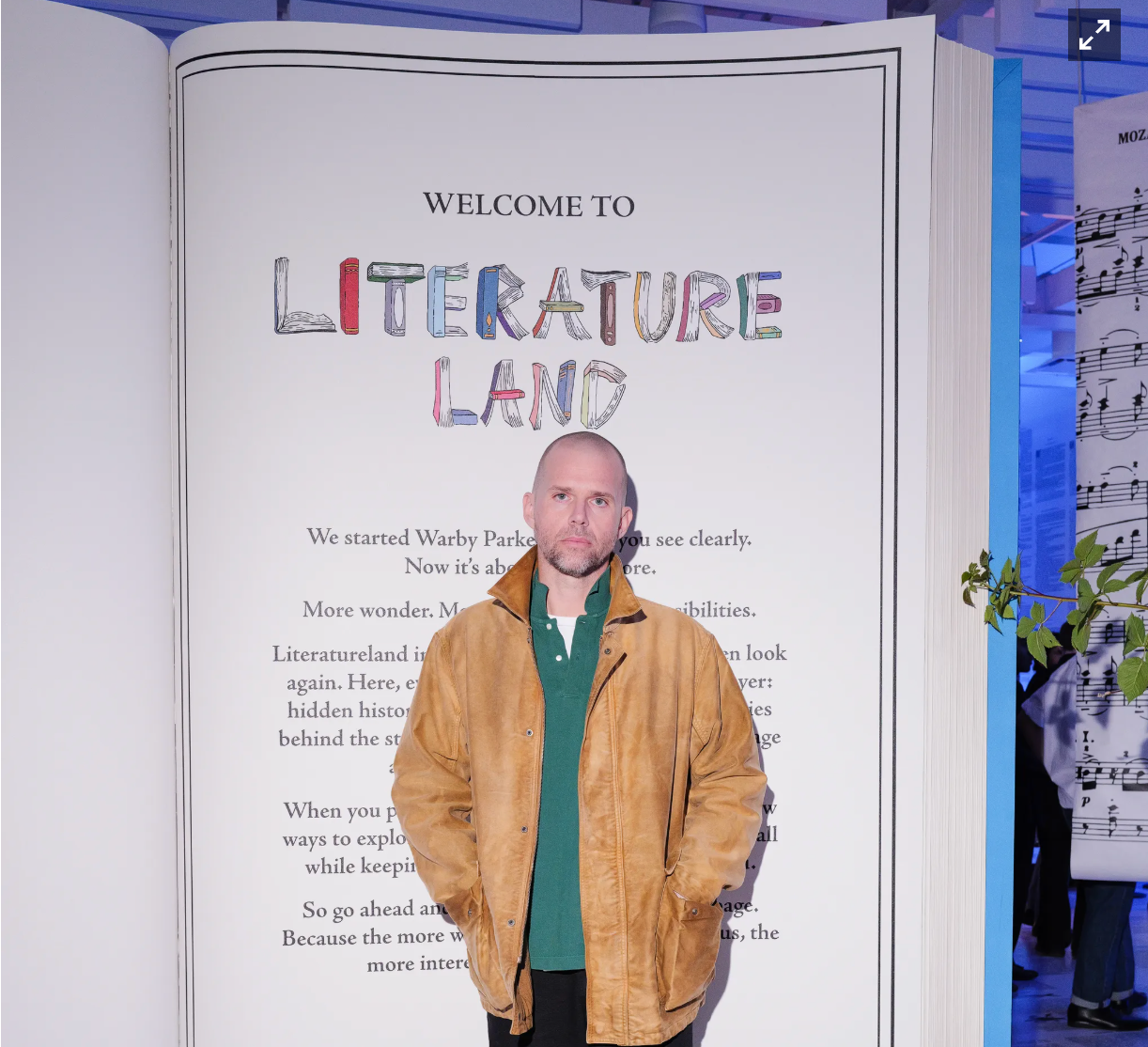
On November 10 Warby Parker and Vogue hosted a very fancy literary-themed event to celebrate Warby Parker's newest product launch: "intelligent" glasses, AKA "perv glasses." They've teamed up with Google and Samsung to release a product with Gemini AI built right in, so you can look like you got your MFA in Fiction even as you chat with a robot and invade the privacy of everyone you meet on the street.
Warby Parker has long used books as part of their branding, and I have been to a few book events in their various stores that I really enjoyed. But this launch, with its enormous, Alice in Wonderland-sized books that various influencers and tech bros posed against, feels downright obscene. There is something so creepy about how the company is so intent on fetishizing books and the idea of books while shilling a technology that is stolen from writers and ruining the livelihoods of authors.
We howled when Meta Glasses came out, and there's a great episode of A Bit Fruity called The Technofascist Urge To Never Turn Down a Brand Deal. I thought, at the very least, the Warby Parker AI glasses would be met with some skepticism. But all I could find were rehashed press releases and interviews with Google and Warby Parker execs. Just about every press outlet taking their word for it.
Finally I found this criticism at a site called All About Cookies: "Face redaction only applies when the wearer is actively querying Gemini with the camera. It doesn't apply to ordinary photos or videos the wearer takes and saves to their own gallery, which CNN confirmed directly with Google. Point the glasses at someone and just hit the camera button, and there's no blurring, no redaction, nothing." Seems not ideal! If only some intrepid reporter would investigate!
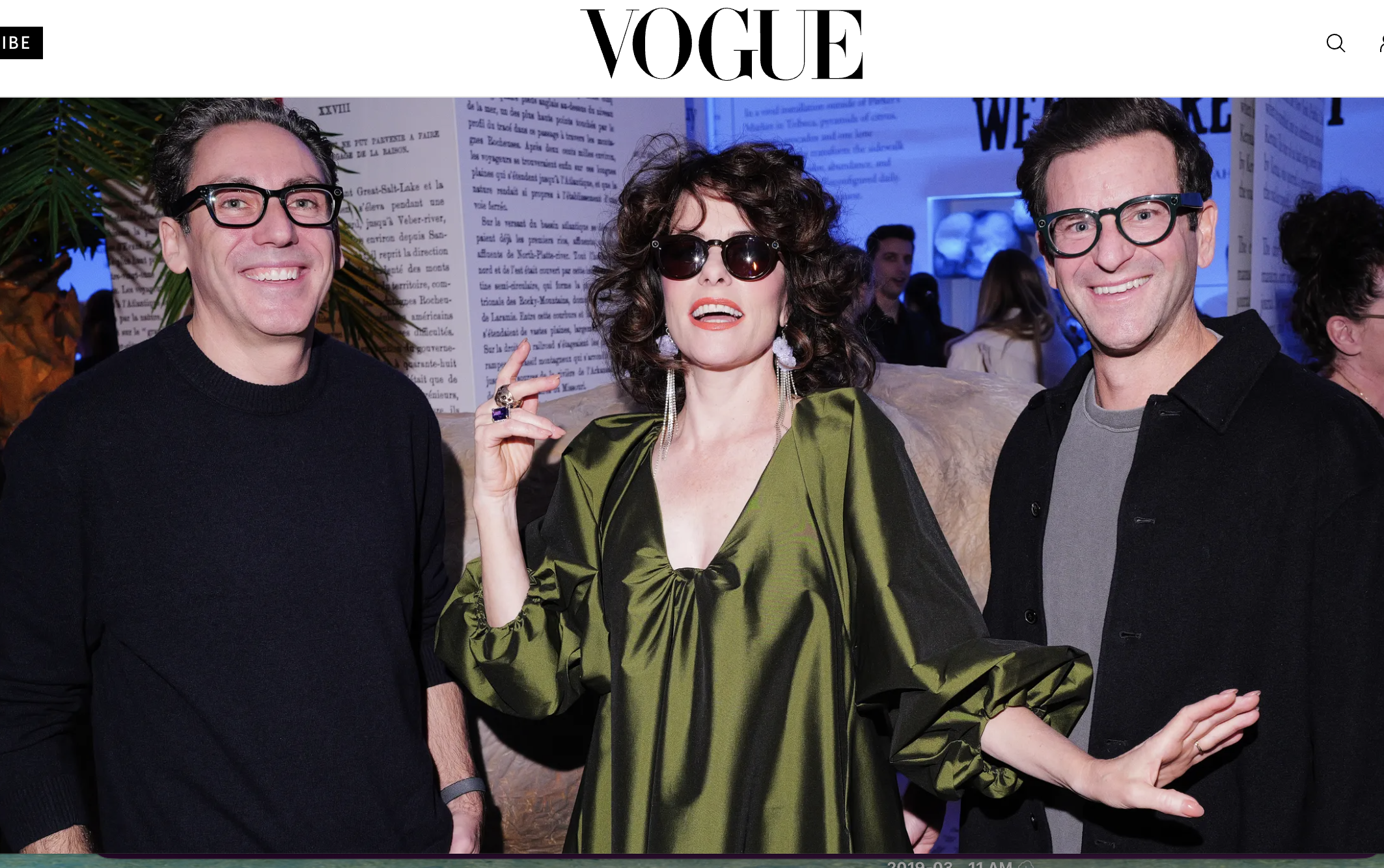
Parker Posey was never an actual librarian, I must keep reminding myself. But I was rooting for her. We were all rooting for her.
Well, this is devastating
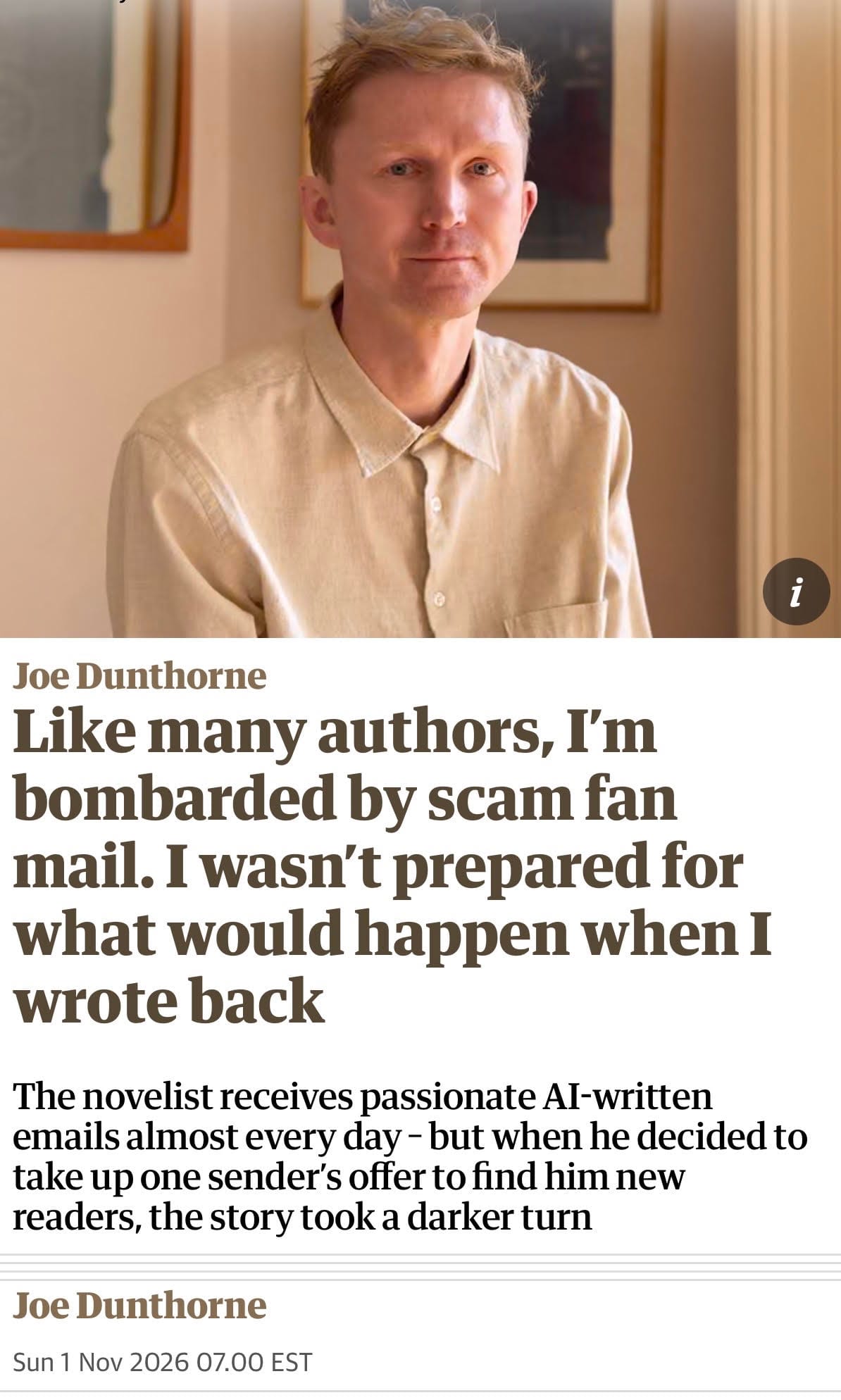
I think I'd been looking at AI email scams to authors as a mild, funny indignity, not quite grasping what was going on on the other end. So this article in The Guardian really fucked me up. It's a tough read, but it clarified a bunch of stuff for me. We live in a hellscape where "Ottessa Moshfegh" or "Elena Ferrante" or whichever fake writing celebrity is contacting you is most likely a person who is suffering profoundly.
Inside the building, it resembled a hybrid between a call centre and a prison, rows upon rows of computers and green screens, and tiny dorms with bunk beds. About half of the workers were Filipino, while the others had been trafficked from China, Vietnam, Malaysia, Taiwan, Indonesia and Rwanda, their documentation withheld. The bosses, meanwhile, splashed around in the swimming pool next door. When another nearby compound was raided, they found it had its own brothel, karaoke suite and torture room. Across south-east Asia, these scam compounds are a multi-billion dollar industry, run largely by Chinese crime syndicates who routinely use violence and sexual abuse to keep workers in line. With the enormous sums of stolen money flowing through the industry, some compounds are the size of small towns or, perhaps more accurately, labour camps – with thousands of workers.
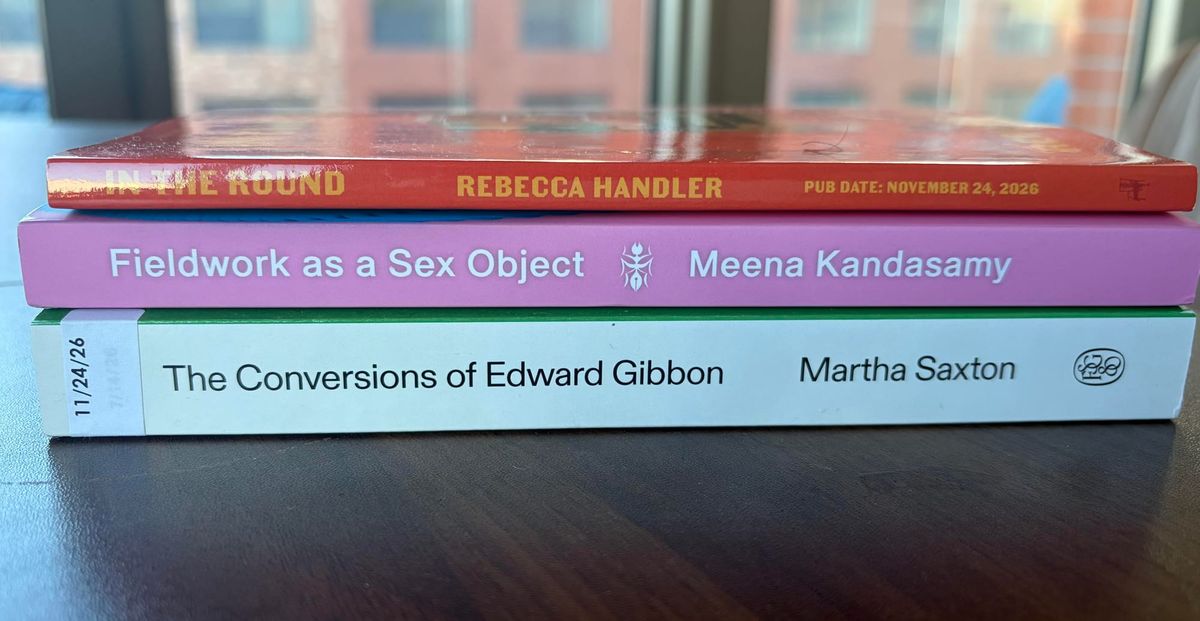
New releases, 11/24
It's a light week, of course. I hope your Thanksgiving week is full of good food and very little drama.
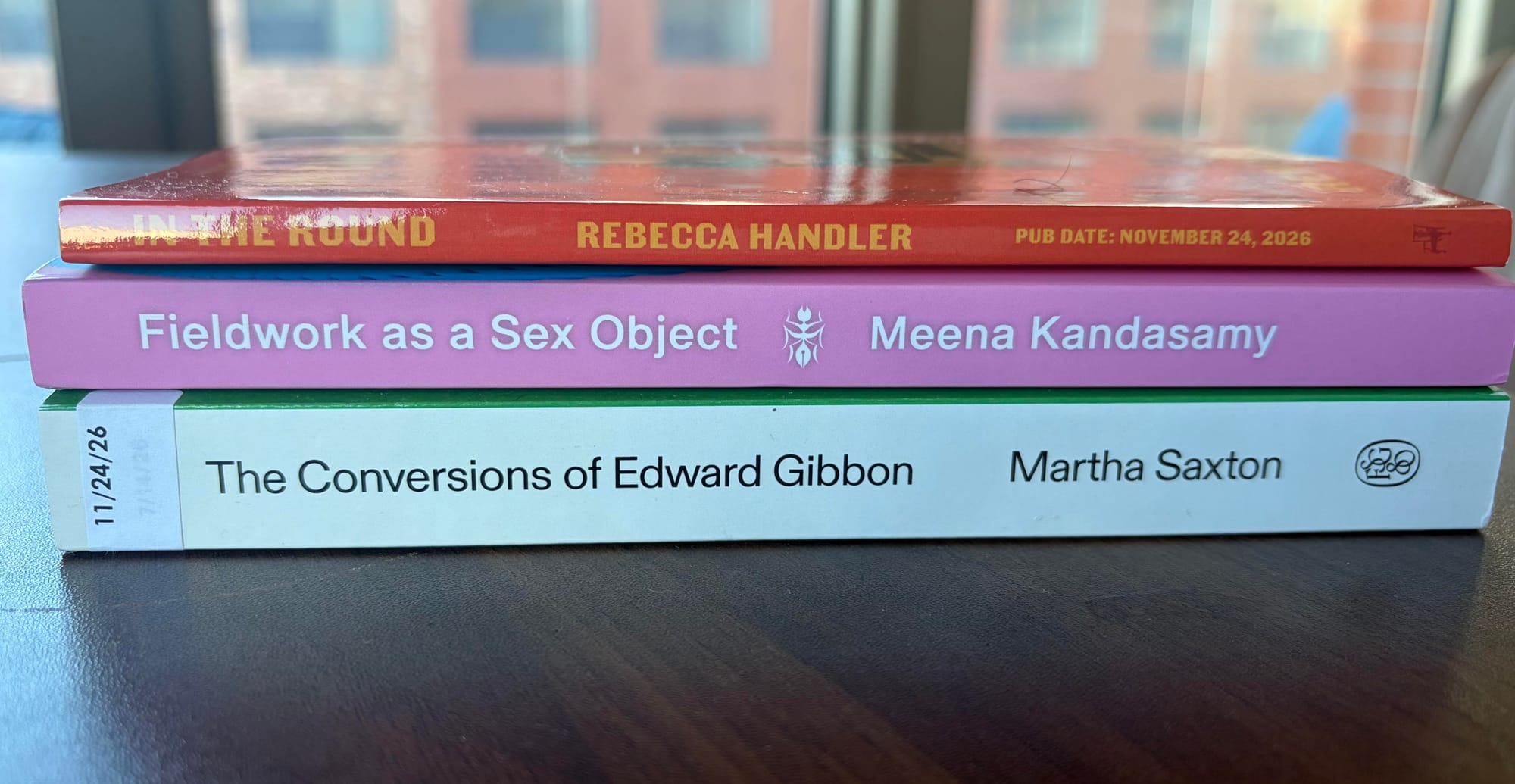
In the Round by Rebecca Handler
Fieldwork as a Sex Object by Meena Kandasamy
The Conversions of Edward Gibbon: A Modern Biography by Martha Saxton
Long Wave by Daisy Johnson
Two Women by Jacqueline Rose
The Rootless Alysium: America at 250, A Journey by Aatish Taseer