The Maris Review, vol 117

This week's theme is who gets to celebrate and go home, and who doesn't
What I read this week
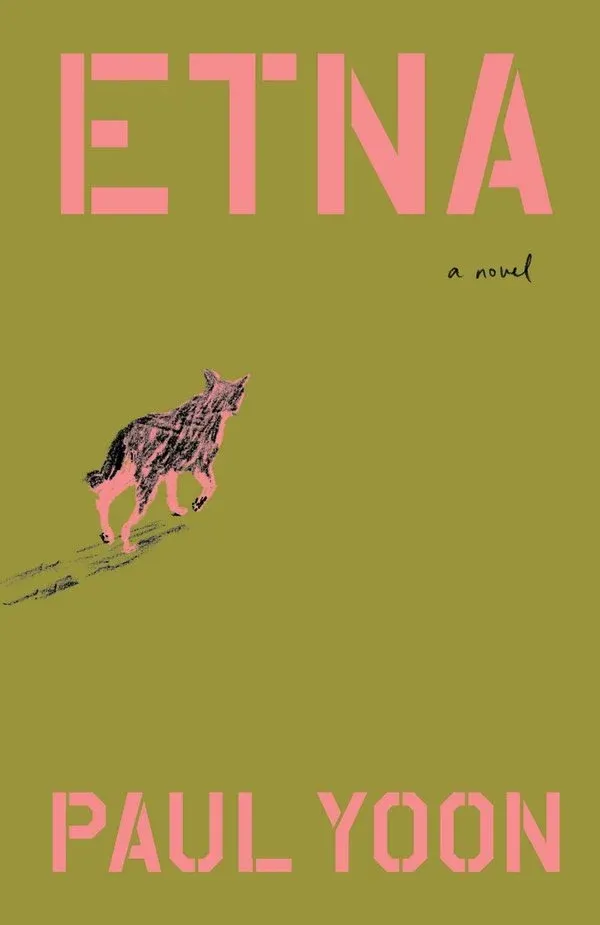
Etna by Paul Yoon
I'm a big Paul Yoon fan but I approached his latest novel with some trepidation. As Josh said, the only book narrated by or about a dog that I would be sure to enter into without fear would be called The Dog Who Lived Forever and Ever. Which, fair.
Paul's new novel is about a dog named Etna (based on Oscar, a lab mix who lives with Paul and his wonderful partner, Laura van den Berg) who is taken from his farm by the sea and enlisted to help American soldiers fight a war in his nameless country. So Etna gets training and becomes a war dog. By the time peace comes to the region and the remaining Americas have begun to celebrate, Etna has spent years at war and has bits of shrapnel stuck at various places in his body. Most of the novel is about his odyssey (this word is used in the marketing copy for the book very purposefully) through the decimated country in order to get back home. There is no Penelope waiting for him. In fact it's very likely that no one – human or dog – left to wait for him at all.
If you are like me, you've been bombarded with images over the past few years of the destruction from America's latest wars. You try not to look away, because the victims deserve a witness, at least. But you must look away because you are one person who has good mental health days and bad ones and continuing to look at American war snuff films on social media is likely to break you. You throw money at the problem as best you can and try to move on.
Etna succeeds in making readers look because it's short and spare and tender, and each and every word has clearly been chosen carefully. And there is enough white space on the novel's pages that I could take frequent timeouts to nuzzle my dog, who is the most coddled pug in the world. The details from Etna's observations themselves are damning enough, and Paul resists expounding very much. There were many moments in the book when I wanted to cry, but there were also more laughs than I was expecting (the throw away line "fuck you, cat" that Etna says to a nearby feline really got me).
So yes, my ideal narrator of fiction may not be a dog with PTSD, but I'm so glad I read this book. It's about the importance of having a pack, and of recreating that pack time and time again after loss. And it's about, if you're lucky, finding humanity through becoming deeply invested in what happens to one sweet dog.
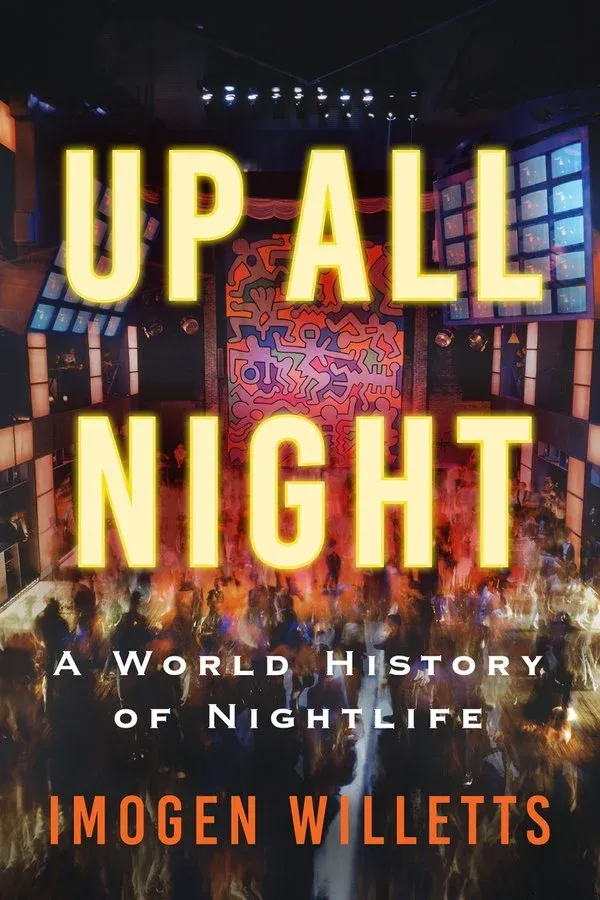
Up All Night: A World History of Nightlife by Imogen Willetts
This is the perfect audiobook because each chapter is its own contained little story about a particular time in history. It's very easy to go in and out. Not to mention that a study of some of the world's most celebrated or notorious kinds of night life is the perfect entree to delve in to the cultural history of a variety of times and places. It's a way to talk about a particular era's social mores and new technologies and class battles – so much of the history of night life is about class. Who gets to be a hedonist, and who has to be the one to wait on the hedonists? Or, who faces consequences from a night gone awry, and who gets off scot-free?
I am no historian, so I have no idea if the times and places the author has chosen to cover are representative of the greatest nights out ever, or if there were any perfect party moments that were left on the cutting room floor. But I do know that it's quite expansive, even though I would have liked it to be less America-focused. But I guess we like to party? Or, at least, we used to like to party.
The book begins with the floating world of Japan's Edo period and spans to LA in the early aughts when Lilo, Paris, and Britney were hanging 0ut at Les Deux and getting papped. In between there are chapters about the party scenes from which so much of my favorite art originates, from Moulin Rouge and Interview with a Vampire to Cabaret (or Isherwood's Goodbye to Berlin) and Passing or Jazz. Imogen Willetts fills in the background with more historical context for why particular entertainments and spectacles or dance crazes caught on at a particular moment in time. And she also, more urgently, highlights the importance throughout modern history of people coming together face to face to hang out. Bedrotting is not and never will be the answer!
One minor gripe: the narrator is really excellent except when she attempts to do the proper accent for each and every quote in the book. New Orleans in the era of Jelly Roll Morton, in particular, was tough. The whole thing would have been perfect if read straight, with no impersonations attempted.
Digital reading is still hard if you hate Amazon
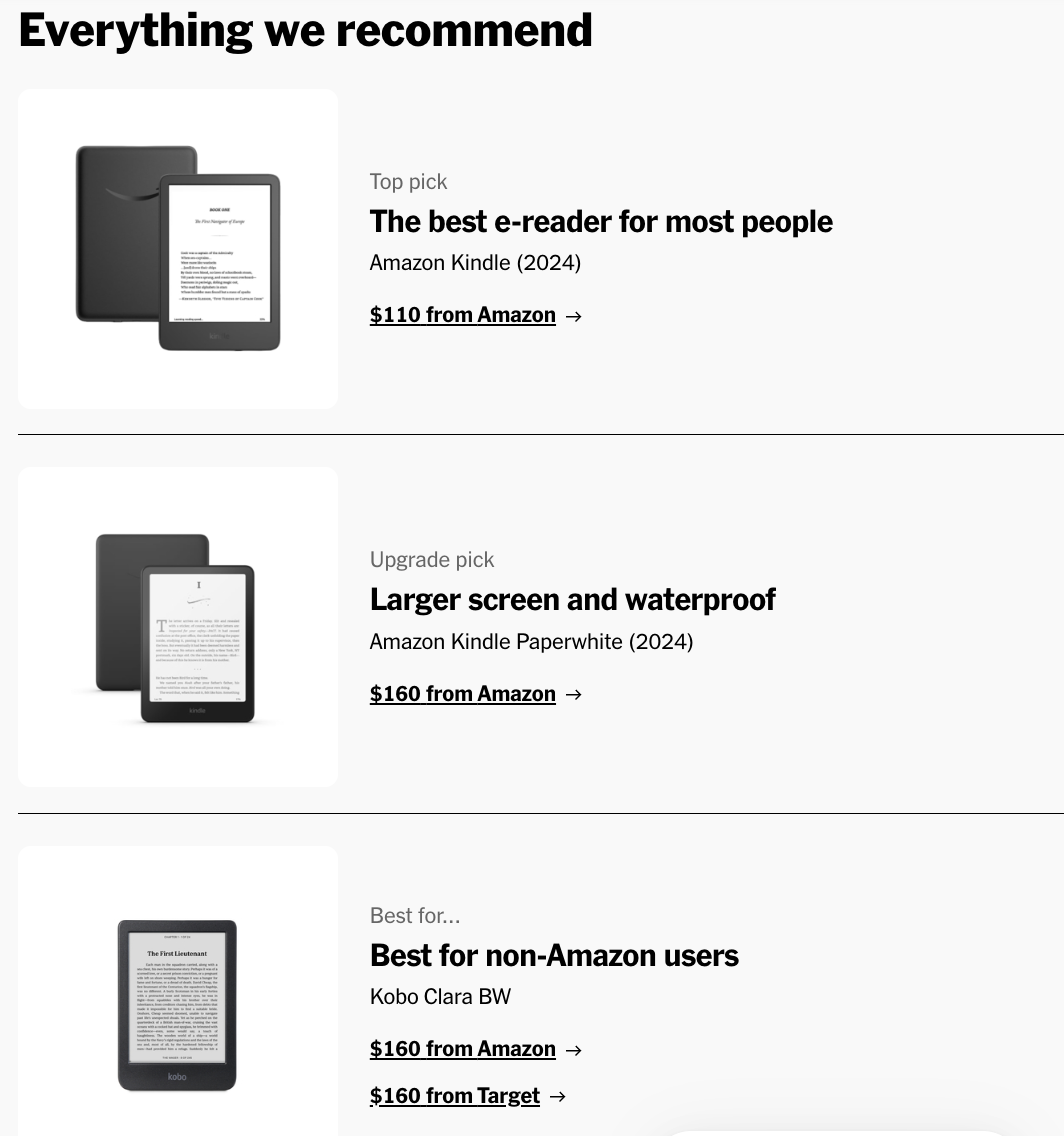
For this past week's Lit Hub column I wrote about trying (and failing) to read digitally (again). We desperately neeeeed a competitor to challenge Amazon's monopoly in the e-reader space. But no sooner did I publish my piece then my beloved audiobook service Libro.fm announced that they were getting into the ebook game. They're even going to let users toggle between the audiobook and ebook, which I've been wanting for a long time. That gives me some hope.
Every day can be book lovers day

Sunday was National Book Lovers Day, which is a fake holiday I usually wouldn't bother with. But everything feels different lately. If you subscribe to this newsletter you don't need me to sell the concept of reading books to you, but I do feel like the act of reading has been so devalued lately that it's worth celebrating. The fascists win when we read bullet points instead of books. I know you know.
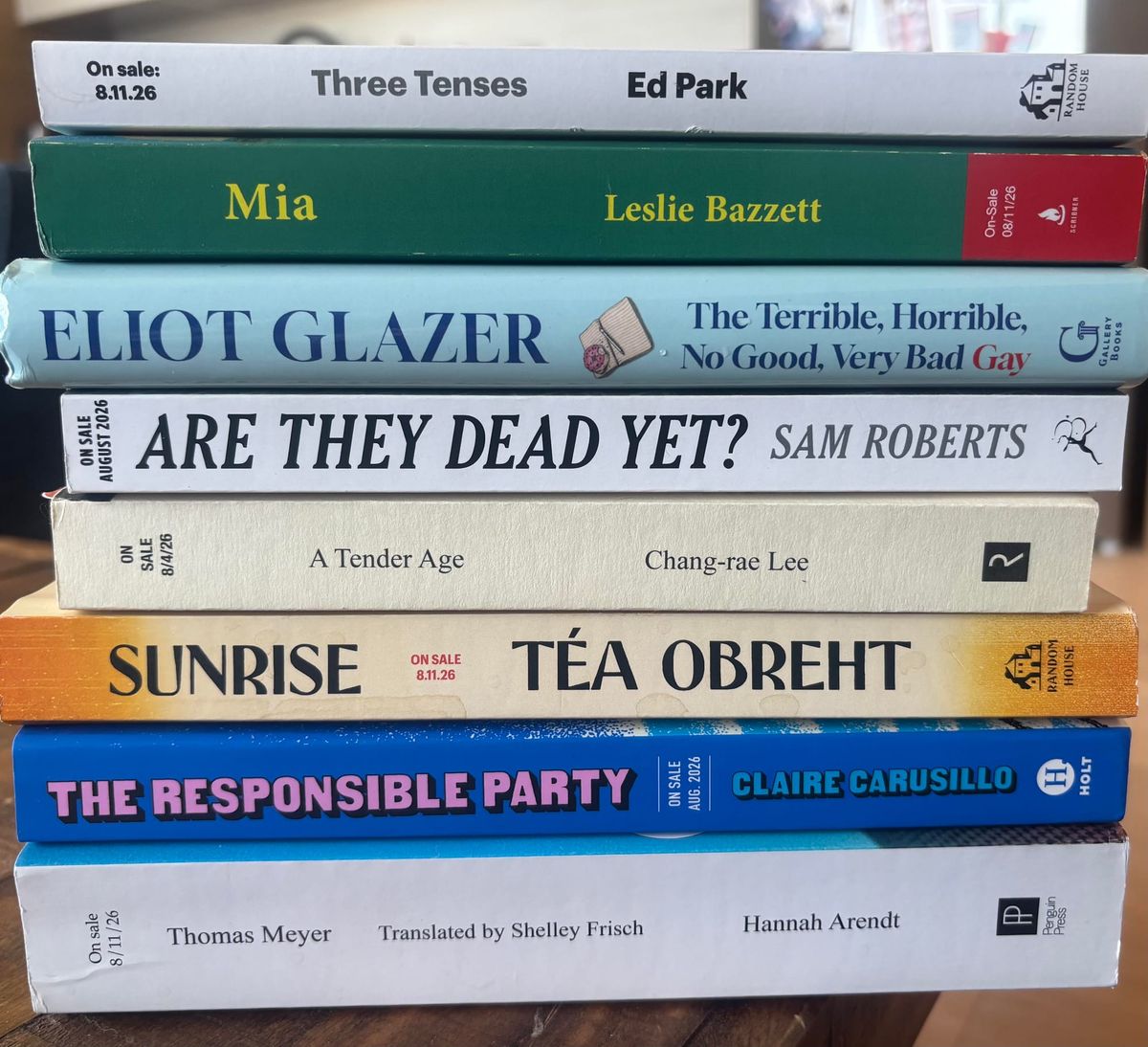
New releases, 8/11
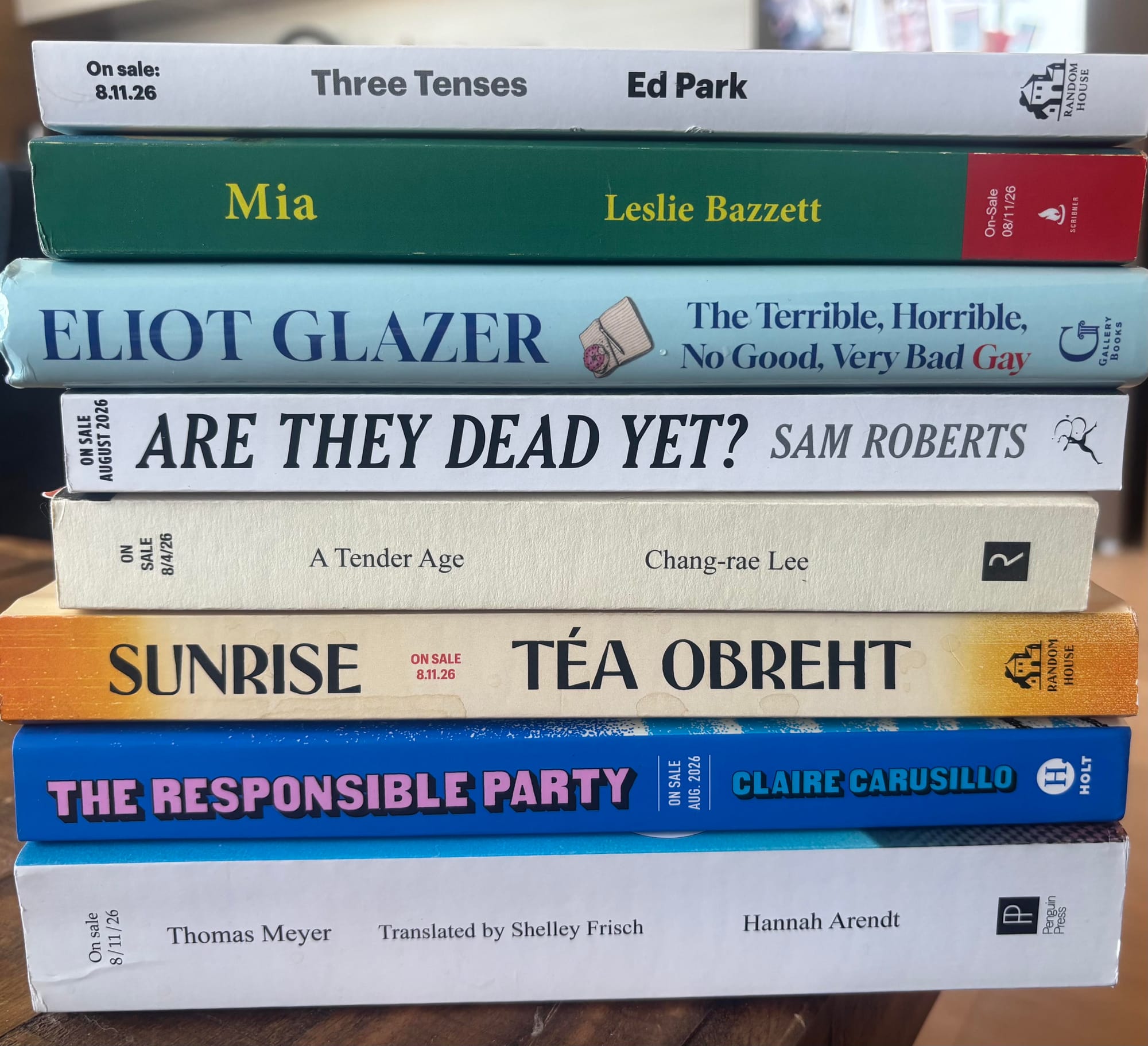
Three Tenses: A Transmission from the Nineties by Ed Park
Mia by Leslie Bazzett
The Terrible, Horrible, No Good, Very Bad Gay by Eliot Glazer
A Tender Age by Chang-rae Lee
Sunrise by Téa Obreht
The Responsible Party by Claire Carusillo
Hannah Arendt: A Life of the Mind by Thomas Meyer, translated by Shelley Frisch
Under the Falls by Richard Russo
Depraved: The Story of Dangerous Art by Daisy Dixon
Capitalism Is Sexism by Doortje Smithuijsen, translated by Erica Moore
Great and Unfortunate Things by Jason Arday with Eve Claxton